
Buying a used boat is exciting, but the real story hides where you can't see it. Think wet deck core, tired engine mounts, and wiring that's been "fixed" three times. At Boatzon, we help buyers shop more than 100,000 boats, pre-qualify for financing, and compare insurance quotes in one place. Nearly every deal raises the same question: what's a fair boat survey cost?
Quick answer: In 2026, a pre-purchase boat survey costs about $25 to $45 per foot. Add $10 to $20 per foot for a haul-out and $500 to $2,000 per engine survey. Most buyers spend $800 to $4,000 total, depending on size, type, and location.
This blog breaks down each line item using current surveyor rates, real buyer receipts, and federal boating data. Whether you're shopping in Fort Lauderdale, Houston, San Diego, or Annapolis, you'll know what to budget.
Key Takeaways
- The core boat survey cost runs about 25–45 per foot, with 400–600 minimums on small boats.
- Haul-outs add 10–20 per foot. Engine surveys add 500–2,000 per engine, and rig surveys start near $400.
- A 35- to 40-foot boat with every add-on often lands between $2,000 and $4,000.
- The buyer pays, usually on survey day, whether or not the deal closes.
- Lenders and insurers often require a survey, so confirm their rules before you book.
Why a Survey Matters More Than Ever
Most boats sold in America are used. According to the National Marine Manufacturers Association (NMMA), pre-owned boats made up 79.7% of U.S. boat unit sales in 2025. NMMA’s pre-owned market report counted 867,059 used boats sold, worth $10.8 billion.
Age and wear show up in federal data, too. In the U.S. Coast Guard’s 2024 Recreational Boating Statistics, 2,405 of the 5,365 vessels involved in incidents were built before 2011. Machinery failure ranked as the fourth-leading primary cause of incidents, and engine failure alone was behind 143. A survey is how you find those weak points at the dock, not offshore.
What You’re Actually Paying For
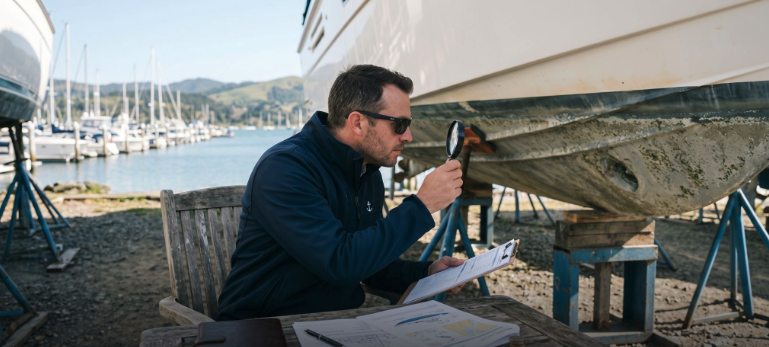
A pre-purchase marine survey is an independent inspection of a boat’s structure, systems, and safety gear. The surveyor sounds the hull and deck, takes moisture readings, and checks electrical, fuel, plumbing, steering, and through-hulls. You receive a written report with photos, prioritized findings, and fair market and replacement values. New to these documents? Our guide to marine survey reports explains each section.
That valuation matters more than most buyers realize. Lenders use it to set your loan-to-value ratio, and insurers use it to set your agreed value. So your boat survey cost buys two things: due diligence and the paperwork financing and coverage depend on.
Credentials count. Look for surveyors accredited through the Society of Accredited Marine Surveyors (SAMS) or the National Association of Marine Surveyors (NAMS). SAMS requires at least five years of experience and a written exam for its Accredited Marine Surveyor (AMS) designation. Most surveyors also reference American Boat & Yacht Council (ABYC) standards in their findings.
How Much Does a Boat Survey Cost Per Foot?
Most surveyors price by length overall (LOA). The boat survey cost per foot in 2026 typically falls between $25 and $45, depending on region, age, and complexity. Full condition-and-value surveys on cruisers and yachts often land at $35 to $45 per foot. Simple outboard boats sit at the lower end.
Prices have climbed. In a popular r/SailboatCruising thread, buyers reported paying roughly $800 to $1,100 for 34- to 38-foot sailboats a few years ago. One Kent Island buyer paid $30 per foot, while a Fort Myers buyer was quoted $25 per foot plus $10 per foot for the haul. Expect those same boats to cost a few hundred dollars more today.
Small boats usually carry a flat minimum, commonly $400 to $600. That’s why a 20-foot bay boat can cost nearly as much to survey as a 26-footer.
What Adds to the Final Boat Survey Price?
The per-foot rate is only the starting point. Your total boat survey cost usually includes one or more of these line items.
| Line item | Typical 2026 range | When you need it |
| Hull and systems survey | 25–45 per foot | Nearly every used-boat purchase |
| Haul-out (short haul) | 10–20 per foot | Boats kept in the water |
| Engine survey | 500–2,000 per engine | Diesels, inboards, high-hour outboards |
| Rigging survey | 400–1,000 | Sailboats, especially for offshore use |
| Travel fee | Varies by distance | Inland lakes and rural marinas |
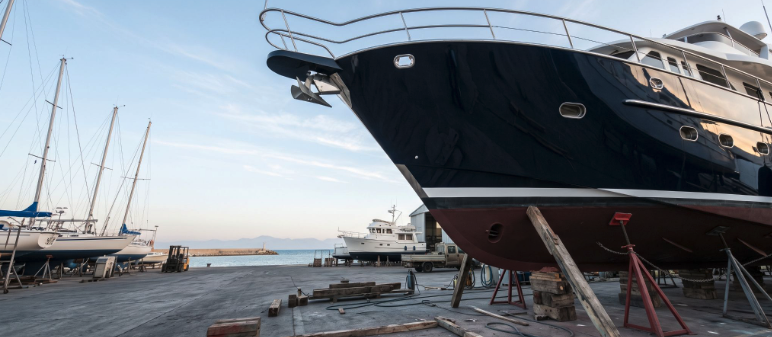
The haul-out is the add-on buyers forget most. A surveyor can’t judge blisters, running gear, or keel joints with the boat afloat. Boatyards bill it separately, and the buyer typically pays.
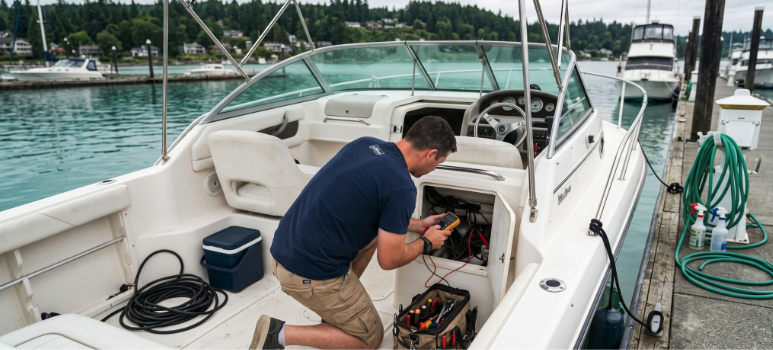
Engine surveys deserve serious thought on any diesel or high-hour outboard. A specialist pulls oil samples, tests compression, and reads diagnostic codes. That work can flag a $15,000 to $25,000 repower before you sign.
Boat Survey Cost by Region
Where you buy affects what you pay. Rates reflect yard fees, surveyor supply, and seasonal demand.
| Region | Typical survey rate (est.) | What drives price | Market context |
| Florida: Miami, Fort Lauderdale, Tampa, Jacksonville | 25–40 per foot | Large surveyor pool; winter is peak season | 632 reported boating incidents and $23.2M in damage in 2024, the most of any state (USCG) |
| Texas: Clear Lake, Galveston, Lake Travis, Lake Conroe | 25–40 per foot | Travel fees for inland lakes | 535,995 registered vessels in 2025 (Texas Parks & Wildlife) |
| California: San Diego, Newport Beach, SF Bay | 30–45 per foot | Steep yard and haul-out rates | 596,703 registered vessels, 5.1% of the U.S. total (USCG) |
| Chesapeake: Annapolis, Solomons, Kent Island | 25–40 per foot | Spring backlog; book early | Maryland logged $8.2M in boating damage in 2024 (USCG) |
| Great Lakes: Michigan, Ohio, Wisconsin | 25–35 per foot | Short season; April–May rush | Michigan reported 120 boating incidents in 2024 (USCG) |
In Florida, book one to two weeks ahead during the winter buying season. In Texas, always ask whether mileage is included in the quoted boat survey cost. Along the Chesapeake and Great Lakes, scheduling early matters more than saving a few dollars per foot.
Shopping locally? Browse boats for sale in Florida, Texas, or California, then book a surveyor near the listing. Buying in another state? Our guide to cross-state boat purchases covers the paperwork.
Sailboat Survey Cost vs. Yacht Survey Cost
A sailboat survey cost usually includes one extra layer: the rig. Many general surveyors won’t go aloft, so a rigger climbs the mast to inspect tangs, swages, and chainplates. Yacht survey cost, by contrast, scales with systems like twin diesels and generators, not just length.
Here’s how real-world budgets compare across three common purchases.
| Example boat | Hull survey | Haul-out | Specialists | Estimated total |
| 22-ft center console, Tampa (on trailer) | $600 minimum | None needed | Outboard check, about $300 | About $900 |
| 34-ft sailboat, Solomons, MD | 1,020(30/ft) | 510(15/ft) | Rig $400 + engine $500 | About $2,430 |
| 50-ft motor yacht, Fort Lauderdale | 2,000(40/ft) | 1,000(20/ft) | Two engines $2,000 + generator $400 | About $5,400 |
On a 1985 Hunter 34 listed at $22,000, that $2,430 is about 11% of the price. It’s still cheap next to a wet-core deck or tired chainplates. On a high-dollar yacht, the same math is even more favorable.
Boat Insurance Survey Cost and When You Might Skip It
A boat insurance survey is usually a condition-and-value (C&V) inspection focused on safety, structure, and value. The boat insurance survey cost is often similar per foot. Some surveyors charge slightly less when no sea trial is involved.
Insurers commonly ask for a survey on boats older than 10 to 15 years or above a set value. Many want one completed within the last three to five years. For premium ranges, see our breakdown of how much boat insurance costs.
Buyers often search for houseboat insurance without survey or wooden boat insurance with no survey. Some carriers will write newer, lower-value boats without one. Older houseboats and nearly all wooden boats still need a current survey. Narrowboat insurance without survey is mostly a UK canal question, where hull surveys are typically required past a certain age. Considering a floating home? Start with our houseboat living guide.
This is where Boatzon helps. With our boat insurance quote tool, you can compare quotes from multiple marine insurers and learn survey requirements early. Your policy can then be ready to activate at closing.
Who Pays, How Long It Takes, and What It Can’t Find
The buyer covers the boat survey cost, and the surveyor works only for you. Payment is usually due on survey day, even if you walk away. Sellers sometimes order a pre-listing survey, but you should still hire your own.
Plan for two to eight hours on site, depending on size. A sea trial adds 30 to 60 minutes. The written report typically arrives within 24 to 72 hours.
Keep expectations realistic. A standard survey is non-destructive and largely visual. In one Washington appeals case, a buyer paid $455 for a survey, then found rotten stringers 18 months later and spent $40,000 fixing them. The contract limited the survey to accessible areas, and the court sided with the surveyor.
How to Get the Most From Your Survey
A little planning protects both your budget and your timeline. Work through these steps in order.
- Make your offer contingent on a satisfactory survey and sea trial.
- Confirm your lender’s and insurer’s survey requirements before booking anything.
- Interview two or three SAMS or NAMS surveyors and ask for a sample report.
- Stack the survey, haul-out, and engine check on one day to avoid repeat yard fees.
- Ask the seller to clear lockers and open access panels before the surveyor arrives.
- Attend in person and share your deal-breakers so they’re checked first.
That last step can save real money. If a surveyor finds a structural deal-breaker early, many will stop and bill only for time spent.
Turning the Report Into Negotiating Power
Expect a list of findings, even on a well-kept boat. Most boats from the 1980s and 1990s show some deck moisture, aging hardware, and dated electronics. That’s normal and rarely a reason to walk on its own.
Focus on safety and structural items: through-hulls, steering, rigging, fuel systems, and core damage. Get repair estimates, then request a price adjustment or a credit at closing. Record any agreed credits in your boat bill of sale. If the findings push risk past your comfort level, use your contingency and walk.
The math is simple. A $1,500 boat survey cost that helps you avoid a $40,000 stringer job is one of the best returns in boating.
Budget Your Boat Survey Cost and Buy With Confidence
For most buyers, a realistic boat survey costs between $800 and $4,000, depending on size, type, and add-ons. It’s a small slice of the purchase price and a big slice of your peace of mind. Fold it into your true cost of boat ownership from day one.
Ready to start? Browse used boats on Boatzon, pre-qualify for financing with no impact to your credit, and run numbers in our boat loan calculator. Build your boat survey cost into your budget now, and every step from listing to signature gets easier.
FAQs
How much does a boat survey cost per foot?
Most boat survey cost quotes run $25 to $45 per foot in 2026, with small-boat minimums around $400 to $600.
Who pays the boat survey cost, the buyer or the seller?
The buyer usually pays, often on survey day. The surveyor works for you, even if you decide not to buy.
Is a boat survey worth the cost on an older, cheaper boat?
Usually, yes. A $1,000 survey can uncover rotten stringers or a failing engine that would cost tens of thousands.
Does boat insurance require a survey, and what does it cost?
Many insurers require one for older or higher-value boats. Boat insurance survey cost is typically similar to pre-purchase rates per foot.
How long does a boat survey take, and when is the report ready?
Expect two to eight hours on site, plus a sea trial. Reports usually arrive within 24 to 72 hours afterward.