
Most buyers walk into the jet ski market with a number in their head, and walk out surprised. A stripped-down entry model and a performance three-seater sit nearly $15,000 apart. A fairly priced used ski and an overpriced one can be separated by $2,000 on the same listing platform. Knowing where real jet ski prices land, and why, puts you in control before you ever talk to a seller.
According to the National Marine Manufacturers Association (NMMA), U.S. PWC sales in 2025 totaled 63,643 units, with an average retail price of just over $16,000. That average is useful context, but it's skewed heavily by premium models. Three-passenger PWCs represented nearly nine out of every ten units sold. If you're shopping for something smaller or used, your numbers will look very different.
This blog covers what you'll actually pay, new, used, and all-in, grounded in real market data and the experience of buyers across the US.
Key Takeaways
- New jet ski prices start around $5,500 for entry-level models and can exceed $20,000 for high-performance supercharged builds
- Used jet ski prices for reliable 4-stroke models typically fall between $3,500 and $7,500 depending on year, hours, and condition
- Jet skis depreciate by approximately 22% in the first year after purchase, then around 8% per year after that, making the used market attractive for budget-conscious buyers
- Most owners spend between $300 and $1,500 per year on jet ski maintenance costs, depending on engine type, usage, and location
- A trailer adds $800 to $2,500 to your total; a jet dock can add another $1,000 to $3,500
- Yamaha 4-stroke engines from 2008–2016 are the most consistently recommended for buyers who aren’t mechanically inclined
- 2-stroke engines are cheaper to buy but carry higher maintenance complexity, most shops won’t service them
- Supercharged models cost more long-term; the supercharger rebuild interval runs $500 to $1,200 every 100 hours
- The South Atlantic and Great Lakes regions account for more than half of all US PWC sales by volume and value
- Pre-qualifying for a marine loan through Boatzon doesn’t affect your credit score and takes minutes
The Real Jet Ski Price Breakdown: New vs. Used
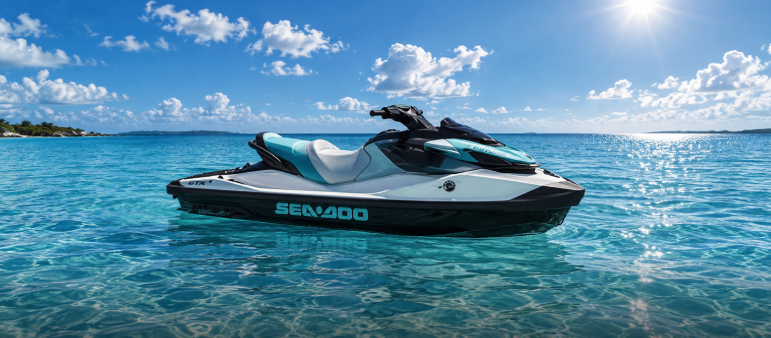
The new PWC market is anchored by three brands, Sea-Doo, Yamaha, and Kawasaki, and each covers distinct pricing tiers.
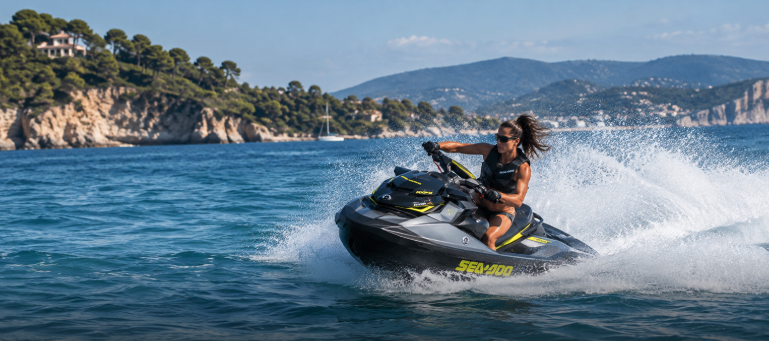
At the entry level, the Sea-Doo Spark and Yamaha EX series start around $5,500 to $7,500. These are two-seat, lower-horsepower machines built for casual lake riding. They’re lightweight, easy to handle, and the right starting point for first-time buyers who want to control jet ski cost without sacrificing build quality.
Mid-range three-seaters, the Yamaha VX Cruiser, Sea-Doo GTI 130, and Kawasaki STX 160, run between $9,000 and $13,500. This is the most popular segment by volume, and it dominates for good reason. They seat families, handle chop comfortably, and hold up to regular use across multiple seasons. The South Atlantic and Great Lakes regions alone account for more than half of all PWC sales and market value in the US, and three-seat models are what drive that demand.
Performance models, the Sea-Doo RXP-X 300, Yamaha GP1800R SVHO, and Kawasaki Ultra 310, run from $15,000 to $18,000+. At the top of the new market, flagship builds and specialty configurations can clear $20,000.
On the used side, the market rewards buyers who come in with specific knowledge. The most consistent community consensus, across PWC forums, Reddit’s r/jetski, and experienced dealers, is that Yamaha 4-stroke engines from 2008 to 2016 represent the sweet spot. Clean examples with under 150 hours typically list between $3,500 and $7,500 depending on model and whether a trailer is included. A 2011 Yamaha VXR with 166 hours in solid condition is a fundamentally better buy than a pristine-looking 2-stroke at the same jet ski price, a point that experienced owners repeat constantly.
The used 2-stroke category, older Sea-Doos, early Kawasaki Jet Skis, and mid-1990s stand-ups, spans roughly $1,000 to $2,500 in working condition. These are machines for buyers who are mechanically comfortable doing their own work. Most shops won’t touch them anymore, and the ones that will charge rates that can quickly exceed the ski’s value.
New vs. Used Jet Ski: What Each Decision Actually Means
Buying new gives you a manufacturer warranty, zero maintenance history to worry about, and access to the latest features, GPS, Bluetooth, braking systems, and adaptive ride modes on premium models. The real cost of buying new is depreciation. Jet skis lose approximately 22% of their value in the first year, then roughly 8% per year after that. For occasional riders, that’s a steep premium for the privilege of being first.
Buying used shifts that depreciation hit to the previous owner. A used jet ski can cost 30 to 50% less than its new counterpart, but that discount comes with unknowns. You inherit whatever problems weren’t disclosed, which is exactly why the water-test rule exists. Always water-test a used PWC before handing over any money. A minor drip noted in a listing is a negotiating point worth several hundred dollars. A seller who refuses a water test entirely is showing you something important, walk away.
For buyers looking at the $7,000–$15,000 range, Boatzon’s personal watercraft listings include engine hours, dealer-verified condition details, and regional inventory across Florida, Texas, Georgia, Tennessee, North Carolina, and the Great Lakes states, making it possible to compare prices across markets before ever contacting a seller.
The Hidden Jet Ski Cost Most Buyers Underestimate
The purchase price is only the beginning. Ongoing costs like insurance, fuel, and maintenance can total around $1,000 annually for a typical owner, and that’s before you factor in the trailer, storage, and registration.
Trailers
Unless you’re docking full-time at a marina, a trailer is non-negotiable. A single jet ski trailer in solid used condition runs $800 to $2,000. New aluminum single trailers from quality brands start around $1,200 to $1,800. A new double trailer for two skis can push past $2,500. Boatzon lists jet ski trailers for sale from verified dealers nationwide, including Road King and Triton models purpose-built for PWC transport, which saves significant time versus hunting classifieds.
Jet Dock and Float-On Storage
If you’re storing at a lake house or private waterfront property, a drive-on jet dock is worth the investment. Basic float-on units start around $1,000 to $1,500. Premium solar-lift systems run $2,500 to $3,500+. Jet dock prices vary significantly by brand, load capacity, and whether you need single or double configuration, always get multiple quotes before committing.
Annual Maintenance
Most owners spend between $300 and $1,500 per year on jet ski maintenance, depending on usage, location, and how well the machine is maintained. Non-supercharged 4-stroke engines sit at the lower end, annual oil changes, spark plug swaps, impeller inspection, and winterization cover most of the routine. Supercharged engines push costs toward the top: the supercharger rebuild interval, typically every 100 hours, adds $500 to $1,200 to your long-term jet ski cost. According to NMMA data, proper maintenance can reduce the likelihood of major repairs by up to 40%, which is why skipping service is one of the most expensive mistakes PWC owners make.
Registration and Insurance
State registration fees vary. Florida, Texas, Michigan, South Carolina, and Tennessee all use different fee structures, generally ranging from $30 to $150 annually. Insurance costs range from roughly $150 to $500 per year, depending on coverage level and insurer. For riders in high-traffic waterways, the Great Lakes, Lake Lanier in Georgia, or the Gulf Coast, comprehensive coverage that includes theft and accident damage is worth the extra premium.
2-Stroke vs. 4-Stroke: How Engine Type Shapes Jet Ski Price and Ownership
Engine type doesn’t just affect how a ski performs, it shapes resale value, maintenance schedule, and total cost of ownership across the machine’s life.
2-Stroke Engines are almost always cheaper to buy because the market has priced in their complexity. Community consensus puts $2,000 as a fair ceiling for a 2-stroke in good working order. Anything above that warrants serious scrutiny unless a technician has independently inspected it. They’re simple machines mechanically, but most shops won’t service them, and parts availability keeps shrinking. For mechanically confident buyers willing to DIY, they can be a bargain. For everyone else, they’re a risk.
4-Stroke Naturally Aspirated Engines, particularly Yamaha’s TR-1 and MR-1 platforms are the community standard for reliability. Owners routinely report that annual oil changes and spark plug replacements are the only recurring costs for years at a time. Popular models from top brands often retain 60 to 70% of their original value even after three to five years of use, which is why a comparable 4-stroke lists $1,000 to $2,000 higher than a 2-stroke of the same vintage. That premium pays back quickly in avoided repairs and dealer service bills.
Supercharged 4-Stroke Engines are fast, genuinely fast, with some models clearing 70+ mph, but they carry maintenance overhead that casual riders consistently underestimate. The community position is consistent: if you’re not prepared to track your hours and schedule supercharger service proactively, a naturally aspirated model delivers 90% of the riding experience at significantly lower long-term jet ski cost.
The table below gives a quick snapshot of what each engine type actually costs over time:
| Engine Type | Typical Used Price | Annual Maintenance | Shop Serviceability | Best Suited For |
| 2-Stroke | $1,000 – $2,500 | Varies (DIY recommended) | Very limited | Mechanically inclined buyers |
| 4-Stroke (NA) | $3,500 – $8,000 | $300 – $600 | Widely supported | Casual to serious riders |
| 4-Stroke Supercharged | $5,000 – $12,000+ | $600 – $1,500+ | Widely supported | Performance riders |
Where to Find a Jet Ski for Sale, New and Second Hand
Knowing the right price only matters if you know where to shop.
For new inventory, authorized Yamaha, Sea-Doo, and Kawasaki dealers are your starting point. Much like car dealerships, they often have flexibility, especially at the end of a model year in September and October. Don’t accept the first number. Asking about accessories packages, service coverage, or trailer inclusions is standard and often works.
For a jet ski for sale second hand, the most reliable platform is Boatzon. NADA Guides is also worth referencing to establish a baseline fair market value before you make any offer, it’s the resource r/jetski users consistently recommend for used price benchmarking.
Craigslist can surface deals, but listing quality is inconsistent. General classified platforms carry even more variability. Whatever platform you use, the rule is the same: water-test before you pay. No jet ski price is worth skipping that step. If a private seller won’t allow it, that’s your answer.
Financing Your Jet Ski: What the 2026 Market Looks Like
Interest rates remained elevated throughout 2025, and consumer confidence stayed subdued, both of which continued to weigh on demand for large discretionary purchases like boats and PWCs. That’s the context for buyers considering financing in 2026.
The good news is that marine loans are available for personal watercraft, and getting pre-qualified is straightforward. Boatzon offers instant marine loan pre-qualification with no impact to your credit score. You can see actual rate ranges and monthly payment estimates before you commit to a specific ski.
Their boat loan calculator lets you model different purchase prices and down payment amounts in real time. If you’re buying a trailer at the same time, trailer loan options are available separately so you don’t have to bundle everything into one loan.
One practical note: some marine lenders set a minimum loan amount, typically $5,000 to $10,000. For lower-priced used PWCs in the $2,000–$4,000 range, cash is often the simpler path. For anything in the $7,000–$15,000 range, financing at a competitive rate can make real sense if the monthly payment fits your budget.
What a Smart Total Budget Actually Looks Like
$3,500 – $5,500 all-in: A reliable used Yamaha 4-stroke from 2008–2014 with under 150 hours, plus a functional used single trailer. Add $300 for first-season registration and a basic service. This is the entry point for buyers who want to enjoy the water without financial stress.
$7,000 – $10,000 all-in: A used 2015–2019 Yamaha VX or Sea-Doo GTI in excellent condition, often with a trailer already included. Many Boatzon listings in this range come from dealers with documented service histories and condition certifications.
$12,000 – $15,000: New entry-to-mid-range model with full warranty, or a clean late-model used performance ski from a verified dealer. At this level, new often competes directly with used once you factor in peace of mind and financing options.
$15,000+: New three-seat performance models or flagship supercharged builds. The jet ski price at this tier is justified for frequent riders who want full capability, manufacturer support, and the latest feature sets.
Final Word: Getting the Right Jet Ski Price for Your Situation
The jet ski market rewards buyers who show up informed. Real prices grounded in engine type, model year, hours logged, and condition look very different from asking prices, and closing that gap is what preparation is for.
Pre-owned boat and PWC sales represent approximately 80% of total annual unit sales in the US recreational boating market, which means the used jet ski market has genuine depth at every price point. The opportunities are real. You just need to know what fair looks like before the conversation starts.
Boatzon gives buyers across the US a transparent way to shop for personal watercraft, compare real listings from verified dealers, explore financing options, and understand market value by region. Whether you’re searching for a second-hand Sea-Doo in Florida or budgeting for a new Yamaha WaveRunner in Texas, start with the numbers, the right ski follows.
FAQ
What is the average jet ski price in 2026?
The average retail price for a new PWC in 2025 was just over $16,000, according to NMMA, but that figure is pulled up by premium three-passenger models, which dominated 89% of sales. Entry-level new jet ski prices start around $5,500. Used jet ski prices for reliable 4-stroke models typically range from $3,500 to $7,500 depending on age, brand, and engine hours.
What is a fair used jet ski price, and how do I know I’m not overpaying?
A fair used jet ski price for a dependable Yamaha or Sea-Doo 4-stroke model in good condition is $3,500 to $7,500. Cross-reference the asking price against NADA Guides before making any offer. The r/jetski community consistently warns against paying $4,000 for an older 2-stroke when the same money can buy a 2014–2016 4-stroke in excellent condition. Always water-test before purchase.
What is the cheapest jet ski worth buying for a non-mechanic?
The cheapest jet ski worth owning for someone without mechanical experience is a used Yamaha or Kawasaki 4-stroke from 2008–2012, typically priced $2,500 to $4,000 in working condition. The lowest new jet ski price comes from the Sea-Doo Spark at around $5,500. Anything significantly below $2,000 used is almost always a 2-stroke with complex maintenance needs, budget accordingly or be prepared to do your own work.
Does jet ski price typically include a trailer, and how much do trailers add to the jet ski cost?
Most jet ski listings, new and used, do not include a trailer unless explicitly stated in the listing. A jetski trailer for sale typically costs $800 to $2,000 used and $1,200 to $2,500 new. Always confirm trailer inclusion before finalizing any deal. Boatzon’s trailer listings cover jet ski-specific models from dealers across the US, which is a faster way to find a compatible trailer than browsing general classifieds.
Where is the best place to find a jet ski for sale second hand in the US?
The most reliable platforms for a second-hand jet ski for sale are Boatzon, PWCTrader, and Facebook Marketplace. Use NADA Guides to check what any specific used model should cost before you negotiate. Boatzon is particularly strong for buyers in Florida, Texas, Georgia, Tennessee, North Carolina, and the Great Lakes states because listings include engine hours, condition ratings, and dealer contact details, making it easier to compare actual jet ski prices across your region.