
Shopping for a used boat usually starts with one number: the hour meter. At Boatzon, buyers from Miami and Tampa to Houston and Charlotte ask the same question every week: how many hours is too many on a boat engine? It's a fair question. Engine hours affect price, financing, insurance, and what you'll spend over the next few seasons.
The honest answer is that hours tell only part of the story. A well-kept engine with 1,200 hours can outlast a neglected one with 300. This blog covers realistic lifespans by engine type, what "high" and "low" hours really mean, and how to judge an engine before you sign.
Key Takeaways
- Most recreational boats log 50–100 engine hours per year. Fishing and charter boats often run 100–200+.
- Typical lifespans: gas outboards 1,500–3,000+ hours, gas inboards and sterndrives 1,000–1,500 hours before major work, and marine diesels 5,000–10,000 hours.
- Maintenance records matter more than the hour meter.
- Ultra-low hours can be a red flag. Engines that sit develop corrosion and fuel problems.
- Always get a marine survey with compression and leak-down tests before buying.
Why Engine Hours Matter More Than Ever
The used boat market is busy, and condition matters for safety, not just resale. According to the U.S. Coast Guard’s 2024 Recreational Boating Statistics Report, the primary contributing factors in accidents last year were operator inattention, improper lookout, operator inexperience, machinery failure and navigation problems. Machinery failure made the top five. A sound engine is part of a safe boat.
Florida shows how heavily boats get used. The Florida Fish and Wildlife Conservation Commission reports that Florida had 1,030,053 registered vessels in 2024, and the number of nonregistered, active-use vessels is estimated to be close to 1 million.
With a year-round season, many Sunshine State boats accumulate hours faster than boats up north. If you’re buying in Florida, our Florida boat registration guide covers the paperwork side.
What Engine Hours Actually Measure
An hour meter records how long the engine has run. It doesn’t record how hard. One hour idling through a no-wake zone counts the same as one hour at wide-open throttle pulling tubers.
A common rule of thumb says 100 engine hours roughly equals 2,500 miles of car driving. By that math, 300 hours equals about 7,500 road miles. Nobody calls a car with 7,500 miles “high mileage.”
The comparison isn’t perfect, though. A car coasts downhill; a boat engine pushes water under constant load. Hours wear an engine harder than miles wear a car.
Not every boat has a working hour meter, either. Older gauges fail. Newer engines with electronic controls store hours in the ECU, which a mechanic can read with a diagnostic tool.
How Many Hours Is Too Many on a Boat Engine, by Type?
There’s no universal cutoff. The right number depends on engine design, fuel type, and use. These ranges reflect manufacturer guidance, mechanic experience, and owner reports.
Typical Boat Engine Lifespan by Type
| Engine Type | Typical Lifespan (Well Maintained) | Look Closer Past | Common Wear Points |
| Gas 4-stroke outboard | 1,500–3,000+ hours | 1,500 hours | Water pump, lower unit, fuel system |
| Gas 2-stroke outboard | 1,000–1,500 hours | 1,000 hours | Pistons, rings, oil injection |
| Gas inboard / sterndrive (I/O) | 1,000–1,500 hours before rebuild | 1,000 hours | Exhaust risers, elbows, outdrive bellows |
| Marine diesel inboard | 5,000–10,000 hours | 4,000 hours | Injectors, heat exchangers, turbo |
How Many Hours Will a 4-Stroke Outboard Last?
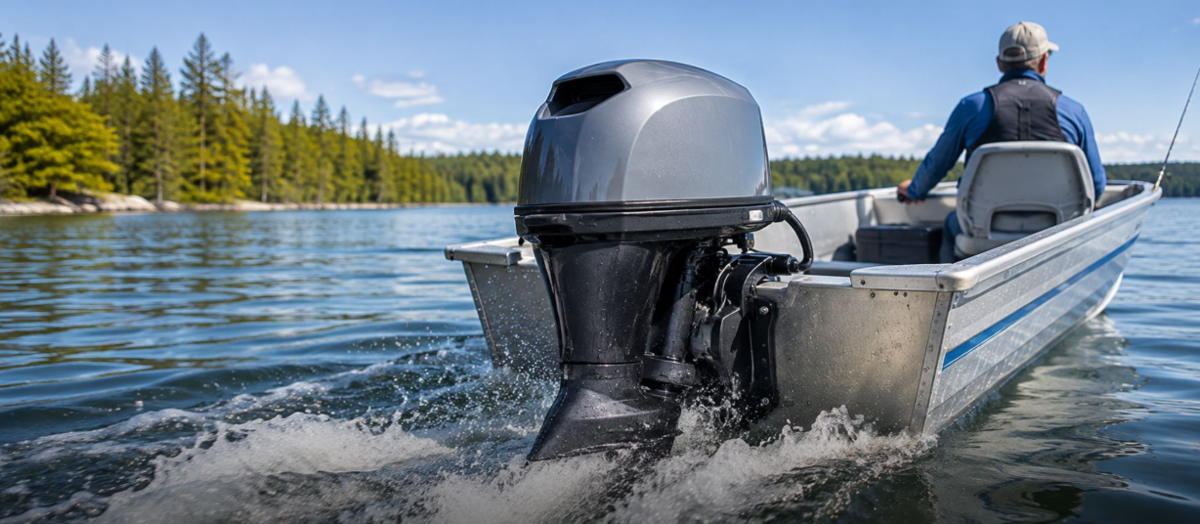
Modern 4-stroke outboards are tough. With regular oil changes, impeller replacements, and freshwater flushing, many reach 2,000–3,000 hours.
One owner on Reddit’s r/boating reported 1,700 hours on a 2020 Yamaha 250 that still “runs mint.” Another described commercial Honda 250s logging 7,000–10,000 hours. Those are outliers, but they show what disciplined maintenance can do.
How Many Hours Do Yamaha and Suzuki Outboards Last?
Both brands have strong reputations in saltwater. Expect 1,500–3,000 hours from a Yamaha outboard or a Suzuki 4-stroke under normal recreational use. Mercury 4-strokes fall in a similar range.
Brand matters less than history, however. A Suzuki that skipped its 100-hour services will age faster than one that never missed a service.
How Many Hours Does a 2-Stroke Outboard Last?
Carbureted 2-strokes usually last 1,000–1,500 hours. Direct-injection models can run longer with good care. Parts availability is shrinking for some older 2-stroke lines, so factor that into your offer.
Inboards and Sterndrives
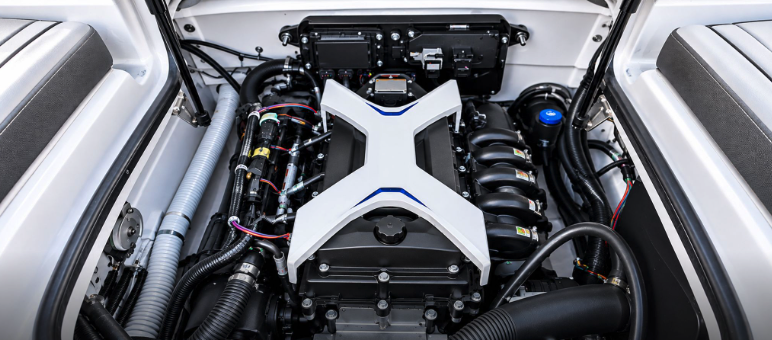
Gas inboards and I/Os are often marinized automotive V8s. Most reach 1,000–1,500 hours before needing a rebuild. Moderate-horsepower engines generally outlast high-performance setups. On an I/O, inspect the outdrive separately, including the bellows, gimbal bearing, and gear lube.
Diesel Engines
Diesels are marathon runners. Lower RPMs and heavier construction let many reach 5,000–10,000 hours before overhaul. For cruisers and sportfishing yachts, a diesel with 2,000 hours may be just entering its prime.
Why Hours Matter Less Than Maintenance
Consider a real example from a Florida yacht broker. He compared two Meridian 341 cruisers. His former 2006 boat had about 1,200 hours on carefully maintained gas inboards, and the engines were still going strong. Meanwhile, a friend’s identical boat needed a new engine at only 600 hours.
What happened? Seawater leaked from failing exhaust elbows and risers into the cylinders. That caused corrosion, lost compression, and ruined valves. Brokers and mechanics call this the most common killer of raw-water-cooled inboards, especially in warm saltwater along the Gulf and Atlantic coasts.
So when you ask how many hours is too many on a boat engine, the better question is often how many of those hours came with documented care. Here’s what that care looks like over time.
Key Maintenance Intervals That Extend Engine Life
| Maintenance Task | Typical Interval | Why It Matters |
| Oil and filter change | Every 100 hours or annually | Prevents internal wear and sludge |
| Water pump impeller | Every 1–2 years | Stops overheating |
| Freshwater flush | After every saltwater trip | Limits salt corrosion |
| Exhaust elbow/riser inspection | Every 2–5 years (inboards) | Prevents water intrusion into cylinders |
| Anode replacement | When about half consumed | Protects metal from galvanic corrosion |
| Fuel filter / water separator | Every 100 hours or annually | Protects against ethanol-related fuel issues |
Many experienced buyers would rather own a 900-hour engine with a folder of receipts than a 300-hour engine with no records.
Why Ultra-Low Hours Can Be a Red Flag
Low hours sound like a bargain. Sometimes they are. But a five-year-old boat with 20 hours raises questions.
Engines are built to run. When they sit, seals dry out, fuel varnishes, and moisture causes internal corrosion. One Reddit owner bought a 1995 motor with 1,200 hours. It needed a full rebuild because of corrosion and sitting. His older 1985 motor ran fine at 8,500 hours.
If hours look suspiciously low, ask why. Was it broken, stored for years, or repowered? Each answer changes the boat’s value.
Is 300 Hours on a Boat a Lot?
No. For most engines, 300 hours is light to moderate use. In Florida or along the Texas Gulf Coast, 300 hours might represent two to four years of regular weekend trips.
Northern boaters tend to cram their hours into short summers. As a result, ten-year-old boats from the South and the Great Lakes often show similar totals. Use this table to compare a boat’s hours against its age.
What Engine Hours Say About a Boat’s Past
| Use Profile | Typical Hours Per Year | Hours on a 10-Year-Old Boat | What It Suggests |
| Rarely used / spare boat | Under 20 | Under 200 | Possible sitting issues; inspect closely |
| Casual cruising | 30–75 | 300–750 | Normal, often well-kept |
| Active fishing / watersports | 75–150 | 750–1,500 | Used and enjoyed; check records |
| Charter / guide / commercial | 200–500+ | 2,000+ | Heavy duty; expect bigger repairs soon |
How to Evaluate a Used Boat’s Engine Before You Buy
Hours are your starting point, not your verdict. Here’s a practical process that typically takes one to three weeks from first look to closing.
Start with the paperwork: Ask for service records, repair invoices, and repower documentation. Confirm whether the hour meter is original. A replaced block resets real wear even when the meter doesn’t.
Inspect the engine compartment: Look for rust stains, water trails, oil leaks, and corroded fittings. A slow leak sometimes leaves only rust, with no visible water. On inboards, focus on manifolds, risers, and elbows.
Hire a marine surveyor: Surveys commonly run about 20–30 per foot, with engine surveys extra. Request compression tests, leak-down tests, and oil analysis. Oil samples can reveal coolant contamination or metal wear you can’t see.
Sea trial the boat: Watch for smoke at startup, rough idle, or slow acceleration. Confirm the engine reaches its rated wide-open-throttle RPM, and watch temperature and oil pressure throughout.
Budget for the future: If an engine sits near the top of its range, plan for bigger maintenance or a repower. Outboard repowers can run from about $15,000 to over $40,000, depending on horsepower. Shopping boat engines for sale or engine parts early helps you price that risk into your offer.
How Boatzon Helps You Buy With Confidence
Boatzon lets you compare engine hours, age, and price across thousands of used boats for sale. Browse regional inventory like center consoles in Texas, Grady-White boats in North Carolina, or center consoles in Georgia.
Once you find the right boat, you can apply for boat loans or engine loans for a future repower. You can also request a boat insurance quote. Lenders and insurers often weigh engine age and condition, so a clean survey can make both steps smoother.
The Bottom Line
So, how many hours is too many on a boat engine? For gas outboards, look harder past 1,500 hours. For gas inboards and sterndrives, use caution past 1,000. For diesels, 4,000+ hours deserves extra scrutiny. Yet a documented, well-maintained engine can comfortably exceed every one of those numbers.
Don’t let the hour meter decide for you. Read the records, inspect the engine, and get a professional survey. Then buy the boat with the best history, not just the lowest number.
Ready to start? Browse used boats on Boatzon, compare engine hours across listings in your state, and line up financing and insurance in one place.
FAQs
How many hours is too many on a boat engine for a gas outboard?
Most gas 4-stroke outboards last 1,500–3,000 hours. Past 1,500, review maintenance records carefully and request a compression test.
Is 300 hours on a boat engine a lot?
No. Three hundred engine hours is light use, often two to four seasons of regular weekend boating with proper maintenance.
How many hours do Yamaha outboards last before high engine hours become a concern?
Well-maintained Yamaha 4-strokes often reach 2,000–3,000 hours. Consistent servicing matters more than brand when judging high engine hours.
How many hours does a 2-stroke outboard last compared to 4-stroke engine hours?
Carbureted 2-strokes typically last 1,000–1,500 hours. Modern 4-strokes usually outlast them, especially with routine oil and impeller service.
Are low hours on a boat engine always better?
Not always. Very low engine hours may mean the boat sat unused, causing corrosion, dried seals, and fuel system problems.