
What Every New Owner Needs to Know
Buying a boat in Florida is exciting. Getting it legally on the water is the next step. Whether you bought through a dealer or found your dream boat on Boatzon, you'll need to meet Florida's boat registration requirements before you launch. Florida ties registration to titling, and the process trips up a lot of first-time owners.
This blog breaks down exactly what the state expects, from paperwork to fees to timelines, using figures straight from Florida's own regulatory agencies.
Key Takeaways
- Florida requires both a title and a registration for most powered vessels.
- The Florida Highway Safety and Motor Vehicles (FLHSMV) office handles titling and registration.
- Florida has more than 1 million registered vessels, more than any other state.
- Registration numbers must start with “FL” and be displayed correctly on the hull.
- Homemade or undocumented boats need extra proof before the FWC will approve a title.
- Boatzon helps buyers pre-qualify for financing so paperwork moves faster after purchase.
Understanding Florida Boat Registration Requirements
Florida has required boat titling since 1968. Every motorized vessel operating on Florida waters must carry a valid registration. This applies to boats bought new, used, or built at home.
The Florida boat registration requirements cover more than just the hull. They apply to personal watercraft, sailboats over 16 feet, and even canoes once a motor is attached. If your vessel touches Florida water with an engine on it, it needs papers.
Registration and titling happen through your local county tax collector’s office, acting on behalf of FLHSMV. Some owners confuse this with the Department of Motor Vehicles used for cars, but the vessel process runs on its own track.
Florida’s Boating Landscape by the Numbers
Florida leads the nation in registered vessels, and that scale is exactly why the state enforces its rules so closely. According to the Florida Fish and Wildlife Conservation Commission’s (FWC) latest Boating Accident Statistical Report, Florida now counts 1,027,742 registered vessels statewide, with an estimated one million more unregistered boats sharing the same waters.
Florida is often called the “Boating Capital of the World,” a title FWC itself uses after the state crossed one million registered recreational vessels. With that many boats on the water, the state logged 694 reportable boating accidents in a single recent year.
Personal watercraft are a meaningful part of that picture. FWC data show PWCs make up about 17% of Florida’s registered vessels, yet they accounted for roughly 23% of reportable accidents. That gap is one reason Florida pwc registration and safe operation get extra attention from law enforcement.
With that many boats sharing the same waterways, accurate registration isn’t just paperwork. It helps law enforcement identify vessels quickly during safety checks and after accidents.
Titling vs. Registration: Two Separate Steps
Florida treats titling and registration as connected but distinct steps. Titling establishes legal ownership. Registration grants permission to operate the vessel on public waters.
You cannot register a boat without a valid title, except in rare federally documented cases. If your boat is documented with the U.S. Coast Guard, the process shifts slightly, and liens get recorded through the National Vessel Documentation Center instead.
Most private buyers will go through the standard state titling path. Expect to bring the prior title, a bill of sale, and identification to your county tax collector.
Documents You’ll Need
Paperwork is where most delays happen. Gather these before your appointment:
- Proof of ownership (title, manufacturer’s statement of origin, or bill of sale)
- Florida ID or driver’s license
- Proof of sales tax payment, if purchased out of state
- Hull Identification Number (HIN) documentation
- Lien information, if the boat is financed
Buyers who purchase through Boatzon’s Florida listings typically already have clean bills of sale and dealer paperwork on hand. That alone shaves real time off the registration visit.
Registering PWCs, Sailboats, and Smaller Vessels
Florida pwc registration follows the same core rules as motorboats. Jet skis and other personal watercraft need titling, registration, and visible numbers on the hull. As the FWC data above shows, PWCs make up a disproportionate share of reported accidents relative to their share of the fleet, so accurate registration and safety compliance matter here especially. Browse current personal watercraft listings in Florida to see what’s available before you register one.
Florida sailboat registration only kicks in once the vessel crosses 16 feet in length, or if it carries an auxiliary motor. Smaller sailboats and non-motorized canoes are typically exempt, unless you plan to add propulsion later.
If you’re unsure whether your vessel qualifies, your county tax collector’s office can confirm before you show up with the wrong paperwork.
Homemade and Undocumented Boats: The Hard Cases
Owner forums and boat-builder communities are full of people stuck with a hull and no title. Florida makes this scenario genuinely difficult to resolve. Unlike some states, there’s no simple bonded-title workaround.
For homemade boats, FWC requires a Vessel Statement of Builder form plus receipts proving materials were purchased and taxed. An officer typically inspects the build, checks the hull identification number, and confirms no theft occurred before approving the title.
Builders who kept photos and receipts throughout construction report a smooth process, often finished within two to three weeks of the FWC inspection. Skipping documentation almost always means delays or a rejected application.
If you bought a used boat with only a bill of sale and no title, options narrow quickly. Florida generally won’t title it as “homemade” if it was manufactured. Your best path is tracking down the previous owner for a duplicate title.
What State of Florida Vessel Registration Costs
Florida’s registration fees are set in statute and scale with vessel length. Titling is billed separately from annual registration.
| Vessel Class (length) | Base State Registration Fee (12 months) |
| Class A-1 — under 12 ft (incl. powered canoes) | $5.50 |
| Class A-2 — 12 ft to under 16 ft | $16.25 |
| Class 1 — 16 ft to under 26 ft | $28.75 |
| Class 2 — 26 ft to under 40 ft | $78.25 |
| Class 5 — 110 ft or longer | $189.75 |
Source: Florida Statutes §328.72. County service fees, the FRVIS fee, and the Save the Manatee Trust Fund fee are added on top of these base amounts.
| Title Type | Fee |
| Electronic title | $5.25 |
| Paper title | $7.75 |
| Expedited (fast) title | $11.00 |
| Each recorded lien | +$1.00 |
Source: FLHSMV, Vessel Titling and Registrations.
County tax collectors may add small administrative charges on top of these state figures. Ask your local office for an exact quote before your visit, since amounts can shift periodically.
How Long the Process Takes
For a straightforward title transfer with complete paperwork, many owners finish at the counter in under 30 minutes. Homemade boat titling takes longer, often two to four weeks total once you add the FWC inspection and follow-up paperwork.
Busy county offices near coastal cities can mean longer waits during peak boating season. Arriving early in the day and calling ahead helps avoid unnecessary delays.
Renewing Your Registration
Florida boat registration renewal happens annually or biennially, depending on the option selected at initial registration. Renewal notices arrive by mail, but you can also renew online, by phone, or in person.
Late renewal can lead to fines and, eventually, an inability to legally operate the vessel. Set a calendar reminder well before your expiration date to avoid gaps in coverage.
Finding Your Vessel Registration Number
Lost your paperwork? A vessel registration number lookup is possible through FLHSMV’s online records or by visiting your county tax collector with identifying information about the boat.
This is also useful before buying a used vessel. A quick lookup can confirm a boat isn’t reported stolen and that its registration history matches what the seller claims.
Displaying Your Registration Numbers Correctly
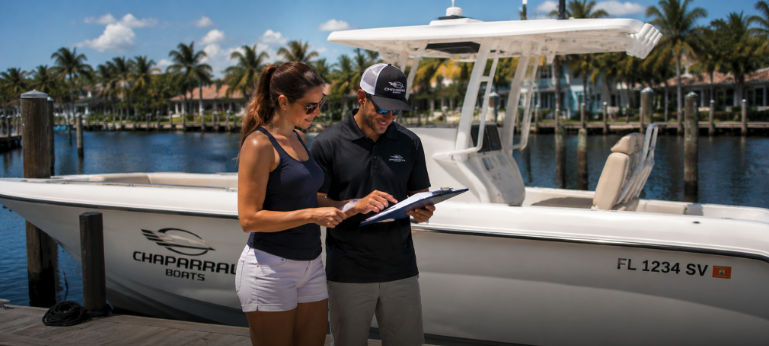
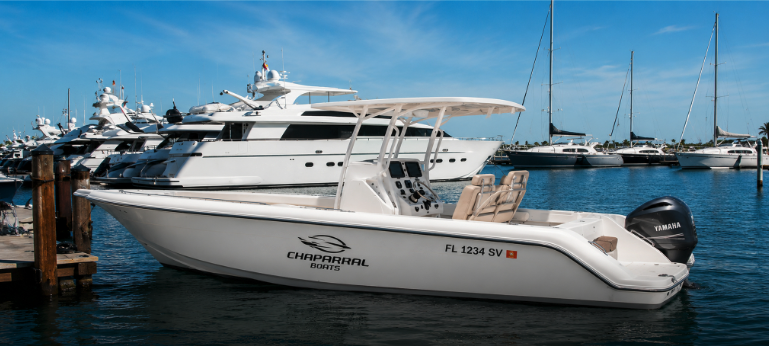
Once registered, Florida requires your assigned numbers to appear on both sides of the bow. Numbers must start with FL, use three-inch block letters, and include a visible space between the letters and digits.
A validation decal goes near the registration number as proof of current registration. Getting spacing and placement right avoids a citation during a routine water patrol check.
Buying Online and Registering Faster
Shopping through Boatzon simplifies what comes next. Unlike generic national registration pages, Boatzon pairs state-specific inventory like boats for sale in Florida with city-level markets across Florida, Texas, South Carolina, and the Great Lakes region.
That local focus matters because Florida boat registration requirements aren’t identical to any other state’s. Buyers searching by city, whether Tampa, Jacksonville, or Fort Myers, get listings from dealers who already understand the county tax collector process.
Financing pre-qualification happens before you shop, so you already know your loan terms and have a dealer-provided bill of sale ready for the county office. Incomplete paperwork is the top reason buyers make a second trip to the tax collector. Start your search on Boatzon and skip that trip.
Final Thoughts on Florida Boat Registration Requirements
Meeting Florida boat registration requirements doesn’t have to be stressful. Know which documents you need, understand whether your vessel needs a full title or falls under an exemption, and budget realistic time for homemade or undocumented boats.
Whether you’re titling a new purchase, registering a PWC, or sorting out a homemade skiff, the process rewards preparation. Start your search with Boatzon’s Florida boat listings, where transparent listings and fast financing pre-qualification help you get from purchase to registered owner with less friction.
FAQ
What documents satisfy Florida boat registration requirements for a used boat?
You’ll generally need the prior title, a signed bill of sale, a valid photo ID, and proof of sales tax paid if the boat came from out of state. Bring your Hull Identification Number documentation too, since the county tax collector will match it against the title before processing anything.
Do Florida boat registration requirements apply to kayaks and canoes?
Only if a motor is attached. Non-motorized paddle craft, racing shells, and rowing sculls are generally exempt from Florida’s titling and registration rules, but the moment you add propulsion, the standard vessel rules apply.
How much does the state of Florida vessel registration cost?
Base state fees range from about $5.50 a year for vessels under 12 feet to nearly $190 a year for vessels over 110 feet, per Florida Statutes §328.72. Titling adds $5.25 to $11, and counties may tack on small service fees.
Can I get a title for a homemade boat without original manufacturer paperwork?
Yes, but FWC requires a completed Vessel Statement of Builder form, receipts proving you purchased and taxed the materials, and typically a physical inspection. The inspection confirms the hull wasn’t stolen or altered before FWC approves the title.
Where can I do a vessel registration number lookup in Florida?
Check FLHSMV’s online vessel records or visit your county tax collector’s office with identifying details about the boat, such as the Hull Identification Number. This is also a smart step before buying a used vessel, to confirm it isn’t reported stolen.