
TL;DR: Under $50K you can get a genuinely capable family cruiser. Prioritize layout, right-sized power, and condition over flashy extras, and match the boat to your home water.
A family weekend cruiser is a boat built for spending the day, and sometimes the night, comfortably on the water with the people you like most. In the sub-$50K range, that usually means a bowrider, a deck boat, or a small cuddy cabin between roughly 20 and 28 feet, with seating for a crowd and enough versatility to swim, cruise, and maybe overnight. The budget is real but not limiting: plenty of well-kept boats in this range do everything a typical family needs, as long as you shop for the right things instead of the shiniest listing.
The trick is knowing what actually matters. Buyers new to the market tend to fixate on horsepower numbers or cosmetic upgrades, when the features that make or break family weekends are layout, condition, and a good match to your local water. Get those right and $50K stretches a long way.
Match the boat to your water first
Before you compare specific models, define where you will use the boat. The best family boats are the ones matched to a realistic use case, starting with your water: on small lakes a bowrider or pontoon may be ideal, while on large reservoirs with afternoon chop a deeper-V bowrider, deck boat, or center console is usually more comfortable. That single decision narrows the field faster than any spec sheet.
A calm, protected lake forgives almost any hull, so you can prioritize space and comfort. Bigger, rougher, or coastal water rewards a deeper V that handles chop without beating up your passengers. Buying a flat-bottomed boat for choppy water, or an overbuilt offshore hull for a small lake, is how families end up with a boat that never quite fits. Start with the water, then browse available boats on Boatzon with that hull requirement fixed in your mind, and the rest of the choices fall into place.
The layouts that work for families
Three layouts dominate this price range, and each suits a slightly different family. Knowing the strengths of each helps you shop with intent.
Bowriders
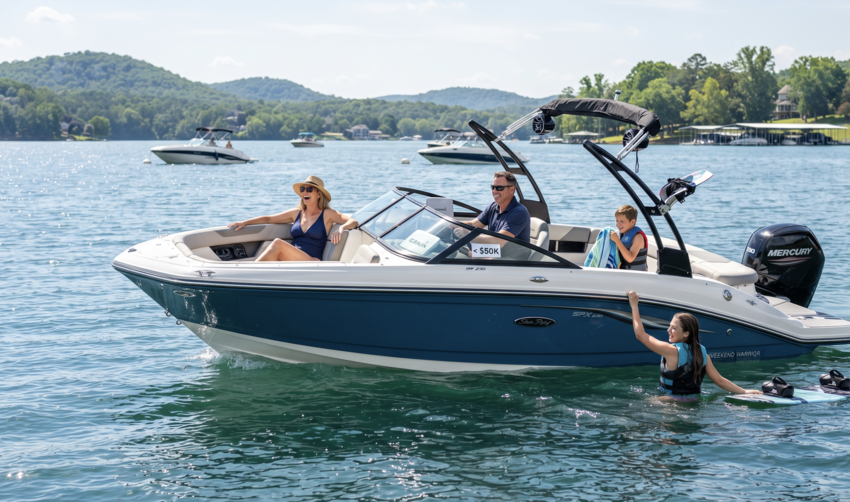
Bowriders are a top choice for families who want to cruise, relax, and enjoy watersports. The open bow adds seating and makes these boats great for larger groups, and their versatility covers swimming, tubing, and day cruising with ease. A 22 to 24 foot bowrider is one of the most flexible family boats you can buy under $50K, which is exactly why the used market is full of them.
Cuddy cabins
Cuddy cabins blend open-air fun with a small enclosed space, and they are great for day cruising and weekend adventures. Ranging from about 20 to nearly 30 feet, a cuddy typically does not have standing headroom but may include a berth, a portable head, and even a small galley. For families that want the option to escape the sun, change clothes in private, or grab an occasional overnight, that little cabin adds real value without a big jump in cost.
Deck boats
Deck boats are the go-to when entertaining tops your list. The wide, open layout seats a crowd comfortably and handles watersports well, making them a strong pick for families who host friends and want space to spread out. They give up a little sportiness compared with a bowrider but return it in usable room.
What to prioritize under $50K
With your layout and water sorted, focus your budget where it counts. The features that matter most for family weekends are rarely the ones that get top billing in a listing.
Right-sized power beats maximum power. A boat with an engine matched to its hull will be more reliable, more efficient, and cheaper to insure than one strapped with the biggest available motor. Chasing top speed usually costs you at the fuel dock and the mechanic. Seating and storage matter more than you think, since a family needs somewhere to stow life jackets, coolers, toys, and wet towels without stepping over them all day.
Condition trumps cosmetics every time. A boat with a documented service history, a sound hull, and a well-maintained engine is worth far more than a shiny one with mystery gaps in its records. Soft spots in the deck, corroded wiring, and a tired engine are expensive to fix and easy to miss if you shop on looks alone. Filter for boats with clear histories and be ready to pay a little more for one that has been cared for. The BoatUS guide to buying a used boat walks through the condition checks that separate a cared-for hull from an expensive project.
The must-check items on any used cruiser
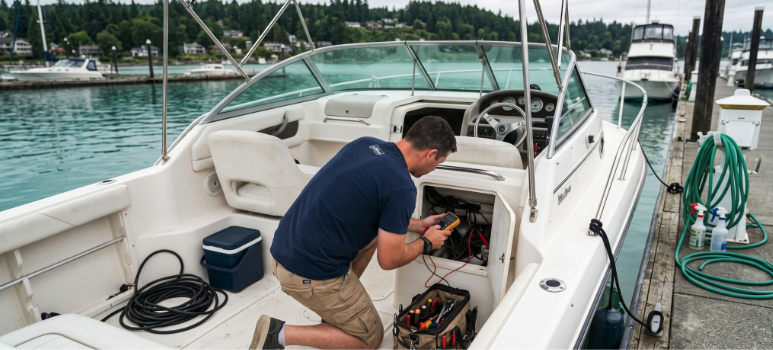
Before you fall for a listing, confirm these basics:
- Engine hours reasonable for the age, with service records to back them up
- Hull free of soft spots, cracks, and sloppy repairs
- Upholstery and canvas intact, since re-canvassing a boat is surprisingly costly
- Trailer included and roadworthy if the boat is trailerable
- Electronics and safety gear present and functional
Get a survey before you sign
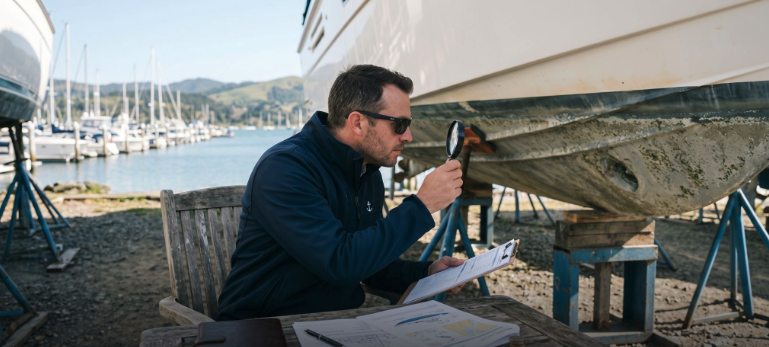
Those checks are what you can do with your own eyes. On a boat at this price, the next step is a professional survey, and it is frequently not optional: lenders and insurers routinely require one before they will finance or cover a used boat. Budget a few hundred dollars for a marine survey and treat it as cheap protection on a five-figure purchase.
A survey also pays for itself in negotiation. If the report turns up a soft transom, a tired outdrive, or wiring that needs work, you have documented grounds to ask for a price reduction or to walk away entirely. Buyers who skip this step to save a few hundred dollars are the ones who discover the expensive problems after the money has changed hands.
Budgeting for the whole picture
The purchase price is only the first number. Insurance, storage, fuel, and maintenance all follow, and they shape what you can truly afford. A boat that costs $45K to buy but sits at the top of your budget leaves no room for the running costs that come with ownership, so many families are happier buying a well-kept boat a little below their ceiling. Premiums vary by boat type, size, and use, so it pays to get a boat insurance quote on any model you are serious about rather than discovering the number after purchase.
Financing can make a stronger, better-maintained boat attainable without draining your savings, but only if the payment fits your monthly budget comfortably. Take a few minutes to run the numbers on a boat loan before you shop, so you know your real target price including a cushion for the running costs above.
Putting it together
A family weekend cruiser under $50K is very achievable if you shop deliberately. Start with your water, pick the layout that fits how your family spends the day, and then buy on condition and right-sized power rather than flash. The boat that checks those boxes will serve your family for years, while the impulse buy that skips them tends to become a project.
Give yourself time, inspect carefully, and keep the running costs in view alongside the sticker. Do that, and the sub-$50K market has plenty of boats that turn ordinary weekends into the ones your family remembers.
FAQ
What kind of boat is best for a family under $50K?
Bowriders, deck boats, and small cuddy cabins between about 20 and 28 feet are the strongest family options under $50K. Bowriders offer the most versatility, deck boats give the most space for entertaining, and cuddy cabins add a small enclosed cabin for shade, privacy, or the occasional overnight.
How many engine hours are too many on a used cruiser?
There is no single cutoff, because hours matter most in relation to the engine’s age and how well it was maintained. A higher-hour engine with complete service records can be a better buy than a low-hour engine with no history. Always weigh hours alongside documented maintenance and a mechanical inspection.
Should I prioritize horsepower when buying a family boat?
No. An engine properly matched to the hull is more reliable, more fuel-efficient, and cheaper to insure than the biggest available motor. Right-sized power serves family cruising far better than chasing top speed, which usually costs more at the fuel dock and in maintenance.
Is it better to buy at the top of my budget?
Usually not. Buying a little below your ceiling leaves room for insurance, storage, fuel, and maintenance, which are ongoing costs that a top-of-budget purchase can crowd out. A well-kept boat priced with a cushion for running costs tends to make ownership more enjoyable.
What should I inspect before buying a used family cruiser?
Check the engine hours and service records, the hull for soft spots and repairs, the condition of upholstery and canvas, the trailer if included, and that electronics and safety gear work. These items reveal a boat’s true condition far better than its cosmetic appearance.
Does a cuddy cabin have enough room to sleep on?
Most cuddy cabins have a berth suitable for occasional overnighting and a portable head, but they typically lack standing headroom. They are best thought of as a place to escape the weather, change clothes, or sleep a night or two, rather than as a full liveaboard cabin.
How do insurance costs factor into buying a family boat?
Insurance premiums vary with the boat’s type, size, value, and how you use it, so they belong in your budget from the start. Getting a quote before you buy prevents surprises and helps you compare the true cost of different boats, not just their purchase prices.