
A Florida officer waves you over mid-lake, not for speeding, but to check one thing: your card. It happens more often than new boat owners expect. Florida had over one million registered vessels in 2025, more than any other state, and law enforcement checks boater education compliance routinely, not just during holiday weekends. So before you ever put a boat in the water, it's worth settling the question everyone eventually asks: do I need a boating license in Florida?
For most people born after a specific year, the answer is yes, and Boatzon wants you squared away on that before you're squared away on a boat. As a platform where you can browse listings, compare boats, and arrange financing in one place, Boatzon sees this question come up constantly from first-time buyers.
Key Takeaways
- Florida doesn’t issue a traditional “boating license.” It issues a Boating Safety Education ID Card.
- If you were born on or after January 1, 1988, you must carry this card to operate a motorized vessel with 10 horsepower or more.
- The card is permanent. You earn it once and never renew it.
- Jet skis and personal watercraft have their own age and certification rules, separate from boats.
- You can finish an approved course and get a temporary card in a single afternoon.
The Short Answer: It Comes Down to Your Birth Date
Florida law doesn’t care how experienced you are. It cares when you were born.
If you were born on or after January 1, 1988, and you plan to operate a motorized vessel with 10 horsepower or more, you need a Florida Boating Safety Education ID Card. This card is what most people mean when they ask do I need a boating license in Florida.
If you were born before January 1, 1988, you’re exempt from the education requirement. You can legally operate a motorboat without the card. That said, the Florida Fish and Wildlife Conservation Commission still recommends the course. Many insurers offer lower premiums to boaters who complete it, regardless of age.
This birth-date cutoff catches a lot of people off guard. Someone in their late thirties assumes they’re grandfathered in, then realizes they were born a few months too late. It’s worth checking the exact date against your own before you plan a trip.
Quick Reference: Do You Need the Card?
| Situation | Card Required? |
| Born on or after Jan 1, 1988, operating 10+ HP vessel | Yes |
| Born before Jan 1, 1988 | No, but recommended |
| Operating a jet ski or PWC, any birth year | Yes, must be 14+ |
| Ages 14–17, operating independently | Yes |
| Under 14, adult with card on board | Card not required for the child |
| Vessel under 10 HP or non-motorized | No |
| Private waters only, no public access | No |
Who Actually Needs the Card
The rule applies statewide, from the Panhandle down through Tampa Bay, across Central Florida, and into the Keys. It doesn’t matter if you bought your boat in Jacksonville, Fort Lauderdale, Miami, or Orlando. The requirement travels with the boater, not the location.
A few groups fall under close scrutiny:
Personal watercraft operators, including jet skis, must be at least 14 years old and hold the card. There are no exceptions for this age minimum, even with a parent on board.
Boaters between 14 and 17 can operate independently only if they hold a valid card. Younger children can be on board, but an adult with a card must be present and in control.
Out-of-state visitors are not exempt. If you’re vacationing in Florida and renting or launching a boat, and you were born on or after January 1, 1988, you still need proof of completion. Many rental companies will ask for it before handing over the keys.
Why Florida Takes This Seriously: The Numbers Behind the Rule
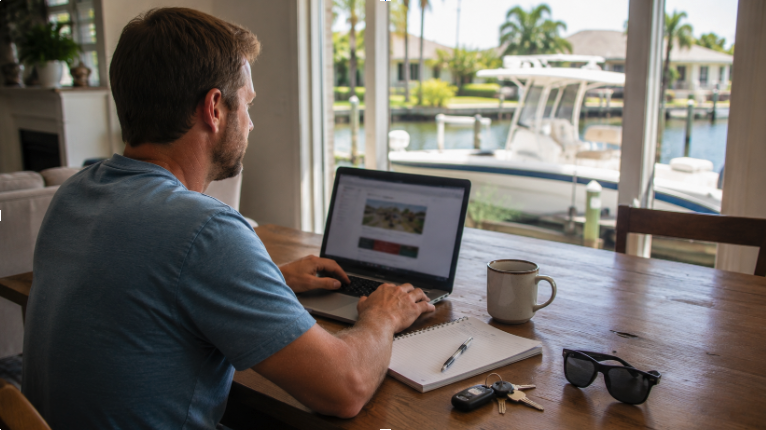
This isn’t a paperwork formality. The Florida Fish and Wildlife Conservation Commission’s own 2025 Boating Accident Statistical Report shows why the state enforces boater education so closely.
| FWC 2025 Report Finding | Figure |
| Registered vessels statewide | 1,027,742, the most in the nation |
| Reportable boating accidents | 694, up from 685 in 2024 |
| Boating fatalities | 51, from 41 separate incidents |
| Fatal victims not wearing a life jacket | 37 of 51 |
| Personal watercraft share of accidents | 23%, despite being 17% of registered vessels |
| Alcohol or drugs involved in fatalities | 14% |
A companion FWC finding, reported by public broadcaster WUSF, found that at least 65% of operators involved in fatal accidents had no formal boater training. That single figure is the clearest case for why the state ties operation rights to a completed safety course. Boater education doesn’t guarantee a safe trip. But the data shows untrained operators are disproportionately represented in the worst outcomes.
What the Card Actually Covers
The Boating Safety Education ID Card isn’t a driving test behind the wheel of a boat. It’s proof you completed a NASBLA-approved safety course.
The course covers navigation rules, right-of-way, required safety equipment, and how to respond in an emergency. Most people complete it online in a few hours, then pass a final exam.
Once you pass, you get a temporary certificate immediately. This lets you legally operate a boat while you wait for the permanent card to arrive by mail, which typically takes a few weeks. The card itself never expires, so this is genuinely a one-time step.
Timeline: From Signing Up to Legally Operating
| Step | Typical Time |
| Complete the online course | 3 to 6 hours |
| Pass the final exam | Same day |
| Receive temporary certificate | Immediately after passing |
| Permanent card arrives by mail | A few weeks |
| Card expiration | Never, it’s issued for life |
How Long Does It Take to Get a Florida Boating License
This is one of the most common follow-up questions once people learn the rule applies to them. Most approved online courses take somewhere between three and six hours to finish, depending on how quickly you move through the material.
You can start and stop as needed. Nothing requires you to finish in one sitting.
Once you pass the exam, your temporary card is available right away, often as a printable document. That’s usually enough to satisfy an on-water check by an FWC officer while your permanent card is in transit.
If you’re picking up a boat this weekend and haven’t taken the course yet, plan for at least a day to get it done properly. Rushing through it the morning of a trip isn’t realistic and isn’t safe.
Can You Operate Without It, at Least Temporarily
There’s a narrow supervised exception. If you were born on or after January 1, 1988, and don’t yet have your card, you can still operate a qualifying vessel if you’re directly supervised by someone 18 or older who does hold a valid card.
This is not a loophole for regular boating. It’s meant for short-term situations, like a first-time renter learning the ropes before completing the course themselves.
Private, non-public waters and vessels under 10 horsepower fall outside the requirement entirely. Kayaks, canoes, and small sailboats without motors aren’t affected by this rule at all.
Looking Up or Verifying Your Card
If you’ve taken a boating course before and aren’t sure whether your card is still on file, the FWC maintains records tied to your name and date of birth. You can request verification directly through their boating safety division rather than assuming you’re covered.
This matters more than people expect. Officers can ask for the physical card or valid proof during a routine stop, and “I think I took the course years ago” isn’t documentation.
Why This Matters When You’re Buying a Boat
Here’s where this connects back to the actual boat-buying process. When you find a listing on Boatzon, whether it’s a center console out of Tampa or a pontoon boat listed near Fort Lauderdale, the purchase itself doesn’t require any boating certification. Financing, paperwork, and delivery move independently of your license status.
But the moment you want to operate that boat on Florida waters, the rule kicks back in. Buyers sometimes assume ownership alone qualifies them to drive it off the lot or the dock. It doesn’t. Boatzon’s listings and financing options make getting into a boat straightforward, but the on-water legal requirement still sits with the operator, not the transaction.
This is worth planning around, especially for first-time buyers. If you know you’ll need the card, take the course before your boat arrives rather than after. It saves you from having a boat sitting at the dock while you scramble to get certified.
A Few Real-World Scenarios
Someone born in 1990 buys their first boat and assumes years of experience on friends’ boats counts for something. It doesn’t. The card is about documentation, not skill.
A family visiting Central Florida rents a pontoon boat for a lake trip. The parent, born in 1985, is exempt and can operate it. Their 22-year-old child cannot operate it solo without the card, even for a few minutes.
A longtime boater born in 1975 sells an old boat and buys a new one through an online marketplace. No card is required, but the seller still recommends the course, since it can reduce insurance costs on the new purchase.
Each of these situations comes back to the same starting point: knowing whether you personally are required to hold the card, based on your birth date and the boat you plan to run.
Getting Squared Away Before You Launch
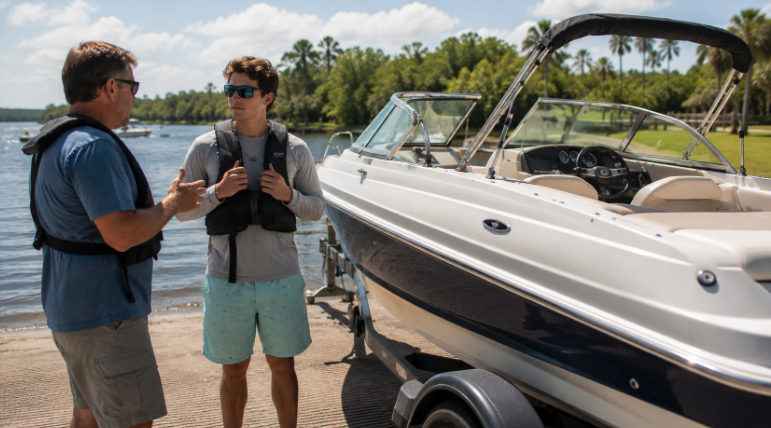
If there’s one thing to take from all this, it’s that the question do I need a boating license in Florida has a specific, checkable answer. It isn’t based on how long you’ve been boating or how confident you feel behind the wheel.
Check your birth date against the January 1, 1988 cutoff. If you fall on or after it, plan to complete an approved course before your first trip out. If you fall before it, you’re clear on the legal requirement, though the course still has real value given what the accident data shows.
Once you’ve got that squared away, the rest of the process, finding the right boat, comparing listings, and working out financing, is where a platform like Boatzon is built to help. Browse current listings, compare pricing across models, and line up financing before you ever touch the water, so the only thing left to plan is the trip itself.
New buyers across Florida, from Jacksonville down to the Keys, ask do I need a boating license in Florida before they even start shopping, and that’s the right order to do things in. Sort out the paperwork first. Then let Boatzon help you find the boat.
FAQ
Do I need a boating license in Florida if I was born before 1988?
No. If you were born before January 1, 1988, Florida law exempts you from the boater education requirement. You can legally operate a motorized vessel without the card. Taking the course is still recommended and can lower insurance costs.
How long does it take to get a boating license in Florida?
Most approved online courses take three to six hours to complete, and you can pause and resume as needed. Once you pass the exam, you get a temporary certificate immediately. Your permanent card follows by mail within a few weeks.
Is there a temporary boating license option in Florida?
Yes. After passing the course exam, you receive a printable temporary card right away. This lets you legally operate a boat while the permanent Boating Safety Education ID Card is mailed to you. It typically covers you for about 90 days.
Do I need a boating license in Florida to ride a jet ski?
Yes. Jet ski and personal watercraft operators must be at least 14 years old and hold a valid Boater Education Card. This applies regardless of the birth-date exemption that covers regular motorboats for older operators.
How do I look up my FL boater’s license if I already took the course?
Contact the FWC’s boating safety division directly with your full name and date of birth. They can verify whether a Boating Safety Education ID Card is on file for you, since the card itself never expires or needs renewal.