
A used outboard can save you thousands, but it can also become a costly lesson. At Boatzon, buyers shop used boats and boat engines for sale nationwide, from Gulf Coast bays to Great Lakes harbors.
Knowing how to inspect an outboard motor before buying is the single best way to protect that investment. Most private-sale inspections give you 30 to 60 minutes. This guide shows you how to use every one of them.
The stakes are real. NMMA's latest outboard sales report shows U.S. outboard engine sales totaled 267,000 units in 2025, down 3.9% from the prior year. Meanwhile, average retail prices climbed 3.2% to $13,081. With new motors that are expensive, more buyers turn to used outboard motors. That makes a careful inspection more valuable than ever.
Key Takeaways
- Never buy a used outboard without hearing it cold start and confirming a strong cooling stream.
- A compression test is the most revealing check; cylinders should read within roughly 10% of each other.
- Water in the lower unit oil is common, costly, and takes two minutes to detect.
- Sloppy wiring, chewed bolt heads, and excess gasket sealant often signal amateur repairs.
- Service records, a signed bill of sale, and a serial number check protect you after the handshake.
Why a Thorough Outboard Inspection Matters
An outboard isn’t just a purchase. It’s what gets you home safely. According to the U.S. Coast Guard’s 2024 boating statistics, there were 3,887 boating accidents in 2024, causing 556 deaths, 2,170 injuries, and roughly $88 million in property damage. Machinery failure ranked among the top five primary contributing factors in those incidents.
The used market is also where most buyers shop. NMMA data shows pre-owned boats made up 79.7% of total boat unit sales in 2025. Demand is concentrated in Boatzon’s busiest markets. The South Atlantic, Great Lakes, and Gulf Coast regions accounted for over 60% of outboard unit sales, with Florida and Texas leading the states.
That’s a lot of used motors changing hands. A sharp inspection separates the good ones from the lemons.
Before You Go: Fit, Parts, and Your Inspection Kit
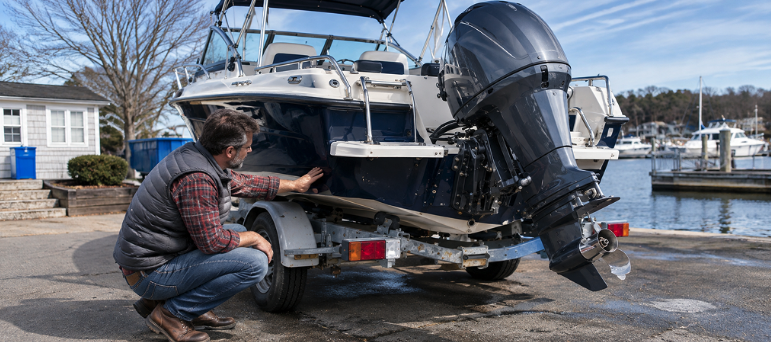
Smart inspections start at home. First, confirm the motor fits your boat. Measure from the top of your transom to the bottom of the hull. That number should match the shaft length, measured from the clamp bracket to the cavitation plate. A mismatch usually means swapping midsections, which is rarely cheap.
Next, research parts for that exact model. A seller might say it “just needs a carb kit.” If that kit is discontinued, you own a paperweight. Check prices on water pump kits, props, and cowlings. Also ask whether controls and rigging come with the motor, since older controls often won’t work with newer engines.
Finally, ask the seller not to start the motor before you arrive. Then pack the right gear.
| Tool | Approx. Cost | What It Reveals |
| Compression gauge | 25–40 | Internal engine health, ring and cylinder wear |
| Flathead screwdriver + drain pan | Under $15 | Water or metal in lower unit oil |
| Flushing muffs | About 10–20 | Lets you run the motor safely on land |
| Spark plug socket | Under $10 | Plug condition, rich or lean running |
| Spare battery + jumper cables | Varies | Starter and charging function |
| Flashlight + rags | Under $10 | Leaks, corrosion, and wiring detail |
How to Inspect an Outboard Motor Before Buying: The Exterior Walkaround
Start with a slow, careful look. This takes about 10 minutes and tells you how the motor was treated.
Check the cowling first. Cracks can mean the motor was dropped. Look at the rubber gasket at the base, too. A worn gasket lets water reach the powerhead. Be wary of fresh paint on an older motor, which can hide corrosion.
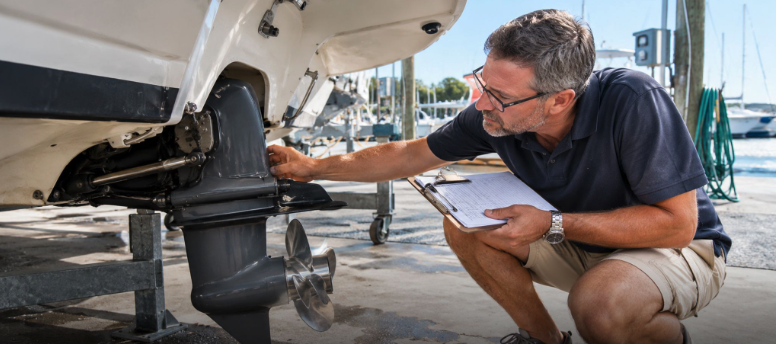
Move to the lower unit and skeg. A cracked gearcase often means water froze inside over winter. A chewed-up skeg points to repeated shallow-water runs. Inspect the cavitation plate as well. A small chip is fine, but cracks can spread.
Look closely at the prop and anodes. Pull away any fishing line wrapped behind the prop, since it can damage the shaft seal. Heavily eaten anodes on a saltwater motor, common in coastal Texas, Alabama, and Georgia, suggest skipped maintenance.
Finally, study the hardware. One experienced Reddit commenter offered a sharp tip. Skilled mechanics don’t leave chewed screw heads or globs of sealant behind. Overspray on wires and hoses can mean someone painted over a messy repair. Work the tiller, steering, throttle, and tilt-trim through their full range. Everything should move smoothly.
Check the Lower Unit Oil (Don’t Skip This)
If you remember one hands-on check, make it this one. One YouTube creator bought a “fully serviced” motor without checking it. Water poured out of the lower unit. A cracked bearing housing had let water in, and he ended up buying an entire replacement gearcase.
Crack the bottom drain screw open briefly while the top vent screw stays in. Then read what comes out.
| What You See | What It Likely Means | Your Move |
| Dark, consistent gear oil | Normal used oil | Proceed |
| Milky or cloudy oil | Water intrusion, likely a failed seal | Negotiate or walk |
| Water drains out first | Serious seal or housing failure | Walk away |
| Brand-new, clean oil | Recently changed; leaks can’t be judged | Ask for records |
| Large metal chunks on the magnet | Possible gear damage | Walk away |
A thin film of fine metal on the drain magnet is normal wear. Chunks are not. While you’re there, ask when the water pump impeller was last replaced. A specific answer usually signals a careful owner.
Under the Cowl: Reading the Powerhead
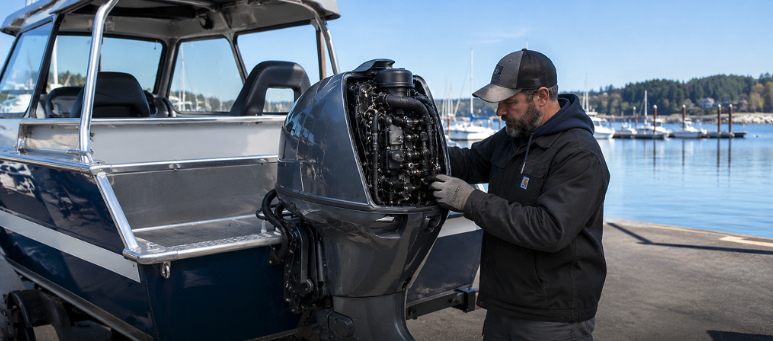
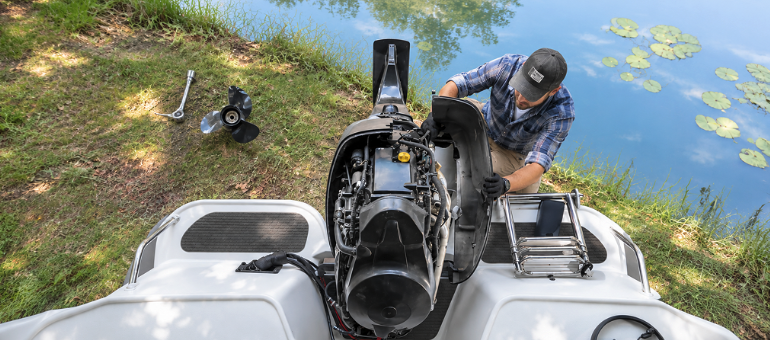
Pull the cowling and look closely. Corrosion on the block or head is a serious warning. It can mean a cooling leak or even a cracked block. Discolored paint near the cylinders suggests the motor ran hot.
Check fuel lines for cracks and dry rot. They’re cheap to replace, but rotted hoses can shed debris into the carburetor. Then study the wiring. On electric-start motors, a nest of wire nuts and random splices is a red flag. Loose grounds and corroded connectors cause frustrating no-start problems.
On four-strokes, pull the dipstick. Low oil is a deal-breaker for many experienced buyers. Milky oil suggests water contamination. Next, pull the spark plugs. Oily plugs or metal specks are bad signs. Very white plugs suggest the motor ran lean and hot.
The Compression Test and Run Test
With the plugs out, run a compression test. It takes about 10 to 15 minutes and is the most revealing check you can do. As one r/Outboards user put it, they test compression right in front of the owner. If the seller objects, they walk.
Consistency matters more than raw numbers. Readings slightly below factory spec are common on older motors. However, a big spread between cylinders signals internal damage. Then it’s time to hear the motor run. Touch the powerhead first. A warm engine may have been pre-started to hide hard cold starts.
| Check | Healthy Sign | Red Flag |
| Compression | Cylinders within about 10% | One cylinder far below the others |
| Cold start | Fires within a few pulls or seconds | Long cranking, or engine already warm |
| Telltale stream | Strong, steady “pee” stream | Weak trickle or nothing |
| Quarter throttle | Smooth, even acceleration | Missing, surging, or knocking |
| Smoke | Light on two-strokes, none on four-strokes | Heavy smoke on a four-stroke |
| Shifting | Clean engagement in all gears | Grinding or refusal to engage |
| Hot restart | Restarts quickly when warm | Struggles or won’t restart |
Remember, motors on muffs run slightly rougher due to lower exhaust backpressure. A water test on the boat is ideal. Don’t accept excuses like “it’s just a wasp nest in the telltale.” A weak cooling stream can mean overheating damage.
Paperwork, History, and Negotiation
Ask for service records, receipts, or logs. Ask about engine hours, too. Surprisingly low hours on an old motor can be a warning sign. Engines that sit for years often develop gummed carbs and dried seals.
Ask how the motor was used. A lightly loaded bass boat motor lives an easier life than one that pulled tubes all summer. Every flaw you uncover becomes negotiating leverage. Before paying, get a signed bill of sale with the serial number, model, price, and both signatures. Run the serial number to confirm it isn’t stolen. Many states require this paperwork for registration.
When to Call a Professional
For higher-dollar motors, a marine mechanic is worth the fee. Expect roughly $100 to $300 for an engine inspection, depending on your area. Modern four-strokes from Yamaha, Mercury, and Suzuki also store diagnostic data, including hours by RPM range. A tech with the right scan tool can read it. Organizations like BoatUS also publish helpful safety and ownership resources.
Shopping Smarter With Boatzon
Inspection is only half the battle. Finding the right motor and paying for it wisely matter just as much. On Boatzon, you can compare used outboard motors and boat engines before driving anywhere. You can also browse listings by location, like pontoons in Texas, center consoles in Georgia, Carolina Skiffs in North Carolina, or Lund boats in Michigan. Or search boats by state to find used outboard motors for sale near you.
Ready to buy? Boatzon’s boat engine loans offer pre-qualification with no impact to your credit score. Run the numbers first with the boat loan calculator. Then compare marine insurance quotes so coverage is ready at closing. For more guidance, explore Boatzon’s boat buying tips.
Final Thoughts
Learning how to inspect an outboard motor before buying turns a gamble into an informed decision. Confirm fit, inspect the exterior, drain the gear oil, test compression, and hear it run cold. Walk away from any seller who resists. If the motor passes, negotiate on what you found and document the sale.
Put this guide on how to inspect an outboard motor before buying to work today. Browse used outboards on Boatzon, pre-qualify for an engine loan, and shop with total confidence.
FAQs
What is the most important step in how to inspect an outboard motor before buying?
A compression test. Consistent readings across all cylinders reveal internal health better than appearance, paint, or any seller promise.
How to inspect an outboard motor before buying if the seller refuses to run it?
Treat it as a major red flag. Test compression, check gear oil, and price it like a non-running motor.
What does Reddit recommend for how to inspect an outboard motor before buying?
r/Outboards users suggest compression testing, spotting chewed bolts, reviewing maintenance records, and confirming a quick hot restart before paying.
Where can I find used outboard motors for sale near me?
Boatzon lists used boat engines nationwide. Search by state, then follow a full inspection checklist before buying any outboard.
What are red flags when inspecting a used outboard motor before buying?
Watch for water in gear oil, weak cooling streams, uneven compression, block corrosion, cracked gearcases, and messy spliced wiring.