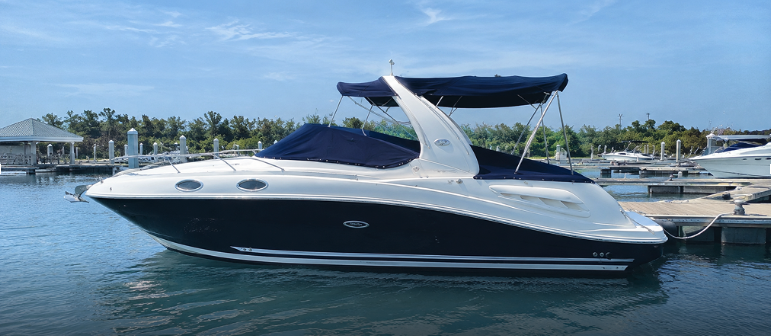

Buying a boat should feel exciting, not stressful. At Boatzon, we help buyers across Florida, Texas, California, the Carolinas, and other active markets find, finance, and insure the right boat.
One question comes up more than any other: what to look for when buying a used boat. The answer matters because a used boat can save you thousands, or quietly cost you thousands.
This blog walks you through the checks that experienced owners, mechanics, and surveyors actually use. You'll learn where problems hide, what they cost, and how to turn your findings into a fair price.
Key Takeaways
- Research the brand and model year first, including whether it uses wood or composite construction.
- The transom, stringers, and floor are the structural core. Rot here can cost $4,000 to $8,000 or more.
- Confirm a clean title for the boat and, where required, trailer registration.
- Insist on a sea trial of at least 15 to 20 minutes. A seller who refuses is a red flag.
- Use every flaw as negotiating leverage, and hire a marine surveyor for larger or older boats.
Why a Careful Inspection Matters
Mechanical conditions aren’t just about money. It’s about safety. The U.S. Coast Guard’s latest annual report lists operator inattention, improper lookout, operator inexperience, machinery failure and navigation rules as the top five primary contributing factors in incidents. A thorough pre-purchase inspection directly addresses one of them.
The stakes are also high in the states where boating is busiest. According to the National Safe Boating Council’s summary of Coast Guard data, Florida led the nation with 632 accidents, followed by California with 377 and Texas with 174. And Florida is the U.S. state with the highest number of registered recreational boating vessels. More boats means more used inventory, and more variation in condition.
Nationwide, the 11,674,073 recreational vessels registered by the states in 2024 represent a 1.1% increase from the prior year. You can review the full 2024 Recreational Boating Statistics report from the U.S. Coast Guard, or the Coast Guard’s official press release.
Start With Research, Not the Walkaround
Your inspection begins at home. Every builder has strengths and known weak spots. Owner forums and brand-specific Facebook groups are gold mines. Owners openly discuss which years had fuel tank issues, wet transoms, or faulty gauges.
Find out how the boat was built. Many builders moved from wood-cored transoms to composite during the 1990s, though timing varies by brand. A wood transom isn’t automatically bad. It lasts a long time if it stays dry. It just needs closer inspection.
Next, study the market. A Florida boat restorer we reviewed put it simply: look at dozens of boats before you trust any price. Browsing used boats on Boatzon by make, type, and location gives you a realistic range. Popular searches include Sea Ray boats, Boston Whaler, and Grady-White.
Paperwork Comes First
Before you drive anywhere, ask about the title. This is the closest thing to a universal rule among experienced buyers. No title? Walk away. Retrieving a title from another state can take weeks. Buying without one can leave you with a boat you can’t legally register.
Rules differ by state, so check with your agency before you buy. Ask for maintenance records, too. A folder of receipts tells you more about an owner than any sales pitch.
| Document | Why It Matters | Red Flag |
| Boat title | Proves legal ownership | Seller “will mail it later” |
| Trailer title or registration | Required in many states, including Florida | No paperwork for the trailer |
| HIN (hull ID number) | Confirms year and builder | HIN doesn’t match title |
| Maintenance records | Shows how the engine was cared for | No records on a high-hour motor |
| Lien release | Confirms no lender still owns it | Outstanding loan with no payoff plan |
Watch for marketplace scams, too. If a seller wants a deposit just to see the boat, move on.
What to Look for When Buying a Used Boat on the Trailer
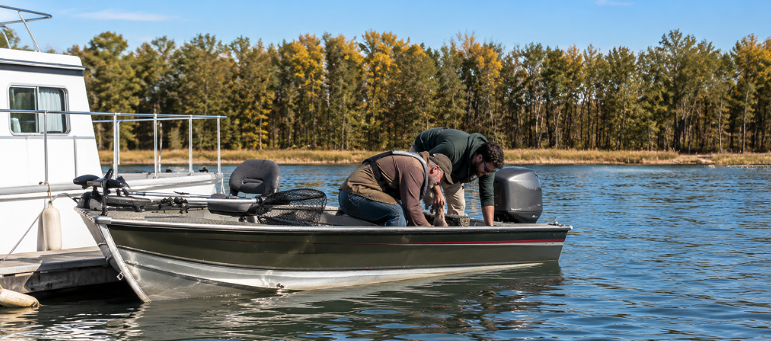
Here’s a trick from a seasoned bass boat owner. Arrive before the seller. If the boat is already in the water and running when you get there, be cautious. A pre-warmed engine can hide hard starts.
When the seller pulls in, touch the wheel bearings right away. They should feel warm, not hot. One buyer learned this the hard way when a bad bearing caught fire on a 16-hour trip home.
Then walk the whole trailer. Light surface rust is normal. Flaking rust on axles, springs, or bunk brackets is not. Check tire tread, cracking, and uneven wear. Test the winch, jack, and lights. In salty coastal areas like Tampa, Galveston, or Wilmington, trailers corrode faster. If the trailer is too far gone, you can browse boat trailers for sale or explore trailer loans.
Inspect the Hull Before It Gets Wet
Crawl under the boat before the sea trial. Once it’s launched, everything will be dripping and hard to read.
Small scratches on the bottom are normal, especially in lakes with standing timber or shallow sandbars. Damage that cuts through the gelcoat into exposed fiberglass is not. Exposed glass below the waterline can soak up water over time.
Look along the chines and keel for patches, dents, or mismatched gelcoat. Fresh patches aren’t always bad, but ask what happened. Along the rub rail, spider cracks often signal a hard hit against a dock or piling.
Check every through-hull fitting. Old plastic fittings turn brittle and can crack. Faded gelcoat is mostly cosmetic, but it lowers value and may need buffing.
The Transom: The Most Important Check
If one area answers what to look for when buying a used boat, it’s the transom. It carries the motor’s weight and absorbs enormous force underway. Every hole drilled for transducers, ladders, or tow eyes is a potential path for water.
The simplest test is tapping. Use a small mallet or your knuckles. A healthy transom gives a sharp, consistent “ping.” A dull “thud” suggests delamination or rot. Move across the whole surface and listen for changes.
Check the motor mount bolts and washers. If they’re sinking into the fiberglass, the core behind them may be soft. Pull gently on the lower unit. The transom shouldn’t flex.
A good sound isn’t a guarantee, though. A transom can be wet without being rotten yet. A moisture meter or professional survey is the only way to know for sure.
Stringers, Floors, and Hatches
Inside, open the bilge with a flashlight. Look at the stringers, the long supports that run along the hull. Tap them like the transom. On wood stringers, check the limber holes. If they aren’t sealed with fiberglass, water can wick in. Wood that crumbles into powder is rotten.
A dirty, oily bilge is a warning sign. It often points to leaks, either water coming in or fluids going out. Sniff for fuel. A strong gas smell could mean a leaking line, filter, or tank.
Now walk the floor. Put your feet together and press into every corner and around screwed-in seats or consoles. Soft spots usually start at screw holes where sealant failed. Step on every hatch lid and open each compartment.
Suggested image alt text: “Buyer checking the floor for soft spots while learning what to look for when buying a used boat”
Engine and Mechanical Systems
The motor is the heart of the boat. Ask for engine hours. Recreational boaters average roughly 100 hours a year. But low hours aren’t always good news. Engines that sit for years often develop more problems than ones run regularly.
Inspect the propeller for dings and the lower unit for missing chunks. Pull the lower unit drain plug if the seller allows it. Milky oil means water intrusion. Metal flakes signal gear wear. On sterndrive boats, check the bellows and gear oil color.
Ask a mechanic to run a compression test. As a general rule, cylinders should read within about 10% of each other. Look for oil leaks around the powerhead and trim system. Steering should feel smooth lock to lock.
If the motor is beyond saving, it may still be a good deal. You can compare boat engines for sale, including Yamaha, Mercury, and Suzuki, and look into engine loans for a repower.
Electrical, Fuel, and Electronics
Flip every switch with the seller present. Test bilge pumps, livewell pumps, navigation lights, and gauges. Power up the GPS, fish finders, and trolling motor.
Look behind the console. Neat, heat-shrunk, labeled connections are a good sign. A tangled “rat’s nest” is a problem you’ll inherit. Check battery age and terminals for corrosion. Inspect the fuel tank area for corrosion, pooled water, or fuel odor.
Upgrades add value, but rarely dollar for dollar. Don’t overpay for accessories you don’t need.
Common Repair Costs to Price Into Your Offer
Every issue you find is leverage. These ranges come from the buyers, restorers, and mechanics whose walkthroughs we reviewed. Actual quotes vary by region, boat size, and shop.
| Issue Found | Typical Repair Range | Deal Impact |
| Transom rot or replacement | 4,000–8,000+ | Often a deal breaker |
| Full rewiring | ~$1,500+ | Major negotiating point |
| Fuel tank replacement | ~$2,000 installed | Major negotiating point |
| Dual trailer axle replacement | ~400–600+ | Moderate |
| Soft hatch or cover rebuild | Under ~$200 DIY | Minor |
| Marine survey | Several hundred to $1,500+ | Worth it on larger boats |
The Sea Trial: Never Skip It
Every expert source agrees here. Run the boat in real water. Muffs on a hose won’t tell you the full story.
After launch, watch the bilge for several minutes. Then start the engine. Listen for knocking, ticking, or sputtering. Run on plane for at least 15 to 20 minutes to confirm it doesn’t overheat.
Throttle up and see how quickly it planes. Check that it reaches rated RPM. Feel for vibration in the wheel or deck, which can point to a bent prop. Test the trim underway. On sterndrives, listen for a growling gimbal bearing when turning.
| Sea Trial Check | Good Sign | Warning Sign |
| Cold start | Fires quickly, idles smoothly | Hard start, sputtering |
| Getting on plane | Quick and level | Bow stays high, sluggish |
| Top RPM | Reaches rated range | Falls short |
| Steering | Smooth both ways | Sticking, slop, grinding |
| Bilge after run | Dry or nearly dry | Water steadily rising |
If a seller won’t allow a sea trial, treat it as a red flag.
Survey, Finance, Insure, and Close
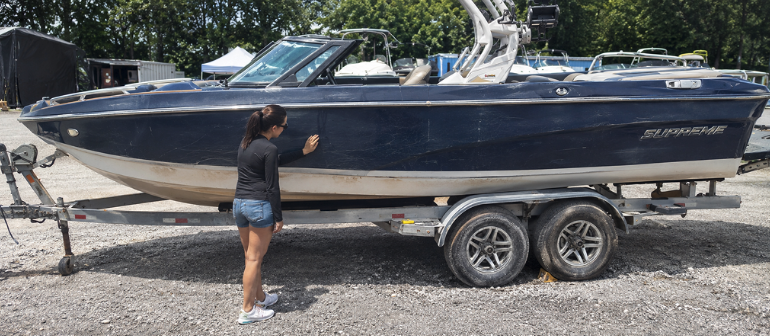
A marine surveyor is worth it for larger, older, or higher-value boats. Lenders and insurers often require one anyway. Think of your own inspection as a screen before you pay a pro.
Then plan the full cost of ownership. One Reddit boater suggested a smart buffer: with a $15,000 budget, shop boats closer to $10,000. Registration, safety gear, and early repairs add up fast. Before you commit, compare boat loan options and request a boat insurance quote on Boatzon. That way you know your true monthly cost.
Safety gear deserves a line in that budget. In Coast Guard data, where cause of death was known, 87% of drowning victims in recreational boating accidents were not wearing a life jacket in 2024. Texas buyers can also review the Texas Parks and Wildlife boating incident report for local context. The National Safe Boating Council offers a helpful facts summary too.
Finally, complete the title transfer properly. Many buyers prefer finishing paperwork in person at their state titling office.
Conclusion: Buy With Clear Eyes
Knowing what to look for when buying a used boat turns a risky purchase into a smart one. Check the paperwork, trailer, hull, transom, floors, engine, and electronics. Then prove it all on the water. Stay objective, because emotion is how buyers overpay.
Ready to put this guide to work? Browse listings like Texas pontoon boats, California Sea Ray boats, or North Carolina Grady-White boats on Boatzon. Now that you know what to look for when buying a used boat, your next boat can be the right one.
FAQs
What should I look for when buying a used boat first?
Start with the title, maintenance records, and transom. Structural rot and missing paperwork are the costliest problems when buying a used boat.
What to check on a boat before buying it?
Check the hull, transom, stringers, floor, compression, lower unit oil, wiring, fuel tank, trailer bearings, and complete a full sea trial.
Is a marine survey necessary when buying a used boat?
For older, larger, or financed boats, yes. A survey can reveal hidden rot and engine issues that a casual walkaround easily misses.
How many hours is too many on a used boat engine?
It depends on maintenance. Around 100 hours yearly is typical. Well-kept high-hour engines often beat low-hour engines that sat unused for years.
What to look for when buying a used boat in Florida or Texas?
Look closely for saltwater corrosion on trailers, through-hulls, and wiring. Confirm the boat title and trailer registration under your state’s rules.