
Compare real pontoon configurations, transaction items, and Florida ownership needs so you can find a boat that fits your family and complete budget.
A Florida family may compare two pontoon listings for weekend cruising and find that one includes an engine package while the other excludes a trailer, preparation, title, or registration. So, how much is a pontoon boat? Without a verified live statewide dataset, the responsible answer comes from comparing like-for-like listings and everything included in the transaction — not from quoting a single number.
How much does a pontoon boat cost ultimately depends on condition, length, engine, and what the seller has already included. This blog uses Boatzon's live Florida pontoon inventory to show how that comparison actually works.
Key Takeaways
- There’s no single honest price figure for Florida, compare matched listings instead of a statewide average.
- Match condition, length, model year, engine package, tube design, equipment, and trailer inclusion before comparing price.
- Ask for an out-the-door breakdown that itemizes applicable taxes, title, registration, preparation, and other transaction fees.
- Pontoon weight (roughly 1,000–8,000+ lbs dry depending on length, tube count, and materials, averaging around 2,200 lbs) affects towing, trailer choice, and insurance, factoring it in alongside price.
- Budget beyond the purchase price for insurance, storage, maintenance, fuel, trailer needs, and saltwater care.
- Compare actual inventory, then pre-qualify with no impact to your credit score.
How Much Is a Pontoon Boat in Florida?
There is no responsible single-number answer for Florida without a verified current statewide dataset. A parent who needs family seating and enough power for tubing must first match the engine, trailer, condition, and equipment across both listings before comparing sticker prices.
A pontoon is a boat whose deck is supported by cylindrical tubes. The displayed price is the advertised figure, while the out-the-door cost includes the applicable transaction items and equipment needed to complete the purchase.
| Shopper profile | Configuration to compare | Main cost drivers | Verify in displayed price |
| Family cruising | Seating, shade, storage | Condition, length, model year, engine | Engine, trailer, preparation, paperwork |
| Fishing | Fishing layout and electronics | Equipment, engine, tube design | Electronics, fishing equipment, trailer |
| Watersports | Suitable layout and engine package | Engine, tube design, options | Exact engine, equipment, seller-added items |
The cheapest headline price is not the cheapest boat if essential equipment or immediate repairs sit outside that number. Check condition, model year, length, brand and model, engine, tube design, trailer, and included fees. You can compare a compact Florida pontoon listing on Boatzon and inspect its specific configuration rather than treating it as a statewide benchmark.
New vs. Used Pontoon Boats
Choose new when warranty certainty and current features matter more. Consider used when your family accepts a deeper inspection and possible repair risk in exchange for a potentially lower asking price. This new-versus-used tradeoff is one Boatzon covers in more depth in its new vs. used pontoon boat comparison.
| Decision point | New | Used |
| Purchase tradeoff | Current configuration | Potentially lower asking price |
| Inspection | Confirm specifications and delivery condition | Review the boat, engine, equipment, and trailer |
| Warranty | Verify written terms for the exact model | Confirm whether any coverage transfers |
| History | Confirm included equipment | Check engine hours and maintenance records |
| Repair tolerance | Plan routine ownership needs | Budget for upholstery, flooring, tubes, electronics, steering, engine, or trailer work |
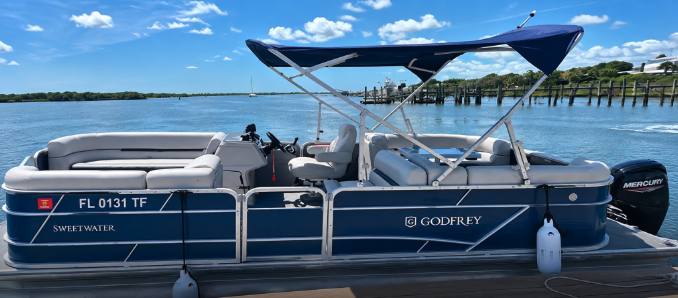
A lower displayed price does not automatically create a lower real cost. A family considering a used listing should compare needed work and included equipment before choosing it over a new boat. Boatzon makes that comparison practical by presenting new and used listing details in one marketplace. Inspect this used Florida pontoon listing as an example of a boat to evaluate, not a market benchmark.
How Length Changes Pontoon Cost
A 20-foot label cannot reveal whether the boat, engine, trailer, and storage plan fit your family. Compare condition, model year, engine, tube design, and included equipment, the same discipline applies whether you’re looking at a 25 ft pontoon boat for sale, a 30 ft pontoon boat for sale, or a 40 foot pontoon boat for sale.
| Size category | Use to evaluate | Configuration questions |
| Compact | Smaller-group use and available storage | Does the layout meet seating and storage needs? |
| Around 20–25 feet | Family cruising, fishing, or watersports plan | Which engine, tube design, and equipment are included? |
| Around 30 feet | Larger group seating, shade, storage, activity mix | Does the complete package fit storage and towing plans? |
| 40 feet and up | Additional deck space and equipment needs | What engine package, trailer, and storage arrangement are required? |
Length affects more than deck space. It also affects how much a pontoon boat weighs, which in turn shapes engine selection, storage planning, trailer capacity, and the complete budget. Measure the available storage area and confirm trailer fit before choosing a length. If a boat lacks a suitable trailer, compare boat trailers for sale on Boatzon separately. Listing-level dimensions and configuration details help narrow the field without treating one boat as representative of Florida.
How Much Do Pontoon Boats Weigh?
Weight is easy to overlook when shoppers focus only on the sticker price, but it directly affects what you can tow, what engine you need, and what your insurer will ask about. Pontoon weight is not a single figure, it depends on:
- Length and tube count: A compact two-tube pontoon weighs less than a longer three-tube tritoon with the same deck length.
- Construction materials: Aluminum tubes, deck framing, and flooring choices all change the dry weight.
- Engine and equipment: A larger outboard, full fuel tank, generator, or added electronics adds weight beyond the base hull.
- Passenger and gear capacity: The boat’s rated capacity (listed on its capacity plate) reflects maximum weight, not typical loaded weight.
As a rough guide across the market, average dry weight (boat and motor, no fuel, gear, or passengers) sits around 2,200 lbs, but the real spread is wide. Compact pontoons in the roughly 12–19 ft range often run 1,000–2,000 lbs dry; most 20–25 ft family pontoons fall between about 1,900–3,500 lbs dry; and larger tritoon or luxury models can reach 5,000–8,000+ lbs dry.
A common manufacturer rule of thumb is roughly 100–120 lbs of dry weight per foot of length, though tube count and construction materials shift that number. Loaded (“wet”) weight, with a full fuel tank, passengers, and gear typically runs 20–30% higher than dry weight, and a trailer adds roughly another 1,000–1,500 lbs to what you’re actually towing.
Always confirm the exact dry weight, wet weight, and rated capacity on the manufacturer’s specification sheet or hull ID plate rather than estimating from length alone; this number affects your tow vehicle’s rating, your trailer’s capacity, and your insurance quote.
How Much Is a 2026 Pontoon Boat?
A 2026 pontoon has no single useful figure because base MSRP, configuration, engine package, factory options, advertised price, and out-of-the-door amount can differ. Two listings with the same model name may not represent the same financial package.
MSRP is the manufacturer’s suggested retail price before the buyer confirms the configured package and transaction details. Verify the exact engine, trailer, destination or freight, preparation, and selected options in writing, then inspect live model-level inventory instead of relying on the model year alone.
What Makes One Pontoon Cost More?
Place two listings side by side and circle every unmatched specification before discussing price. A fair comparison matches the following items:
- New or used condition, model year, brand, and model
- Length and two-tube or three-tube design
- Engine horsepower and complete engine package
- Electronics and fishing equipment
- Seating, flooring, shade, and storage features
- Trailer inclusion and condition
- Seller-added equipment and transaction items
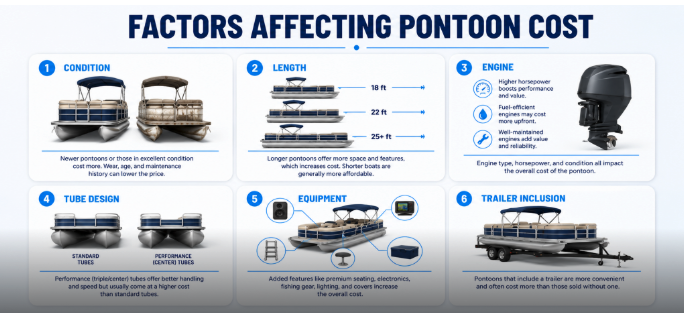
Functional differences affect how the boat serves its intended activity. Cosmetic preferences affect appearance or comfort but may not solve a practical need. A three-tube boat and a two-tube boat of the same length are not matched products, nor are two boats with different engine packages.
A low hull or base price may not represent a comparable engine-equipped package. Normalize the listings by matching condition, length, tube design, engine, trailer, and included transaction items.
If repowering is part of the plan, inspect boat engines for sale on Boatzon as a separate budget item. Structured listing details help compare actual boats instead of mismatched headlines.
Florida Costs Beyond the Boat Price
A Florida buyer may have room for the boat payment but not yet have budgeted for registration, insurance, storage, trailer needs, or saltwater care. The complete plan should address:
- Applicable taxes, without assuming a rate
- Title and registration
- Marine insurance
- Storage and fuel
- Routine maintenance
- Trailer purchase, upkeep, and storage where relevant
- Saltwater-corrosion prevention for coastal use
Out-the-door price means the estimated total required to complete the purchase after applicable transaction items and included equipment are considered. As of August 2026, FLHSMV lists title fees of $5.25 for an electronic title and $7.75 for a paper title, plus a $28.75 standard registration fee for a Class 1 vessel from 16 to less than 26 feet. These are government fee-schedule items, not a boat price or complete purchase total.
Ownership costs continue after closing. Coastal storage, saltwater exposure, and year-round use can change the maintenance plan. Boatzon lets shoppers compare marine insurance options for Florida alongside the boat purchase, including quotes from multiple marine insurance companies, and its guide on types of boat insurance policies breaks down how agreed-value and actual-cash-value coverage differ.
Pontoon vs. Tritoon, Deck Boat, or Bowrider
Relaxed family cruising may point toward one configuration, while heavier watersports or more demanding water conditions may change the engine and tube-design requirements. No boat type is always cheaper because length, engine, condition, layout, water type, and intended use must match.
A tritoon is a pontoon-style boat with three tubes rather than two.
| Boat type | Family-use strength | Compare | Cost question |
| Pontoon | Relaxed cruising and flexible layouts | Tube design, layout, engine | What does the complete package include? |
| Tritoon | Use requiring a three-tube configuration | Engine, layout, intended water | Which equipment differs from the pontoon? |
| Deck boat | Family activity mix | Layout, engine, storage | Are the comparable boats similarly equipped? |
| Bowrider | Seating and activity plan | Condition, engine, layout | Does it meet the same family use case? |
Consider Florida lakes, protected Intracoastal cruising, coastal conditions, and watersports before selecting a type. Choose the use case first, then compare matched inventory. Inspect an actual Florida pontoon configuration without generalizing its price to the wider market.
Where to Find Pontoon Boats for Sale
Shoppers who ask how much is a pontoon boat for sale near them usually mean one of a few specific searches:
- 40 foot pontoon boat for sale, larger, higher-capacity models built for bigger groups; expect a heavier hull, larger engine package, and higher purchase and storage costs.
- 30 ft pontoon boat for sale, a common mid-to-large family size; compare tube count, engine, and equipment closely since this length spans a wide price range.
- 25 ft pontoon boat for sale, a popular family-cruising size; verify whether the trailer, bimini top, and electronics are included in the displayed price.
- Used pontoon boats for sale under $5,000, typically older, smaller, or higher-hour boats that may need engine, upholstery, flooring, or trailer work; budget for inspection and likely repairs before assuming this is the final cost.
Regardless of length or budget tier, the same comparison discipline applies: match condition, engine, tube design, equipment, and trailer inclusion before comparing the sticker price.
How Much Is a Pontoon Boat Rental?
Renting is a different cost question than buying, but shoppers weighing both often compare rental and ownership paths before deciding. Rental pricing typically depends on the rental duration, boat size and age, engine size, location, season, and whether a captain is included, so a single statewide rental figure is just as unreliable as a single purchase figure.
If you’re weighing rental against ownership, compare your expected annual usage, storage situation, and financing options against a season or year of rental costs before committing either way.
Budget Before You Choose a Pontoon
The family that found the right layout still needs to confirm that the complete boat, paperwork, insurance, and storage plan fit. Set the budget before becoming attached to a listing.
- Set an all-in purchase and ownership budget.
- Compare real inventory with matched configurations.
- Identify a down payment that works for your finances.
- Estimate the amount to finance.
- Review term, rate, and fee disclosures.
- Compare total borrowing cost with monthly affordability.
- Preserve room for insurance, storage, maintenance, and trailer needs.
Pre-qualification is an early financing step, not final loan approval. Monthly affordability reflects the financed amount, term, rate, down payment, taxes, and fees. The payment is only one line in the family boat budget.
Shoppers can pre-qualify with Boatzon with no impact to their credit, helping them compare inventory within a working budget before selecting a boat. Buyers can also review boat-loan options or run numbers through the boat loan calculator without assuming a rate, payment, or outcome.
Do I Need a License to Drive a Pontoon Boat in Florida?
As of August 2026, FWC states that a person born on or after January 1, 1988, who operates a boat in Florida waters with an engine of 10 horsepower or more must complete an approved boating safety course and obtain a Florida Boating Safety Education ID Card.
FWC states that the education card is not a boating license. Operator education is also separate from vessel title and registration. Review the current Florida boating regulations and exemptions before operating because the rules can change. Resolving operator and paperwork requirements before selecting a boat reduces purchase uncertainty.
How Boatzon Helps You Compare the Complete Purchase
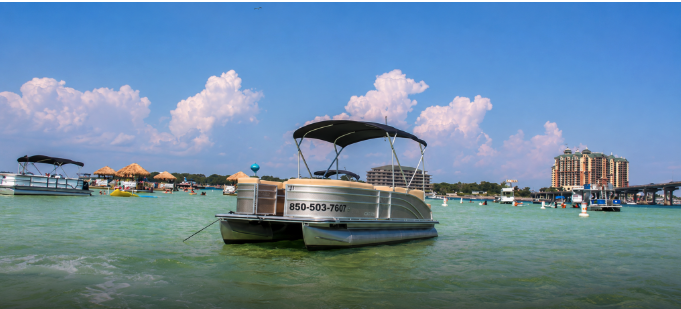
Moving from a vague statewide average to a specific boat means comparing its configuration, financing path, and insurance needs. Boatzon operates an online digital marketplace, backed by MarineMax, where shoppers can shop, finance, insure, and buy boats. Shoppers can compare actual pontoon inventory and quotes from multiple marine insurance companies, then pre-qualify without an impact to their credit score. This keeps the decision focused on the boat and complete budget rather than an unsupported statewide average.
FAQ
How much is a pontoon boat?
There’s no single reliable number without a verified live dataset. Compare matched listings, same condition, length, model year, engine, tube design, equipment, and trailer inclusion, and request an out-the-door breakdown before comparing price.
How much does a pontoon boat cost new versus used?
New pontoons carry warranty certainty and current features but a higher starting price. Used pontoons can offer a lower asking price but require closer inspection of engine hours, equipment, and maintenance history. Compare needed repairs against the price difference before deciding.
How much do pontoon boats weigh?
Average dry weight (boat and motor, no fuel or gear) is around 2,200 lbs, but the range runs from roughly 1,000–2,000 lbs for compact 12–19 ft models to 1,900–3,500 lbs for most 20–25 ft family pontoons and 5,000–8,000+ lbs for large tritoon or luxury models. Loaded (“wet”) weight typically runs 20–30% higher, and a trailer adds another 1,000–1,500 lbs. Confirm the exact figures on the manufacturer’s spec sheet or hull ID plate before matching a tow vehicle or trailer.
How much is a pontoon boat used?
Used pricing depends on age, engine hours, condition, and included equipment rather than a single average. A used listing can be a lower real cost or a higher one once needed repairs and missing equipment are factored in, compare it against a similarly configured new or newer listing.
Are there used pontoon boats for sale under $5,000?
Listings in this range exist but are typically older, smaller, or higher-hour boats that may need engine, trailer, upholstery, or flooring work. Budget for an inspection and likely repair costs before treating the listed price as the final cost.
What’s the average cost of a 20 ft pontoon boat, or a 25, 30, or 40 ft pontoon boat for sale?
A trustworthy current Florida average requires a verified live dataset, so compare listings directly at each length. Match condition, model year, engine package, tube design, equipment, trailer, and transaction items, that comparison is more useful than applying a broad figure to unlike boats.
How much is a pontoon boat rental?
Rental cost depends on duration, boat size and age, engine size, location, season, and whether a captain is included. There’s no single statewide rental rate, request pricing directly from the rental operator and compare it against ownership costs if you’re weighing both options.
Does the advertised pontoon boat price include the trailer, taxes, title, and registration?
Inclusion varies by listing and seller. Request a written breakdown identifying the engine package, trailer, freight or destination, preparation, documentation items, applicable taxes, title, and registration. Compare boats using that out-the-door breakdown, not just the displayed figure.
What Florida title and registration fees should pontoon buyers budget for?
As of August 2026, FLHSMV lists $5.25 for an electronic title, $7.75 for a paper title, and a $28.75 standard registration fee for a Class 1 vessel from 16 to less than 26 feet. These are official fee-schedule items, not the boat price or complete purchase total. Applicable taxes and other transaction items must be calculated separately.
Do I need a license to drive a pontoon boat in Florida?
As of August 2026, FWC requires a person born on or after January 1, 1988, who operates a boat in Florida waters with an engine of 10 horsepower or more to complete an approved boating safety course and obtain a Florida Boating Safety Education ID Card. FWC states that the card is not a boating license. Review current Florida boating rules before operating because requirements and exemptions can change.
How can I budget or finance a pontoon boat purchase?
Start with an all-in budget, then compare real inventory and estimate the down payment and amount financed. Review the rate, term, fees, total borrowing cost, and monthly affordability while preserving room for insurance, storage, and maintenance. You can pre-qualify without affecting your credit score, but pre-qualification is not final approval.
Where can I shop pontoon boats for sale in Florida online?
Filter actual Florida pontoon inventory on Boatzon by condition, length, model year, engine, and budget. Boatzon is an online digital marketplace for shopping, financing, insurance, and boat purchases. Start by inspecting a current Florida pontoon listing, then compare its complete configuration with other boats.
Will pre-qualification affect my credit score?
Our pre-qualification process does not impact the shopper’s credit score. Pre-qualification is an early financing step, not final loan approval. It does not establish a rate, payment, or approval outcome.
When is the best time to buy a pontoon boat in Florida?
Watch live inventory and compare matched configurations rather than assuming every boat follows the same discount season. Buy when a boat fits your family’s intended use, storage plan, ownership needs, and complete budget. Verify every included item before making the comparison.
Choose by Complete Cost, Not Headline Price
Protect your family budget by matching condition, length, engine, tube design, weight, equipment, and trailer inclusion. Confirm the out-the-door amount so you do not overlook Florida title and registration, insurance, storage, maintenance, saltwater care, or actual financing disclosures, that’s the real cost picture for your family.
Explore pontoon options in Boatzon’s Florida inventory, compare what each listing includes, and pre-qualify before choosing a boat. For help, call 1-833-262-8966.