
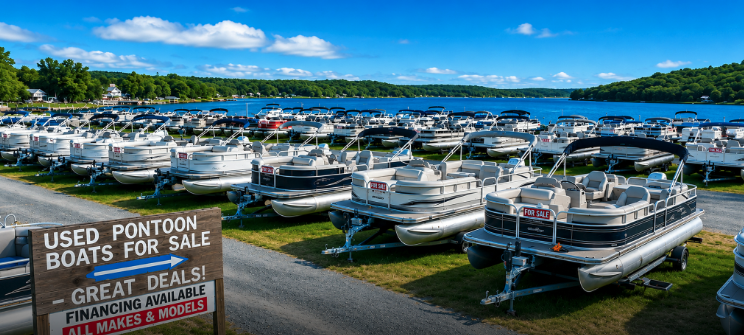
Shopping for a used pontoon boat is exciting, but it can also be overwhelming. One boat looks great in photos, then falls apart on a closer look. That's why knowing what to look for when buying a used pontoon boat matters so much before you hand over a deposit.
According to the National Marine Manufacturers Association (NMMA), pontoons were one of the top three best-selling powerboat segments in the U.S. in 2024, which is exactly why the used market is so crowded.
Boatzon, the online boat marketplace based in Florida and serving buyers nationwide, connects shoppers with thousands of pontoon listings from dealers coast to coast. This blog walks you through exactly what to check, what repairs typically cost, and how to walk away from a bad deal, drawing on real inspection walkthroughs, owner forums, and published NMMA data.
Quick Inspection Checklist
Before you even step onto the boat, it helps to know what you’re looking for at a glance. Use this table as a fast reference while you walk the boat in person.
| Area to Inspect | What to Check | Common Red Flag |
| Pontoons/logs | Welds, dents, eyelets, pontoon diameter | Cracked welds, punctures, pontoons under 23 inches |
| Deck and flooring | Firmness underfoot, staining, sagging | Soft or spongy spots, visible rot |
| Carpet | Moisture, smell, wear pattern | Mildew odor, matting near seams |
| Upholstery | Seams, cushions, storage underneath | Rips along seams, foam exposed |
| Bimini top/cover | Frame stability, fabric condition | Wobbly frame, missing custom cover |
| Motor | Cold start, idle, smoke, hours | Rough idle, stalling, no service records |
| Electrical | Wiring, battery switch, fuses | Tangled aftermarket wiring, missing fuses |
| Trailer | Bunks, tires, lights, frame | Dry-rotted tires, rusted frame |
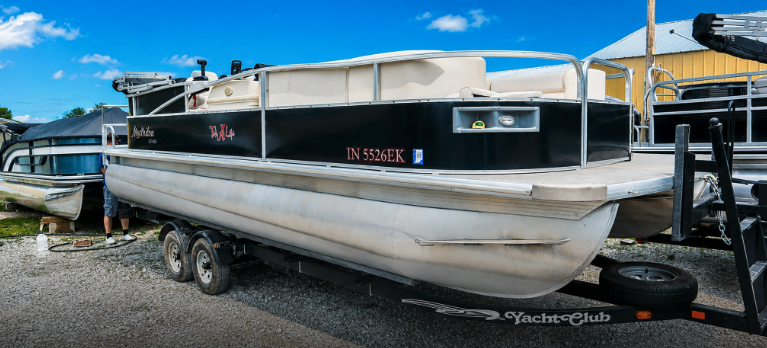
Start With the Pontoons and Logs
The pontoons, sometimes called logs, are the heart of the boat. If they fail, nothing else matters. This is the first place any experienced buyer checks, and it should be yours too.
Walk the full length of each pontoon. Look for dents, dings, or anything that resembles a weld that’s been redone. A small dent usually isn’t fatal, but repeated stress in the same spot can eventually crack a weld or puncture metal. Check the front eyelets too, since these take a beating from docking and beaching over the years.
Pontoon size matters as well. Older boats often have 20 to 23-inch pontoons, while newer models run 25 inches or larger. Bigger pontoons mean more flotation and a steadier ride. If you’re comparing two similarly priced boats, the one with larger, undamaged pontoons is usually the better long-term investment.
Check the Deck, Flooring, and Carpet
Underneath the carpet on most pontoon boats is marine-grade plywood decking. It’s built to last, often 10 to 20 years, but only if it stays dry and protected. Water intrusion is the enemy here.
Get underneath the boat if the trailer allows it. Look for soft spots, staining, or sagging. Press on the floor from inside the boat too. If it flexes or feels spongy anywhere, that’s a red flag worth investigating further before you buy.
What Repairs Typically Cost
Repair estimates vary by region, boat size, and labor rates, but the ranges below reflect what buyers commonly report paying for a 20 to 21-foot pontoon boat. Knowing these numbers before you negotiate is one of the most useful things to look for when buying a used pontoon boat.
| Repair or Replacement | Typical Cost Range |
| Pontoon pair (logs only, before labor) | $3,000 |
| Deck/flooring replacement | $2,000–$5,000 |
| Carpet replacement | $500–$2,000 |
| Seat section reupholstering | $300–$500 |
| Captain’s chair reupholstering | $500–$700 |
| Custom form-fitted cover | $1,500–$3,000 |
| Generic boat cover | $300–$500 |
| Engine compression test (mechanic) | Around $150 |
Inspect the Upholstery and Furniture
Upholstery tells a story. A boat that’s been covered and cared for will usually show it, with soft, crack-free vinyl and tight seams. A boat left uncovered in direct sun for years will show that too, often with cracked, faded, or torn seating.
Sit in every seat. Lift the cushions and check the storage underneath for moisture or mildew. Look closely at seams, since rips along a seam are harder and more expensive to repair than a simple tear in the middle of a panel.
Look Closely at the Bimini Top and Cover
A quality bimini top provides real shade and can make a hot summer afternoon on the water far more comfortable. Check the fabric for fading, mildew, and tears, and shake the frame gently to see if it feels sturdy or wobbly.
The boat’s cover matters just as much, even though it’s easy to overlook. A form-fitted custom cover protects the upholstery, carpet, and electronics from sun damage between uses. If a boat has never had one, expect faster wear across the rest of the interior.
Test the Motor and Electrical System
The engine is usually the single most valuable component on the boat, and it deserves the most attention. Ask the seller not to start it before you arrive. A cold start tells you far more about how the engine actually performs than a motor that’s already warmed up.
Listen for smooth idle, check for excessive smoke, and pay attention to whether it stalls. If you have any doubts, a marine mechanic can run a compression test for around $150, which is a small price to pay for peace of mind on a bigger purchase.
Check the wiring too. A clean, organized setup with a proper battery switch and labeled fuses suggests careful ownership. A tangled mess of wires added over the years is harder to diagnose and more likely to cause frustrating electrical gremlins down the road.
Horsepower matters based on how you’ll use the boat. A 40 to 60-horsepower motor is plenty for cruising, while tubing or watersports call for something closer to 90 horsepower or more. Also check local horsepower limits on the lake you plan to use, since some smaller lakes cap engine size.
Don’t Skip the Trailer
If you’re trailering the bo
at instead of keeping it at a dock, the trailer deserves its own inspection. Check the bunks or rollers, the tires for dry rot, the wiring for working lights, and the frame for rust or corrosion.
Plywood bunk boards can rot just like the boat’s own decking, especially where bolts pass through. A full bunk board replacement runs a few hundred dollars, which is manageable, but worth factoring into your offer if the boards look weathered or soft.
What to Look for When Buying a Used Pontoon Boat by Price Range
The budget changes what a reasonable inspection should turn up. Understanding what a boat should look like at your specific price point helps set realistic expectations and avoids walking away from a fair deal.
| Budget Range | What’s Typical | Where to Focus |
| Under $7,000 | Worn seats, aging decking, modest motor (40–60 HP) | Confirm pontoons and motor are sound |
| $7,000–$15,000 | Decent interior, mid-size motor, some cosmetic wear | Check maintenance records and hours |
| $15,000–$25,000+ | Stronger brands, cleaner documentation, newer motor | Verify title history and warranty transfer |
A rough interior on a budget boat isn’t necessarily a dealbreaker if the pontoons and motor are sound. On a higher-priced boat, though, buyers should expect a much cleaner overall package.
Pontoon or Tritoon: Does the Inspection Change?
Standard pontoon boats float on two logs, while tritoons add a center pontoon for extra stability and horsepower capacity. If you’re comparing both, the inspection basics stay the same, but a couple of details shift.
Tritoons can generallyhandle larger engines, often well above 115 horsepower, so check whether the motor size matches what the boat is actually rated for. Also check the center pontoon just as carefully as the outer two, since it takes on additional stress from the extra weight and speed these boats are built for.
Frame construction is worth comparing directly if you’re cross-shopping models. Higher-end tritoons typically use continuous structural beams and heavier-gauge aluminum running the full length of the boat, while entry-level models sometimes shorten the frame or use lighter channel construction near the stern. None of that is disqualifying on its own, but it does explain some of the price gap between brands.
Why the Used Market Favors Buyers Right Now
New pontoon sales have cooled noticeably over the past two seasons. NMMA data shows new pontoon retail unit sales declined by double digits in both 2024 and the twelve months ending in early 2025, even as overall boating participation stayed strong, with an estimated 85 million Americans going boating each year.
That combination, softer new sales alongside steady participation, tends to push more well-maintained, recently traded pontoons into the used market. For buyers, that means more selection and more room to negotiate than in past years.
NMMA also reports that recreational boating supports more than 812,000 American jobs and contributes to a $55 billion-plus annual industry, spending that includes fuel, financing, insurance, storage, and maintenance on boats already on the water, not just new purchases. That steady spending on existing boats is one reason well-cared-for used pontoons tend to hold their value better than many other used vehicles, as long as the core structure and motor check out during inspection.
Ask the Seller the Right Questions
A good inspection isn’t only visual. The seller’s answers matter just as much as what you see on deck.
Ask why they’re selling. Ask if the boat has spent time in saltwater, since saltwater accelerates corrosion on both the pontoons and the motor far faster than freshwater use. Ask whether they have service records, and how recently the engine was winterized if you’re buying anywhere with a cold season.
If the motor is an older two-stroke, ask specifically how the oil mixing system works. Some owners disable factory oil-injection systems on aging two-strokes and premix fuel by hand instead, because injection systems are known to fail at inconvenient times. That’s a reasonable workaround, but you want to know which setup you’re actually getting.
Finally, ask how the upholstery was cleaned. Aggressive cleaners and abrasive scrubbing can shorten the life of marine vinyl, so a seller who mentions a magic eraser or a pressure washer on the seats may be masking wear rather than preventing it.
Check the Documentation
Paperwork is an easy step to skip, and an easy one to regret skipping. Confirm the seller holds a clean title for both the boat and the trailer before any money changes hands.
If a title is missing or the trailer has a different owner on record, treat that as a serious problem, not a minor inconvenience. Ask for maintenance receipts if available, even informal ones, since a paper trail is one of the more reliable signs of a boat that’s been genuinely maintained rather than just cleaned up for sale.
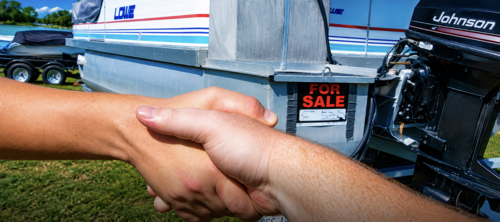
Always Request a Sea Trial
Photos and even an in-person walkthrough only tell part of the story. A sea trial shows you how the boat actually handles, whether the motor shifts cleanly, and whether everything from the depth finder to the stereo actually works.
Take the trailer for a short test tow if possible, too. This is also a good time to confirm titles are clean for both the boat and trailer, since a missing title can stall or completely derail a purchase later.
Buying With Confidence
Knowing what to look for when buying a used pontoon boat gives you real leverage. You’ll spot the boats worth pursuing and walk away from the ones that aren’t, without wasting a weekend on a bad lead.
Boatzon makes that next step easier once you’ve found a boat worth pursuing. Buyers across Florida, Texas, Georgia, the Carolinas, Tennessee, and beyond can browse verified dealer listings of used pontoon boats for sale, get pre-qualified for financing without a hard credit check, and schedule a sea trial directly through the platform. Shoppers working with a tighter budget can also filter listings for used pontoon boats for sale under $5,000 to see what’s realistically available at that price point.
If you’re ready to start the search, browse Boatzon’s pontoon boat listings and put everything you’ve just learned in this guide to work on your next boat.
FAQ
What should I check first when buying a used pontoon boat?
Start with the pontoons and welds, since that’s the single most important thing to check when buying a used pontoon boat. Walk the full length of each log looking for dents, cracked welds, or signs of a prior repair. A damaged pontoon is far more expensive to fix than worn upholstery or a tired carpet, so it should always be the first stop in your inspection.
How much does it cost to fix a used pontoon boat’s flooring?
Replacing rotted decking typically runs $2,000 to $5,000, an important cost to factor into what to look for when buying a used pontoon. That range covers pulling up the carpet, removing the furniture, and installing new marine-grade plywood underneath. Get underneath the boat and check for soft or spongy spots before you make an offer, since flooring issues aren’t always visible from inside.
Is a 2-stroke or 4-stroke motor better on a used pontoon boat?
Most buyers prefer 4-stroke motors for quieter, more reliable performance, which matters when evaluating what to look for when buying used pontoon boat options. Two-stroke motors can still run well, but ask how the oil-mixing system works, since factory injection systems on older engines are known to fail. A cold start and a short test run will tell you more than the engine type alone.
Should I get a sea trial before buying a used pontoon boat?
Yes, always request one before you commit to buying. A cold start and a water test reveal issues that photos, paperwork, and even a careful dockside walkthrough simply can’t show, including how smoothly the motor shifts and whether it holds a steady idle. Plan for at least 20 to 30 minutes on the water to get a real feel for the boat.
What’s a fair price for a used pontoon boat under $7,000?
Expect visible wear on seats, carpet, and decking at that price point, along with a modest 40 to 60-horsepower motor. Sound pontoons and a running engine still make it a reasonable buy, even if the interior needs some attention over time. Just confirm the title is clean and the motor starts easily from cold before you agree on a price.