
TL;DR: Pontoons win on space, stability, and lazy-day comfort. Deck boats win on speed and rough-water handling. Your typical weekend decides the answer.
A pontoon and a deck boat can look like rivals for the same family, but they solve the day differently. A pontoon rides on two or three aluminum tubes with a big flat deck on top, built around open space and easygoing comfort. A deck boat has a single V-shaped fiberglass hull with a wide, open bow, built to carry a crowd while still slicing through water at real speed. Both seat a group and both suit families, so the smart way to choose is to picture how you actually spend a Saturday on the water.
Get specific about your weekends and the decision gets easier. Do you drift, swim, and grill on a calm lake, or do you tow tubes across a big reservoir with afternoon chop? Those two pictures point at different boats, and the rest is detail.
The core design difference
The single biggest distinction is what holds the boat up. A deck boat has a single rigid fiberglass hull, while a pontoon boat has a deck riding on two or three aluminum tubes that act as the hulls. That one structural fact drives almost everything else, from how the boat rides to how much room you get.
The V-shaped hull on a deck boat cuts through waves and reaches higher speeds, which makes it the stronger choice for watersports and open, choppy water. The flat, tube-supported deck on a pontoon trades top speed for stability and a huge, usable floor plan. Neither approach is better in the abstract; they are just tuned for different days. Seeing the two side by side helps, so it is worth taking a moment to browse by boat category and compare how builders lay out each hull before you go further.
Space and comfort
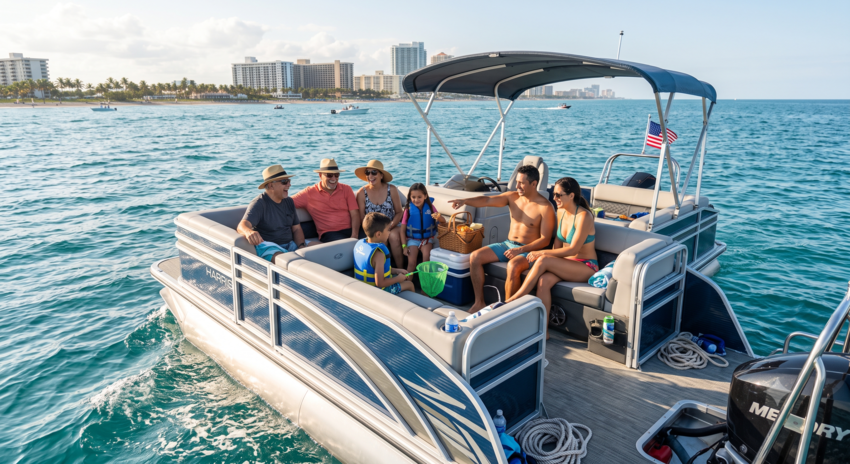
Pontoons have a clear edge in usable space. The flat, broad deck gives you more square footage to move around, arrange furniture, and seat people comfortably, so a pontoon feels more like a floating patio than a sports boat. Families with young kids often love the wraparound seating, the easy walk-through layout, and the sense that there is room for everyone plus the cooler, the toys, and the dog. Whatever the layout, every boat carries a capacity plate that lists the weight of people, fuel, and gear it can safely carry, and the BoatUS Foundation explains how loading and capacity plates work, including why the number of seats is not the same as the number of people a boat can safely hold. Keep that in mind so you never overload the deck on a busy weekend.
Deck boats hold a lot of people too, but the V-hull eats into interior room. You get generous open-bow seating and a sporty cockpit, though there is less flat space to wander than a pontoon offers. For a family that mostly wants to lounge, swim, and eat lunch on the water, the pontoon’s layout usually feels more relaxed.
Getting in and out of the water
If your weekends revolve around swimming, both boats can work, but pontoons make it especially easy. Low freeboard, wide gates, and flat decks mean kids and less-agile guests climb aboard without a struggle. Deck boats often add a swim platform and ladder that handle the job well, though the higher sides can make repeated in-and-out a little more effort for small children.
Speed, ride, and rough water
This is where deck boats shine. With the right power, a deck boat’s V-hull can hit high speeds and handle chop far better than a pontoon, so it is the natural pick for towing skiers and wakeboarders or for water that gets bumpy in the afternoon. The hull knifes through waves instead of slapping across them, which keeps the ride comfortable when conditions turn.
Pontoons have come a long way, and a modern triple-tube pontoon with adequate horsepower can tow tubes and cruise at respectable speeds. Still, on genuinely rough water a pontoon’s flat profile will feel the waves more than a deep-V will. On a calm lake, the pontoon’s stability is a gift; on an exposed reservoir with wind, the deck boat’s hull earns its keep. Match the boat to your typical water and you will rarely be disappointed.
Activities and how families use them
Think about what your family actually does. A pontoon is the go-to for leisurely days: cruising, fishing, drifting near a sandbar, jumping off to swim, and hosting friends. A deck boat leans toward active days: skiing, wakeboarding, tubing at speed, and covering distance to reach a favorite spot. Many families do a bit of both, so the tiebreaker is which activity dominates your calendar.
Age of the crew matters too. Pontoons tend to suit families with young children thanks to their stability and open, contained layout. Deck boats can be a better fit once kids are older and the family wants more speed and watersports. Neither rule is absolute, but they are a useful starting point when you cannot decide.
The cost picture
In the smaller, less expensive size ranges, pontoons usually come out ahead on price. There are plenty of compact pontoons with modest outboards that cost relatively little, and foot for foot, pontoons often price lower than comparable deck boats. Deck boats exist at affordable price points too, but the selection of cheap, small deck boats is thinner, so budget-focused families frequently land on a pontoon.
Price should be weighed against how you will use the boat, not just the sticker. A slightly pricier deck boat that gets used hard for watersports every weekend can deliver more value than a bargain pontoon that never does what your family wants. Before you commit either way, it is smart to estimate your monthly payment so the boat fits your budget as comfortably as it fits your weekends.
Making the choice
Boil it down to your default Saturday. If that day is calm water, swimming, lounging, and hosting, a pontoon’s space and stability make it the natural family boat. If that day is speed, watersports, and bigger, choppier water, a deck boat’s hull is worth the tradeoff in floor space. Most families know their answer the moment they picture the scene honestly.
Whichever way you lean, take the time to walk the decks of both before deciding, since layout and feel matter as much as specs. When you are ready to compare specific models and prices, search boats for sale across both categories and see which one matches the weekends you have in mind.
FAQ
Is a pontoon or deck boat better for a family?
It depends on how your family spends the day. Pontoons are better for lounging, swimming, and hosting on calm water thanks to their space and stability, and they suit families with young children. Deck boats are better for speed, watersports, and rougher water, which often fits families with older kids.
Which is faster, a pontoon or a deck boat?
Deck boats are generally faster because their V-shaped hull cuts through the water efficiently and handles chop well. Modern triple-tube pontoons with strong engines can tow and cruise at respectable speeds, but for top-end performance and rough-water handling the deck boat has the advantage.
Which boat has more room?
Pontoons have more usable space. Their flat, broad deck gives you extra square footage to arrange seating and move around, so they feel more open than deck boats. A deck boat’s V-hull provides sporty open-bow seating but leaves less flat floor space to wander.
Are pontoons good in rough water?
Pontoons are most comfortable on calm to moderate water, where their stability is a real strength. On genuinely rough or choppy water, their flat profile feels the waves more than a deep-V hull does. If you regularly boat on large, exposed, or windy water, a deck boat usually rides better.
Which is cheaper, a pontoon or a deck boat?
In the smaller size ranges, pontoons usually cost less, and foot for foot they often price below comparable deck boats. Affordable small deck boats exist but are less common, so budget-minded families frequently find better value in a pontoon.
Can you do watersports on a pontoon?
Yes, especially with a modern triple-tube model and enough horsepower, which can tow tubes and even skiers. That said, a deck boat’s hull and speed make it the stronger dedicated watersports platform, so heavy skiing and wakeboarding families often prefer a deck boat.
Which boat is easier for kids to swim from?
Both work, but pontoons make swimming especially easy with their low freeboard, wide gates, and flat decks that let kids climb aboard without a struggle. Deck boats usually have a swim platform and ladder that handle the job well, though higher sides can be slightly more effort for small children.