




Trade-In Your Boat
How It Affects Financing


Trading in your current boat when buying a new one simplifies the process by eliminating the hassle of private sales while reducing your new loan amount. The trade-in value becomes your down payment, which can lower your monthly payment, improve your interest rate, or both. Understanding how trade-ins affect financing helps you negotiate effectively and avoid situations where you owe more than your boat is worth.
The process works similarly to car trade-ins, but boat values follow different depreciation patterns and lenders evaluate marine collateral differently. A well-maintained boat from a premium brand might retain 70-80% of its value after five years, while mass-market models typically drop to 50-60%. These value differences directly impact your financing options, particularly when you still owe money on your current boat.
How It Affects Financing
How Trade-In Value Affects Your New Loan
Trade-in equity reduces the amount you need to finance on your new boat. If you're buying a $60,000 boat and your trade-in is worth $15,000 with no loan payoff, you only need to finance $45,000. This lower loan amount means smaller monthly payments and less total interest paid over the loan term. Use the boat loan calculator to see how different down payment amounts from your trade-in affect your monthly payment. On a 15-year loan at 8%, financing $45,000 instead of $60,000 saves you roughly $10,800 in interest.
The equity calculation matters more than the trade value itself. Equity equals your boat's current market value minus any remaining loan balance. A boat worth $25,000 with $10,000 still owed provides $15,000 in equity that reduces your new loan. That same boat with $30,000 owed creates negative equity of $5,000 that adds to your new loan amount instead of reducing it.
Positive equity strengthens your financing position beyond just reducing the loan amount. Lenders view buyers with equity as lower risk because they've demonstrated the ability to build value and maintain payments. This often translates to better interest rates, typically 0.25-0.5% lower than buyers financing the full purchase price with minimal down payment.
Understanding Negative Equity
Negative equity (being "upside down" on your loan) happens when you owe more than your boat's current market value. This commonly occurs with rapid depreciation in the first few years, long loan terms that build equity slowly, or when boats haven't been maintained well and lost value faster than expected. A $50,000 boat financed over 20 years at 9% will still owe $46,900 after three years while potentially being worth only $35,000-38,000.
When trading in a boat with negative equity, that difference gets rolled into your new loan. If you owe $30,000 on a boat worth $22,000, you have $8,000 in negative equity. Buying a $60,000 boat means you'll actually need to finance $68,000 to cover both the new purchase and the shortfall from your trade. This creates higher monthly payments and increases your risk of staying perpetually upside down.
Lenders limit how much negative equity they'll finance based on the new boat's value and your creditworthiness. Most cap it at 10-15% of the new boat's purchase price. On a $60,000 boat, expect approval for rolling in $6,000-9,000 in negative equity with good credit. Amounts beyond that typically require cash to close the gap or a co-signer to strengthen the application.
Rolling negative equity forward extends the problem rather than solving it. You start your new loan already underwater, and depreciation on the new boat compounds the issue. The result is years of being locked into a boat you can't sell or trade without bringing significant cash to close the deal. Breaking this cycle requires either keeping your current boat longer until the loan balance drops below market value, or making a cash down payment large enough to offset the negative equity.
Getting Accurate Trade-In Valuations
Dealers typically offer 70-85% of retail market value on trade-ins, keeping margin for reconditioning, marketing, and profit when they resell. A boat worth $30,000 retail might generate offers between $21,000-25,500 depending on condition, market demand, and how badly the dealer wants your business. This discount represents the convenience factor; selling privately almost always nets more money but requires time, effort, and patience finding a buyer.
Get multiple valuations before accepting any trade-in offer. Check your boat's current market value on Boatzon's boat values page to establish a realistic baseline for negotiations. Compare against similar boats listed for sale in your region, adjusting for age, hours, condition, and included equipment. Research recent sold prices rather than asking prices, which tend to be inflated.
Condition dramatically affects trade value in ways that aren't always obvious until you get offers. Gel coat oxidation, outdated electronics, worn upholstery, or missing standard equipment can reduce offers by 15-25% compared to well-maintained comparable boats. Mechanical issues like engine problems, outdated steering systems, or trailer damage create even larger value hits. Dealers factor reconditioning costs directly into their offers.
Timing your trade strategically can improve the value you receive. Spring typically brings the highest trade-in values because dealers need inventory for peak buying season and can turn boats quickly. Late fall sees softer values as dealers face holding costs through winter and slower sales. Regional markets also matter; boats hold better value in warm-weather states where the season runs year-round compared to northern markets with short seasons.
Financing Strategies With Trade-Ins
Negotiate the trade-in value and new boat price separately rather than discussing them as a combined deal. Dealers sometimes offer inflated trade values while raising the new boat price to compensate, creating the illusion of a great trade when you're actually paying more overall. Handle each transaction independently: agree on the new boat price first, then negotiate the trade value based on market data.
Consider whether selling privately makes more financial sense despite the added effort. If your boat is worth $30,000 and dealers offer $23,000-25,000, selling privately for $28,000-29,000 could provide an additional $4,000-5,000 toward your down payment. That extra equity reduces your loan amount, lowers monthly payments by $30-50, and saves $2,500-3,500 in interest over a 15-year loan. The effort pays for itself quickly.
Private sales work best for desirable boats in good condition during peak season when buyers are actively shopping. Boats requiring significant work, unusual models with limited buyer interest, or off-season timing make dealer trade-ins more practical despite lower offers. Evaluate realistically whether the potential value gain justifies the time investment and risk of not finding a buyer.
Tax Implications of Trade-Ins
Trade-ins may reduce your sales tax liability in states that allow trade-in credits. If you're buying a $60,000 boat and trading one worth $20,000, you might only pay sales tax on the $40,000 difference rather than the full purchase price. In a state with 7% sales tax, this saves $1,400. Not all states offer this benefit, and rules vary significantly, so verify your state's specific regulations before assuming tax savings.
The tax savings from trade-in credits can offset the lower value dealers offer compared to private sales. If a dealer offers $24,000 while you could sell privately for $27,000, the $3,000 difference might be mostly or entirely offset by the $1,400 sales tax savings plus the convenience of not managing a private sale. Calculate the after-tax difference to make an informed decision.
Frequently Asked Questions
How much is my boat worth as a trade-in?
-Can I trade in a boat that I still owe money on?
+What happens if I owe more than my boat is worth?
+Should I trade in or sell privately?
+How do I get the best trade-in value?
+Does my boat's condition affect the trade-in value?
+Can I trade in a boat and finance the new one with the same lender?
+How does trading affect my down payment requirements?
+Making the Right Choice
Trading in your current boat when buying a new one offers convenience and potentially tax advantages, but evaluate whether you're getting fair value for your trade. Research market values independently, get multiple offers, and seriously consider private sale alternatives when the value gap is substantial. The "right" choice balances the money you'd gain from a private sale against the time, effort, and risk involved in finding a buyer yourself.
Disclaimer: This article provides general information about boat trade-ins and financing for educational purposes. Trade-in values, financing terms, tax implications, and lender requirements vary by location, lender, and individual circumstances. Always verify current market values through multiple sources, review all financing documents carefully, and consult with tax professionals regarding sales tax implications in your state. Information about valuations, loan terms, and tax treatment is subject to change based on market conditions and applicable regulations.
Explore Boats for Sale

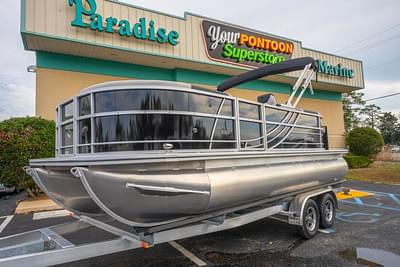
South Bay 220RS LE Rear Seating 275 2025
220RS LE Rear Seating 275 | N/A
$5,628 cash down
 Gulf Shores, AL
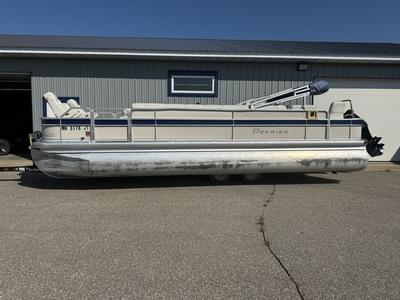

Monterey 278SS 2025
N/A
$13,999 cash down
Lancaster, KY

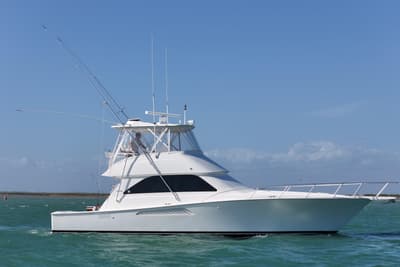
Viking Convertible 2008
Convertible | 3090 Hours
$69,900 cash down
Port Aransas, TX
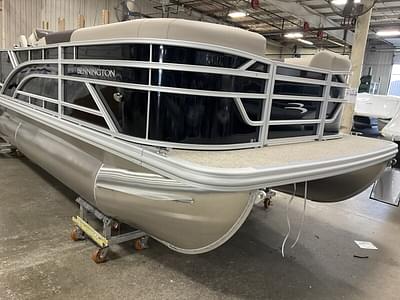
Bennington 20SL YAMAHA T50 2025
N/A
$3,690 cash down
Fergus Falls, MN


Copyright © 2026 Boatzon™. All Rights Reserved