



- Boats

- Shop
- Finance
- Boatability
- Shopping Tools
- Dealer


Paying Off Your Boat Loan Early
Should You Do It?

Should You Do It?
Paying off a boat loan early saves interest charges and eliminates monthly payment obligations, but it's not always the smartest financial move. A borrower with a $50,000 loan at 7.5% over 15 years pays $33,430 in total interest. Paying off five years early saves roughly $10,500 in interest charges, but only if those extra payments don't prevent you from building emergency savings, paying down higher-interest debt, or investing at returns exceeding your loan rate.
Most boat owners assume early loan payoff always makes financial sense, viewing debt elimination as inherently positive. That oversimplification ignores opportunity costs and alternative uses for extra cash. Sometimes paying off your boat loan early represents the best use of available funds. Other times, those same dollars create more value through emergency fund contributions, retirement account investments, or paying down credit cards charging 18-24% interest.
The decision requires comparing your loan's interest rate against alternative uses for the money. Understanding prepayment penalties, calculating actual interest savings, and evaluating your complete financial picture helps you make informed choices rather than defaulting to debt elimination without considering whether it's optimal.
Paying Off Your Boat Loan Early
How Early Payoff Saves Interest
Boat loans calculate interest on your remaining principal balance. Each monthly payment includes interest charges on the current balance plus a principal reduction that lowers future interest. When you pay extra toward principal, you reduce the balance on which future interest accrues, creating compounding savings throughout the remaining loan term.
Consider a $60,000 loan at 7.5% over 15 years with a $556 monthly payment. After five years of regular payments, you've paid $33,360 total while reducing principal by only $13,130. The remaining $20,230 went to interest. Your remaining balance sits at $46,870 with 10 years of payments ahead.
Making a $10,000 extra principal payment at this point reduces your balance to $36,870. Continuing regular $556 payments, you'd pay the loan off roughly 20 months early and save approximately $4,800 in interest. That same $10,000 principal payment made in year one saves roughly $6,900 in interest because it compounds over more years.
The earlier you make extra payments, the more interest you save. A $100 monthly extra payment starting with your first loan payment can cut years off your loan term and save thousands in interest. The same $100 monthly starting in year 10 produces smaller savings because fewer years remain for the reduced principal to compound.
Understanding Prepayment Penalties
Prepayment penalties charge fees for paying off loans before maturity, protecting lenders from lost interest income when borrowers refinance or pay off early. These penalties appear in some boat loans but are far from universal, making it essential to review loan documents before assuming you can pay off freely.
Common prepayment penalty structures include flat fees (typically $500-1,500), percentage of remaining balance (usually 1-2%), or sliding scale penalties that decrease over time. A loan might charge 2% of the remaining balance if paid off in years 1-3, 1% in years 4-5, and nothing after year 5.
Federal regulations don't prohibit prepayment penalties on boat loans the way they do on residential mortgages after the Dodd-Frank Act. This means lenders have flexibility to include these fees in boat financing. However, competitive pressure keeps many lenders from charging prepayment penalties since borrowers can simply choose other lenders offering penalty-free payoff.
Review your loan documents specifically for prepayment penalty clauses. These appear in the Truth in Lending disclosure and loan agreement. If present, calculate whether interest savings from early payoff exceed the penalty amount. A $2,000 prepayment penalty erases the benefit of early payoff if you'd only save $1,500 in interest.
Some loans allow extra principal payments without penalty while charging fees for complete payoff. This structure lets you make additional payments reducing your balance and shortening your term without fees, but charges if you completely eliminate the loan through refinancing or large lump sum payment. Understanding this distinction helps you optimize payment strategy.
When Early Payoff Makes Financial Sense
Paying off boat loans early works best when you've addressed higher-priority financial needs and the interest savings exceed alternative uses for the money.
Eliminating monthly obligations creates financial flexibility. Once your boat payment disappears, that money becomes available for other goals, emergencies, or discretionary spending. This flexibility has value beyond the interest savings, particularly for people approaching retirement who want to reduce fixed monthly expenses.
Borrowers with stable finances, adequate emergency funds, and no higher-interest debt benefit most from early payoff. If you've maximized retirement contributions, built 6-8 months of emergency savings, and carry no credit card debt, directing extra cash toward boat loan payoff makes sense. The guaranteed return from interest savings beats leaving money in low-yield savings accounts.
Psychological benefits matter for some borrowers. Debt-free boat ownership provides peace of mind worth more than mathematical interest calculations suggest. If carrying debt creates stress or anxiety regardless of the interest rate, early payoff might be worth pursuing even when pure financial analysis suggests investing instead.
Boats you plan to keep long-term justify early payoff more than those you'll upgrade soon. Paying off a loan quickly only to sell the boat next year provides minimal benefit. However, paying off a boat you'll own for 10-15 years delivers maximum interest savings plus years of payment-free ownership.
When NOT to Pay Off Early
Several financial situations make early boat loan payoff inadvisable, with better uses for available cash taking priority.
Higher-interest debt should always get eliminated before accelerating boat loan payoff. Credit cards charging 18-24% interest cost you far more than a 7% boat loan. Every dollar toward credit card balances saves triple the interest that dollar would save on boat loans. Pay off all consumer debt above 10% interest before making extra boat loan payments.
Inadequate emergency funds represent a critical vulnerability that takes priority over early loan payoff. Financial advisors recommend 3-6 months of expenses in accessible savings before aggressively paying down moderate-interest debt. Using extra cash to pay off boat loans while maintaining minimal emergency funds creates risk that forces expensive borrowing when unexpected expenses arise.
Investment opportunities offering returns exceeding your loan interest rate make better use of available funds. If your boat loan charges 6.5% and you can reliably earn 8-10% in retirement accounts or other investments, keeping the loan and investing extra cash creates more wealth. The gap between loan interest and investment returns compounds over time into significant additional wealth.
Retirement account contributions often beat early loan payoff, particularly when employer matching is available. Contributing enough to capture full employer 401(k) matching provides immediate 50-100% returns that dwarf interest savings from debt payoff. Maximize retirement contributions up to employer match limits before directing extra money toward loan principal.
Understanding your complete marine loan structure and options helps you evaluate whether your specific loan terms and interest rate warrant early payoff or whether other financial priorities make better sense.
Strategic Payment Approaches
How you structure extra payments affects the benefit you receive. Different approaches optimize for different goals beyond simple interest savings.
Regular extra principal payments build discipline and create steady loan term reduction. Adding $100-200 to your monthly payment doesn't strain budgets while meaningfully shortening loan duration. This approach works well for borrowers who struggle with lump sum savings but can manage modest increases to fixed monthly obligations.
Annual lump sum payments from bonuses, tax refunds, or other windfalls accelerate payoff without affecting monthly cash flow. This strategy suits borrowers who receive irregular income or prefer maintaining maximum monthly flexibility. A $3,000 annual extra payment can cut multiple years off a 15-year loan while leaving regular monthly budgets unchanged.
The bi-weekly payment strategy involves paying half your monthly payment every two weeks. This creates 26 half-payments yearly (13 full payments) versus 12 monthly payments, effectively adding one extra payment annually. The approach reduces loan terms by 2-4 years on typical boat loans while creating only modest per-paycheck budget impact.
Targeting specific payoff dates aligns extra payments with financial goals. Borrowers wanting to eliminate the boat loan before retirement, before children enter college, or before major expenses occur can calculate required extra payments to achieve those timelines. This goal-oriented approach motivates consistent extra payments by connecting them to meaningful life milestones.
Calculating Your Savings
Understanding exact interest savings from early payoff helps you evaluate whether the strategy makes financial sense for your situation.
Your loan documents or lender website show your remaining principal balance and how much total interest you'll pay over the remaining term with regular payments. The difference between your current balance and total remaining payments equals interest you'll pay if you continue making scheduled payments until maturity.
For example, a loan showing $40,000 remaining balance with $68,000 in total remaining payments means you'll pay $28,000 in interest over the remaining term. Paying off the $40,000 balance today eliminates that $28,000 in future interest charges, creating guaranteed savings equal to your loan's interest rate.
Prepayment penalty considerations change the math significantly. A $2,000 penalty to pay off a loan early reduces your $28,000 interest savings to $26,000 net benefit. Calculate whether the net savings justify using available cash for payoff versus alternative uses discussed earlier.
Frequently Asked Questions
Will paying off my boat loan early hurt my credit score?
-Can I make extra payments without penalty?
+Should I pay extra every month or make lump sum payments?
+How much interest will I save by paying off early?
+Is it better to refinance or pay off early?
+Should I pay off my boat loan or invest in retirement accounts?
+What happens to my payment if I pay extra toward principal?
+Can I deduct prepayment penalties on my taxes?
+Making the Right Choice
Early boat loan payoff offers guaranteed returns through interest savings and the psychological benefit of debt-free boat ownership. However, these benefits only make sense when you've addressed higher-priority financial needs and alternative uses for the money don't offer better returns.
Evaluate your complete financial picture before committing to aggressive loan payoff. Emergency funds, retirement savings, higher-interest debt elimination, and investment opportunities all potentially deserve priority over paying down moderate-interest boat loans. The goal isn't eliminating debt at all costs but rather optimizing your overall financial position.
For many boat owners, a balanced approach works best: making modest extra principal payments that shorten loan terms while maintaining emergency funds, retirement contributions, and investment activities. This strategy captures some interest savings without sacrificing other financial goals or creating vulnerability to unexpected expenses.
Your loan's interest rate, your financial priorities, and your overall situation determine whether early payoff makes sense. There's no universal right answer; the optimal choice depends on your specific circumstances and goals.
Disclaimer: This article provides general information about early boat loan payoff for educational purposes. Interest savings calculations, prepayment penalty terms, and optimal financial strategies vary based on individual circumstances, loan terms, interest rates, and alternative investment opportunities. Examples shown are for illustration and may not reflect your specific loan or financial situation. Tax implications of prepayment penalties depend on individual circumstances and tax laws. Decisions about early loan payoff should consider your complete financial picture including emergency funds, retirement savings, other debts, and investment opportunities. Always review your loan documents for specific prepayment terms and consult financial professionals about your individual situation. Information about loan payoff strategies and financial planning is subject to change based on market conditions and individual circumstances.
Explore Boats for Loans

South Bay 220RS LE Rear Seating 275 2025
220RS LE Rear Seating 275 | N/A
May Qualify
 Gulf Shores, AL

Monterey 278SS 2025
N/A
$13,999 cash down
Lancaster, KY
Sea Hunt 245 SE 2027
N/A
$14,537 cash down
Fort Walton Beach, FL

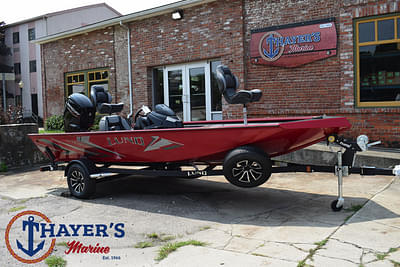
Lund 1775 Renegade SS 2025
1775 Renegade SS | N/A
$3,000 cash down
Norwich, CT
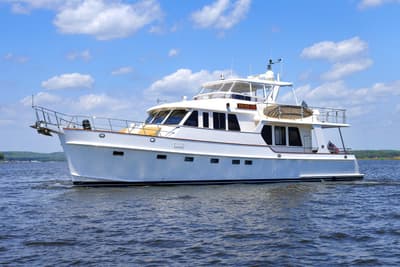
Grand Banks 59 Aleutian RP 2007
59 Aleutian RP | 3343 Hours
$159,900 cash down
Juno Beach, FL


Copyright © 2026 Boatzon™. All Rights Reserved