




Offshore vs Bay Center Console Boats
Choosing the Right Size for Your Fishing Style

Offshore vs Bay Center Console Boats
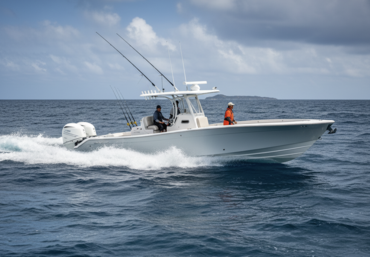
Selecting between offshore and bay center console boats requires understanding how size, design, and features impact fishing capability and safety. While marketing often blurs these categories, fundamental differences in hull design, freeboard height, and fuel capacity determine whether a boat excels in protected waters or handles blue-water conditions. Making the right choice ensures both fishing success and crew safety while avoiding the frustration of owning a boat unsuited to your primary fishing grounds.
The distinction between offshore and bay boats has evolved as manufacturers push boundaries, with many modern bay boats incorporating offshore features while compact offshore models target inshore anglers. Understanding the genuine capabilities behind marketing claims helps buy center consoles that match actual fishing patterns, budget constraints, and storage limitations rather than aspirational usage that rarely materializes.
Defining Offshore Center Console Capabilities
True offshore center console boats prioritize seaworthiness through deep-V hulls, substantial freeboard, and robust construction. These design elements enable safe operation in conditions that would overwhelm bay boats, including 4-6 foot seas and extended runs to distant fishing grounds. Offshore models typically start at 24 feet but truly excel at 28 feet and larger.
Hull deadrise at the transom provides the clearest indicator of offshore capability. Offshore center consoles feature 20-24 degree deadrise angles that cut through waves rather than pounding over them. This deep-V design trades shallow-water access for blue-water comfort, allowing crews to fish longer without fatigue from constant impacts.
Freeboard height on offshore boats typically exceeds 30 inches, providing security when fighting large fish or navigating rough conditions. This height keeps spray outside the boat and prevents waves from washing over the gunwales during drift fishing or when backing down on fish. Higher freeboard also accommodates self-bailing cockpits positioned well above the waterline.
Fuel capacity separates genuine offshore boats from coastal cruisers. Serious offshore center consoles carry 150-400+ gallons, enabling 200+ mile ranges with reserve. This capacity allows reaching distant canyons or seamounts while maintaining safety margins. Dual fuel tanks provide redundancy and weight distribution options for optimizing ride quality.
Understanding Bay Boat Design Priorities
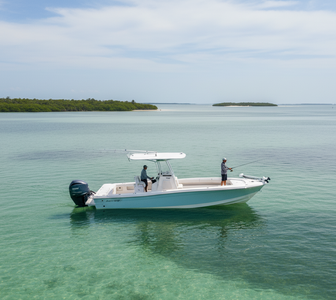
Bay boat center consoles optimize for shallow-water access through modified-V hulls, lower profiles, and lighter construction. These design choices enable fishing in 10-18 inches of water while maintaining reasonable open-water capability for calm days. Most bay boats range from 18-24 feet, balancing fishability with trailerable convenience.
Shallow draft represents the defining characteristic of bay boats, with many models floating in 10-12 inches and running in 6-8 inches when properly trimmed. This capability opens vast inshore fishing grounds inaccessible to deeper-draft vessels. Modified-V hulls with 12-16 degree deadrise provide this shallow running ability while maintaining acceptable ride quality.
Lower freeboard on bay boats, typically 20-25 inches, facilitates fighting fish at water level and reduces wind resistance when poling or drifting. This design improves fishing ergonomics but limits rough-water capability. Many bay boats incorporate raised casting platforms that restore some security without compromising the low-profile advantage.
Weight consciousness drives bay boat construction, with many models under 2,000 pounds without power. This light weight enhances fuel efficiency, improves shallow-water performance, and simplifies trailering with mid-size vehicles. However, lighter construction may sacrifice some durability compared to beefier offshore builds.
Size Considerations for Different Waters
The 22-26 foot range represents the crossover zone where capable boats can handle both inshore and nearshore fishing. These versatile center consoles compromise some shallow-water ability for increased seaworthiness, appealing to anglers who fish diverse environments without venturing far offshore.
Boats under 22 feet excel in protected waters but struggle in open-water conditions. Their light weight and limited freeboard make them vulnerable to sudden weather changes. These smaller center consoles work best for anglers focused exclusively on backcountry or near-shore fishing with quick access to shelter.
The 26-32 foot range delivers true offshore capability while remaining manageable for experienced solo operators. These boats handle moderate seas confidently, carry sufficient fuel for extended trips, and provide space for safety equipment and fish storage. This size range dominates the serious recreational fishing market.
Boats exceeding 32 feet enter the realm of sport-fishing yachts, requiring experienced crews and substantial budgets. While offering maximum capability and comfort, these large center consoles present storage, transportation, and operational challenges that limit their appeal to dedicated offshore enthusiasts.
Power Requirements and Performance Differences
Offshore center consoles demand substantial power to handle heavy loads and challenging conditions. Single engines rarely suffice beyond 24 feet, with most offshore boats featuring twin or triple outboards. Power-to-weight ratios should exceed 3 pounds per horsepower for adequate performance when fully loaded.
Bay boats operate efficiently with single outboards, typically 115-200 horsepower depending on hull size. Their lighter weight and efficient hulls deliver impressive speed and economy with modest power. Many bay boats achieve 40+ mph with 150-horsepower engines while burning under 10 gallons per hour at cruise.
Twin engine redundancy proves invaluable offshore where breakdown consequences escalate quickly. Beyond safety, twins provide superior slow-speed maneuvering, important when working around structure or backing down on fish. The ability to limp home on one engine justifies the added cost and complexity for serious offshore anglers.
Four-stroke outboard technology has revolutionized both categories, delivering fuel efficiency previously impossible with two-strokes. Modern four-strokes enable bay boats to extend range dramatically while allowing offshore boats to reach distant waters economically. This efficiency particularly benefits boats in the crossover size range.
Fishing Features and Layout Priorities
Offshore center consoles prioritize fish-fighting features including full gunwale bolsters, numerous rod holders, and large fish boxes. Fighting chairs or leaning posts with rocket launchers position anglers for battles with large pelagic species. Transom doors facilitate landing big fish while live well systems keep bait frisky during long runs.
Bay boats emphasize sight-fishing amenities like raised casting platforms, push-pole holders, and trolling motor compatibility. Shallow-draft anchor systems, including Power-Poles or traditional stakes, enable precise positioning in skinny water. Storage focuses on fly rods and light tackle rather than heavy conventional gear.
Electronics packages differ significantly between categories. Offshore boats require sophisticated navigation systems, radar, and deep-water sonar capabilities. Bay boats benefit more from shallow-water GPS mapping, side-scanning sonar for structure identification, and sometimes no electronics at all for technical poling situations.
Seating arrangements reflect different fishing styles, with offshore boats featuring bolstered helm seats for long runs and fold-down transom seating for drift fishing. Bay boats often minimize seating to reduce weight and clutter, with simple cooler seats providing adequate comfort for shorter trips in protected waters.
Weather and Safety Considerations
Offshore fishing demands respect for weather conditions that can deteriorate rapidly. Center consoles venturing beyond sight of land require comprehensive safety equipment including life rafts, EPIRBs, extensive first aid supplies, and reliable communication systems. Hull design must handle not just average conditions but unexpected storms.
Bay boats operate in more forgiving environments where shore remains accessible, though shallow-water navigation presents unique hazards. Lightning poses particular risks in open flats, while oyster bars and submerged structure threaten hull integrity. Safety equipment can be simplified but should never be eliminated.
Self-bailing cockpits prove essential offshore where waves routinely wash over gunwales. Scupper systems must drain water faster than it enters, requiring careful engineering of cockpit height and drain capacity. Bay boats in protected waters can utilize lower cockpit designs that enhance fishing ergonomics.
T-top versus hardtop decisions impact both boat categories differently. Offshore boats benefit from hardtops providing substantial weather protection during long runs. Bay boats often skip overhead coverage entirely to reduce weight and wind resistance, though simple T-tops offer valuable sun protection without compromising performance.
Cost Analysis: Purchase Price vs Operating Expenses
Bay boats typically cost 30-40% less than comparable-length offshore models due to simpler construction and reduced equipment requirements. A well-equipped 22-foot bay boat might cost $50,000 while a similar-length offshore boat exceeds $75,000. This price differential widens dramatically as size increases.
Operating costs favor bay boats substantially, with single engines burning 50-70% less fuel than twin-powered offshore boats. Boat insurance premiums run lower due to reduced values and restricted operating areas. Maintenance simplicity of single engines and basic systems reduces annual service costs significantly.
Storage considerations impact total ownership costs, with larger offshore boats often requiring wet slips at $400-1,500 monthly. Bay boats typically fit in standard garages or side yards, eliminating storage fees. The ability to trailer bay boats also reduces maintenance by allowing fresh-water storage.
Resale values generally favor quality offshore boats due to broader market appeal and perceived capability. However, popular bay boat models from respected manufacturers maintain strong values within regional markets where shallow-water fishing dominates.
Making the Right Choice for Your Fishing
Honest assessment of actual fishing patterns should drive the offshore versus bay boat decision. Track where you fish most frequently, typical weather conditions encountered, and realistic range requirements. Many anglers discover 90% of their fishing occurs within 10 miles of launch, suggesting bay boats or crossover models suffice.
Consider physical factors like storage space, tow vehicle capability, and launching facilities. The best boat delivers no value if it cannot be stored affordably or launched conveniently. Smaller bay boats expand launching options dramatically, accessing ramps unusable by larger offshore vessels.
Experience level influences appropriate boat choice, with bay boats offering gentler learning curves for developing boaters. Their forgiving handling, simple systems, and protected operating areas build confidence. Offshore boats demand stronger seamanship skills and weather judgment that develop with experience.
Future fishing plans should also factor into decisions without overwhelming present realities. While offshore capability might become desirable eventually, starting with a bay boat allows skill development and equity building toward eventual upgrades. Many successful anglers maintain both boat types for maximum versatility.
Regional Considerations and Local Knowledge
Geographic location strongly influences the offshore versus bay boat decision. Texas anglers fishing vast shallow bays prioritize draft over seaworthiness. Florida Keys fishermen need boats capable of both backcountry and reef fishing. Northeast anglers require substantial boats for consistently rough conditions.
Local fishing cultures provide valuable insight into appropriate boat selection. Observing successful local anglers reveals which designs excel in specific regions. Marina parking lots and boat ramps showcase the collective wisdom of experienced fishermen who've refined their choices through seasons of trial and error.
Seasonal patterns affect boat utility differently across regions. Northern anglers with short seasons might prioritize maximum capability for limited fishing days. Southern anglers fishing year-round might choose specialized boats for specific seasons, switching between shallow-water and offshore focus.
Environmental regulations increasingly influence boat selection, with some areas restricting combustion engines or limiting access based on draft. Electric motor requirements in certain zones favor lighter bay boats compatible with trolling motor propulsion. Research local restrictions before committing to specific boat types.
Frequently Asked Questions
What size center console is needed for offshore fishing?
-Can bay boats go offshore?
+What's the ideal center console size for both inshore and offshore?
+How much horsepower do I need for offshore center console boats?
+Are catamarans better than monohulls for center console fishing boats?
+What draft is considered shallow for a bay boat?
+Matching Your Boat to Your Waters
The choice between offshore and bay center console boats ultimately depends on where and how you fish most often. Offshore boats provide safety and capability for blue-water adventures but prove cumbersome in shallow protected waters. Bay boats excel inshore but limit fishing opportunities when conditions deteriorate.
Smart buyers resist the temptation to purchase excessive capability that rarely gets utilized. A properly chosen bay boat that gets used weekly delivers more value than an offshore beast that sits idle due to operating costs or complexity. Match your boat to your actual fishing patterns rather than occasional aspirations.
Ready to find the perfect center console for your fishing style? Explore available center console boats to compare models that match your specific needs and budget requirements.
About This Guide
This comparison reflects center console design trends and capabilities as of November 2025. Boat capabilities vary significantly within categories based on specific models and manufacturers. Always evaluate individual boats based on intended use and local conditions rather than general category assumptions.
Center Console Boats for Sale

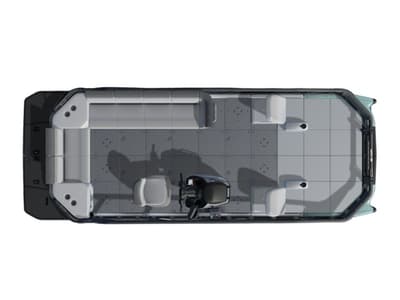
Sea-Doo Switch Sport 21 300 hp Galvanized 2026
Switch Sport 21 300 hp Galvanized | N/A
$4,735 cash down
 Hollywood, FL
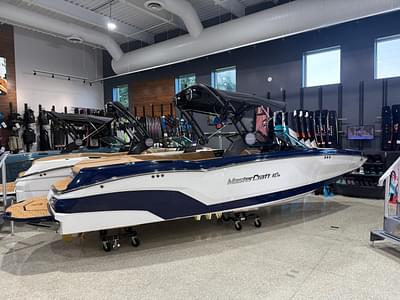
MasterCraft NXT24 2025
NXT24 | N/A
$14,067 cash down
Polk City, FL



Copyright © 2026 Boatzon™. All Rights Reserved