



- Boats

- Shop
- Finance
- Boatability
- Shopping Tools
- Dealer


First-Time Boat Buyer Financing Guide
Discover how boat financing works


Buying your first boat comes with excitement and questions, particularly around financing. Most first-time buyers finance their purchase, which makes sense when boats range from $20,000 for a basic fishing boat to $100,000+ for family cruisers. Understanding the financing process before you start shopping gives you negotiating power and prevents costly mistakes that could affect your finances for years.
The good news: boat financing has become increasingly accessible. Lenders now offer competitive rates comparable to auto loans, with terms up to 20 years for qualified buyers. The key is knowing what lenders look for, understanding your budget realistically, and avoiding the common pitfalls that trip up first-time buyers who focus only on monthly payments rather than total cost.
Financing Guide
Understanding Your Budget
Start with the total cost of ownership, not just the purchase price. Beyond the boat itself, budget for insurance ($800-2,500 annually), storage or marina fees ($1,500-5,000+ per year), fuel, maintenance, winterization, and registration. A $40,000 boat might cost $6,000-10,000 annually to own and operate, which significantly impacts affordability when combined with loan payments.
Calculate what you can genuinely afford using the boat loan calculator with realistic assumptions. A common rule suggests keeping total boat-related expenses (loan payment plus operating costs) under 10-15% of gross household income. For a household earning $100,000 annually, that means $10,000-15,000 yearly, or roughly $835-1,250 monthly including the loan payment.
Work backwards from that number. If your monthly budget is $1,000 and operating costs average $500 monthly, you have $500 for the loan payment. At 8% interest over 15 years, that supports a loan of approximately $52,000, or a boat purchase around $60,000 with $8,000 down. This approach prevents the classic mistake of financing the maximum amount a lender approves without considering whether you can actually afford to use and maintain the boat.
The Financing Process Step by Step
Getting pre-qualified should be your first move, even before shopping. Pre-qualification gives you a clear budget, strengthens your negotiating position, and prevents wasted time looking at boats you can't afford. The process takes 15-30 minutes online and involves providing basic information about income, employment, debts, and credit history.
Pre-qualification differs from pre-approval. Pre-qualification provides an estimate based on self-reported information with no credit impact. Pre-approval involves a hard credit check and document verification (pay stubs, tax returns, bank statements), resulting in a conditional commitment with specific rate and term. For serious buyers ready to purchase within 30-60 days, pre-approval carries more weight with sellers.
Shopping for boats becomes more productive with financing already arranged. You know exactly what you can afford, which prevents emotional decisions to stretch your budget for a boat slightly outside your range. Private sellers and dealers take pre-approved buyers more seriously, particularly in competitive markets where multiple offers might come in on desirable boats.
Once you find the right boat, finalize your loan application with specific details about the vessel: year, make, model, hull identification number, purchase price, and seller information. Lenders typically require a marine survey for pre-owned boats over $50,000 to verify condition and value. The survey costs $300-600 but protects you and the lender from overpaying for a boat with hidden problems.
Closing the loan usually takes 5-10 business days after submitting the complete application with all required documentation. The lender sends funds directly to the seller or issues a check made out to you and the seller jointly. You'll sign the loan agreement, receive the boat title (with the lender listed as lienholder), and make your first payment 30-45 days later.
What Lenders Look For
Credit score matters enormously in boat financing. Most lenders prefer scores of 680 or higher for competitive rates. Excellent credit (740+) unlocks the best available terms, often 6-8% for new boats with 20% down. Scores between 680-720 still qualify but expect rates 1-2 percentage points higher. Below 680, your options narrow and costs increase substantially, with some lenders declining applications under 650.
Debt-to-income ratio evaluates whether you can handle the new payment alongside existing obligations. Lenders calculate DTI by dividing total monthly debt payments (mortgage, car loans, credit cards, student loans, plus the proposed boat payment) by gross monthly income. Most want DTI below 43%, though some allow up to 50% for borrowers with strong credit and stable employment.
Employment stability reassures lenders you'll have income to make payments. Two years at your current job or in the same field is standard, though some lenders work with shorter histories if you're in a stable profession. Self-employed buyers face additional documentation requirements: two years of tax returns, profit-and-loss statements, and possibly bank statements showing consistent deposits.
Down payment size directly affects approval odds and terms. Standard down payments run 10-20% of the purchase price. Putting down 20% typically qualifies you for the best rates because you're demonstrating financial stability and giving the lender a cushion if they need to repossess and resell the boat. Some programs allow as little as 10% down for buyers with excellent credit, while marginal credit often requires 20-30%.
Common First-Timer Mistakes
Focusing solely on monthly payment while ignoring total cost represents the single biggest mistake. A dealer might offer a $35,000 boat with payments of just $300 monthly by stretching the loan to 20 years at 9%. You'll pay over $37,000 in interest alone, nearly doubling the boat's cost. A 10-year term at the same rate creates a $443 monthly payment but saves $22,000 in interest. The extra $143 monthly might seem significant until you realize it's saving you $183 per month over the life of the loan.
Skipping the marine survey to save $500 can cost thousands. Surveys reveal hidden problems like soft decks, compromised stringers, outdated wiring, or engine issues that aren't obvious during a casual inspection. These problems can turn a $30,000 boat into a $40,000 disaster once repairs are factored in. Lenders require surveys on higher-value boats specifically because they protect everyone involved from expensive mistakes.
Underestimating operating costs leads to buyer's remorse within the first season. Insurance, storage, fuel, and maintenance add up quickly. A 25-foot boat might cost $150-250 to fill the tank, and serious boaters fill up multiple times per season. Winterization runs $300-600 in northern climates. Unexpected repairs (impeller replacement, outdated electronics, trailer bearings) can easily add $1,000-2,000 annually. Build a realistic operating budget before committing to a purchase.
Getting emotionally attached to a specific boat before securing financing creates pressure to accept suboptimal loan terms. Fall in love with boats after you've arranged good financing, not before. This keeps you in control of the process rather than scrambling to get approved for whatever terms you can find because you've already committed to buying.
Choosing the Right Loan Structure
Loan term length dramatically affects both monthly payments and total cost. Longer terms (15-20 years) reduce monthly payments but increase total interest paid substantially. Shorter terms (5-10 years) create higher monthly payments but build equity faster and save thousands in interest. For first-time buyers, a middle-ground approach often makes sense: choose a 12-15 year term that keeps payments manageable while avoiding the excessive interest of 20-year loans.
Consider a $50,000 boat loan at 8% interest across different terms. A 10-year loan creates a $607 monthly payment with $22,815 total interest. A 15-year term drops payments to $478 but increases total interest to $36,005. A 20-year loan reduces payments to $418 but costs $50,311 in interest. The monthly difference between 10 and 20 years is just $189, but the total cost difference is $27,496.
Fixed-rate loans provide payment stability over the entire loan term, which works well for most first-time buyers who want predictable budgeting. Variable-rate loans might offer lower initial rates but carry risk if rates increase over time. Given that boat loans already run 1-3 percentage points higher than auto loans, the modest savings from variable rates rarely justify the uncertainty for buyers planning to keep the boat long-term.
Building Your Marine Lender Relationship
Finding the right lender matters as much as finding the right boat. Marine-specific lenders and credit unions typically offer better terms than traditional banks because they understand boat values and market conditions. They know which brands hold value, how to evaluate older boats, and what constitutes reasonable terms for different vessel types.
Shop rates from at least three lenders before committing. Rates can vary 1-2 percentage points for the same borrower and boat, which translates to thousands of dollars over the loan term. Many lenders now offer soft credit pulls for initial quotes, allowing you to compare options without impacting your credit score. Once you've narrowed to a top choice, submit the formal application.
Ask about prepayment penalties before signing any loan agreement. Some lenders charge fees if you pay off the loan early, while others allow unlimited extra payments or full payoff without penalty. If you expect to refinance, upgrade to a larger boat, or pay extra toward principal, avoid lenders with prepayment restrictions.
Frequently Asked Questions
What credit score do I need as a first-time boat buyer?
-How much should I put down on my first boat?
+Can I finance a used boat as a first-time buyer?
+What documentation do I need for a boat loan application?
+How long does boat loan approval take?
+Should I get pre-approved before shopping for boats?
+What interest rate should I expect as a first-time buyer?
+Can I include taxes and fees in my boat loan?
+Moving Forward With Confidence
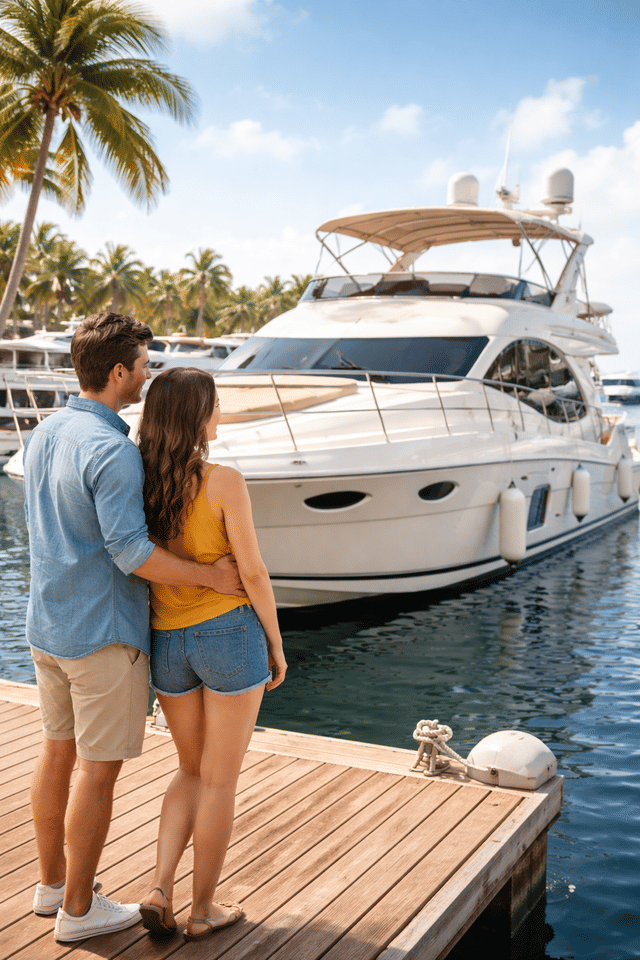
First-time boat buyers who approach financing strategically set themselves up for years of enjoyable ownership rather than financial stress. Understanding the process, knowing what lenders look for, and avoiding common mistakes puts you in control rather than leaving decisions to salespeople motivated to close deals regardless of whether the boat fits your budget.
Take time to get pre-qualified, use the calculator to model different scenarios, and be honest about total ownership costs beyond just the loan payment. The right boat at the right price with the right financing creates a foundation for the boating lifestyle you're looking for. Rush the process or ignore the numbers, and you risk buyer's remorse or financial strain that turns what should be recreation into a burden.
Disclaimer: This article provides general information about boat financing for educational purposes. Loan terms, interest rates, qualification requirements, and available programs vary by lender, borrower qualifications, and market conditions. Always verify current rates and terms directly with lenders, review all loan documents carefully before signing, and consider consulting with a financial advisor about major purchases. Information about lenders, rates, and programs is subject to change.
Boats for Sale

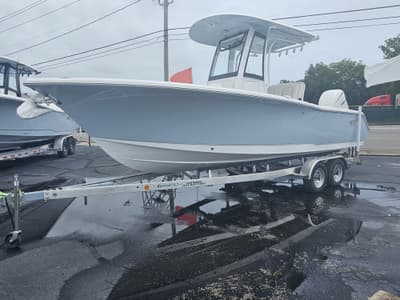
Sea Hunt 245 SE 2027
N/A
$14,537 cash down
 Fort Walton Beach, FL
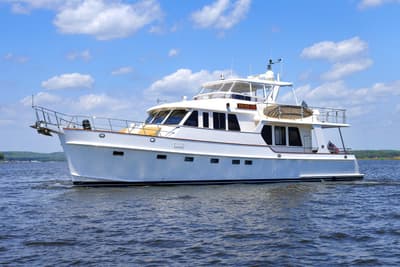
Grand Banks 59 Aleutian RP 2007
59 Aleutian RP | 3343 Hours
$159,900 cash down
Juno Beach, FL


Copyright © 2026 Boatzon™. All Rights Reserved