




Credit Score Requirements for Boat Loans
Credit Score Requirements for Boat Loans


Your credit score opens or closes doors in boat financing more decisively than almost any other factor. While lenders consider your complete financial picture, your score provides their first impression of you as a borrower and heavily influences whether you'll get approved, what interest rate you'll pay, and which loan terms you'll qualify for. Understanding credit score requirements helps you know where you stand and, if necessary, what improvements will yield the biggest financing benefits.
Boat loans typically require minimum credit scores between 650-680, though some specialty lenders work with scores as low as 600-620. The real value of understanding credit requirements isn't just knowing whether you'll qualify, but recognizing how even modest score improvements can save you thousands of dollars over your loan term through better rates and terms.
Credit Score Ranges and What They Mean
Excellent Credit: 760+
Borrowers in this range access the absolute best boat loan terms available. You'll typically see interest rates in the 6-7.5% range for new boats, potentially lower during promotional periods or with relationship pricing at credit unions.
Beyond just rates, excellent credit unlocks maximum flexibility. Lenders approve higher loan amounts relative to income, offer longer terms on borderline-age boats, and may waive certain requirements like larger down payments. The difference between a 780 score and a 720 score might seem arbitrary, but that 60-point gap often translates to 0.5-1% in interest rate differences. On a $75,000 loan over 15 years, that seemingly small distinction saves $40-75 monthly and $7,000-13,000 total.
Good Credit: 700-759
This range represents solid, reliable borrowers who manage credit responsibly. You'll qualify for competitive rates, typically 0.5-1.5% above the best available terms. Most lenders consider you a standard approval with minimal additional scrutiny beyond normal income and employment verification.
Scores in this range provide good financing options but leave room for meaningful improvement. If you're at 720 and can reach 760 through strategic credit management over 6-12 months, the rate improvement often justifies delaying your boat purchase slightly. Our boat payment calculator shows exactly how much these rate improvements save you.
Lenders look more closely at the factors behind your score. A 720 built from 15 years of perfect payment history gets more favorable consideration than a 720 that recently recovered from past delinquencies. The score itself matters, but so does the story it tells about your financial habits.
Fair Credit: 650-699
Borrowers here face more scrutiny and higher costs, but financing remains accessible with most mainstream lenders. Expect rates 1.5-3% above prime borrowers, potentially reaching 9-11% depending on other factors like down payment, income stability, and the boat's age and value.
This range often requires compensating factors. A 670 score might need 20% down instead of 10%, or documented stable employment for 2+ years instead of 6 months. Lenders want to see that despite past credit challenges, you've demonstrated current financial responsibility.
The good news: this is the range where credit improvement efforts yield the highest returns. Moving from 660 to 700 over 6-12 months can drop your rate by 1-2%, saving $50-100 monthly on a typical loan. The path to 700 is relatively clear: pay everything on time, reduce credit card balances, and avoid new credit inquiries.
Poor Credit: 600-649
Financing becomes significantly more challenging here. Many traditional marine lenders set their minimum cutoffs in the 660-680 range, effectively excluding borrowers below that threshold. Specialty lenders who work with this credit tier typically charge 11-14% or higher, require 20-30% down payments, and cap loan terms at 10-12 years regardless of boat age.
Alternative approaches often make more sense. Spending 12-18 months improving your credit to reach 680+ dramatically improves your options. The delayed gratification is frustrating, but financing a boat at 12-14% interest essentially means paying nearly double over the loan's life.
Very Poor Credit: Below 600
Traditional boat financing is largely unavailable below 600. The few lenders working in this range charge prohibitive rates (14-18%+), require massive down payments (40-50%), or both. These loans can quickly become financial traps where you're underwater throughout the loan term and paying extreme costs.
Focus on credit rebuilding rather than boat financing. Secured credit cards, credit builder loans, and consistent on-time payments to all obligations will move your score meaningfully over 12-24 months. The boat will still be there once you're in a better position to finance it reasonably.
What Lenders Look for Beyond the Score
Payment History
Your score's number matters, but lenders dig into what created it. Someone with a 700 score and zero missed payments in the past two years looks substantially different from someone with a 700 score that includes recent 30-day late marks.
Recent payment history weighs most heavily. A single missed payment from four years ago barely registers. A missed payment from four months ago raises immediate red flags because it suggests current financial instability. Lenders want confidence that you'll make boat payments on time based on demonstrated recent behavior.
Major derogatory marks (collections, charge-offs, bankruptcies, foreclosures) create challenges even after scores recover. Time heals these wounds; lenders typically relax scrutiny after 2-3 years for most derogatory marks and 4-5 years for bankruptcies and foreclosures.
Credit Utilization
This measures how much of your available credit you're using. Maxed-out credit cards signal financial stress even if you're making minimum payments on time. Lenders prefer seeing utilization below 30% across all cards, ideally below 10%.
High utilization creates a double problem: it directly lowers your credit score (sometimes by 20-40 points), and it raises lender concerns about your ability to take on additional debt. If you're carrying $18,000 balances on $20,000 in credit card limits, adding a $400 monthly boat payment looks risky regardless of your income.
The fix is straightforward but requires discipline. Pay down balances aggressively before applying for boat financing. Even if you can't eliminate them entirely, reducing utilization from 80% to 30% might boost your score 30-50 points and dramatically improve how lenders view your application.
Length of Credit History
Lenders like seeing established credit histories spanning 5-10+ years. This demonstrates long-term financial responsibility and gives them more data points to assess your borrowing patterns. Thin credit files (only 1-2 years of history) make lenders nervous even with perfect payment records.
Average account age matters too. Opening five new credit cards in six months to "build credit" actually hurts because it tanks your average account age and generates multiple hard inquiries. Strategic credit building means opening accounts sparingly, keeping old accounts active, and letting time work in your favor.
Improving Your Credit Score Before Applying
Time Your Application Strategically
If your score sits just below a meaningful threshold (679 when 680 unlocks better terms, or 719 when 720 does), spending 3-6 months improving it before applying often saves more money than any delay costs you. The quickest improvements come from paying down credit card balances and ensuring perfect on-time payments. Both impact your score within 30-60 days as new account information reports to credit bureaus.
Disputing credit report errors also yields fast results when errors exist. Pull reports from all three bureaus (Experian, Equifax, TransUnion), review carefully for inaccuracies, and file disputes immediately. Corrections typically process within 30-45 days and can boost scores significantly if errors were dragging them down.
Address High Credit Card Balances
If you're carrying balances above 30% of your limits, this represents your highest-impact improvement opportunity. Credit utilization heavily influences scores, and bringing balances below 30% (ideally below 10%) can add 20-50 points or more depending on how high they currently sit.
Focus extra money on cards closest to their limits first. A card with a $9,000 balance on a $10,000 limit (90% utilization) hurts your score more than three cards each carrying $3,000 on $10,000 limits (30% utilization each). Get that maxed card below 50%, then below 30%, then focus on others.
Maintain Perfect Payment History
Nothing matters more going forward than making every single payment on time for everything. Set up autopay for minimums on everything as backup even if you normally pay manually, ensuring you never miss a payment due to forgetfulness or cash flow timing issues.
Even one 30-day late payment tanks your score 60-100+ points depending on your previous history. The damage is worse for people with excellent credit (an otherwise perfect 780 might drop to 680-700) than for people already in the low-600s. Protect your score vigilantly during the months before applying for boat financing.
How Credit Scores Affect Loan Terms Beyond Rate
Maximum Loan Amounts
Lenders calculate your maximum approved loan amount based partly on debt-to-income ratios, but credit score influences how conservatively they apply those ratios. Someone with a 780 score and 42% DTI might get approved, while someone with a 680 score faces denial at 42% DTI and needs to stay below 38-40%.
This means your credit score affects not just what you'll pay for a given boat, but which boats you can finance at all. A buyer with $100,000 income and excellent credit might qualify for a $75,000 boat loan, while the same income with fair credit might cap at $55,000-60,000.
Available Loan Terms
Maximum term lengths often vary by credit tier. Prime borrowers might access 20-year terms on new boats, while fair credit borrowers max out at 15 years for the same boat. This impacts monthly payment affordability significantly; that difference might be $150-200 monthly on a $75,000 loan.
Down Payment Requirements
Minimum down payments increase as credit scores decrease. Excellent credit might access 5-10% down programs, good credit needs 10-15%, and fair credit often faces 20-25% minimums. This front-loads the affordability challenge; you need more cash upfront precisely when higher rates are already making the monthly payment more challenging.
Frequently Asked Questions
What credit score do I need for a boat loan?
-Can I get a boat loan with a 650 credit score?
+How much does my credit score affect my boat loan rate?
+Will applying for a boat loan hurt my credit score?
+How can I improve my credit score quickly?
+Can a co-signer help if my credit score is low?
+How long do negative marks stay on my credit report?
+What if I have bad credit but good income?
+Boats For Sale

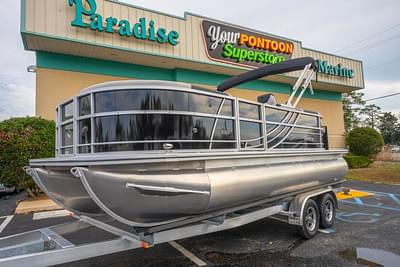
South Bay 220RS LE Rear Seating 275 2025
220RS LE Rear Seating 275 | N/A
$5,628 cash down
 Gulf Shores, AL

Monterey 278SS 2025
N/A
$13,999 cash down
Lancaster, KY


Copyright © 2026 Boatzon™. All Rights Reserved