



- Boats

- Shop
- Finance
- Boatability
- Shopping Tools
- Dealer


Co-Signing a Boat Loan
Responsibilities and Risks


Co-signing a boat loan means legally guaranteeing someone else's debt. You're not just vouching for their character or providing a reference; you're committing to repay the full loan amount if they default. This responsibility comes with serious financial and credit implications that many co-signers don't fully understand until problems arise.
Lenders require co-signers when the primary borrower doesn't qualify independently due to insufficient income, limited credit history, or marginal credit scores. The co-signer's stronger financial profile allows the loan to get approved, often at better rates than the primary borrower could access alone. While this helps someone you care about buy a boat, it creates significant risk and obligation for you as the co-signer.
Responsibilities and Risks
How Co-Signing Actually Works
When you co-sign a boat loan, you become equally responsible for the debt. The lender can pursue either the primary borrower or you for payments, and they typically choose whoever seems more likely to pay. If the primary borrower misses payments, the lender will come after you immediately rather than waiting to exhaust collection efforts against them first.
The loan appears on your credit report just as if you borrowed the money yourself. Late payments damage your credit score, defaults destroy it, and the outstanding balance counts against your debt-to-income ratio when you apply for your own financing. Even if the primary borrower pays perfectly, that $50,000 boat loan shows as your obligation and can prevent you from qualifying for a mortgage or car loan because you already carry too much debt.
You have no ownership rights to the boat despite being legally obligated for the loan. The primary borrower owns the boat, decides how it's used and maintained, and can sell it without your permission. If they sell the boat for less than the loan balance, you're still responsible for the difference. If they wreck it and insurance doesn't cover the full payoff, you owe the shortfall.
Co-signing differs from co-borrowing, though many people use the terms interchangeably. Co-borrowers have ownership rights and shared decision-making authority over the boat. Co-signers have financial obligation without ownership or control. Some lenders structure loans with co-borrowers to give both parties legal rights, but traditional co-signing leaves you with all the risk and none of the benefits.
Credit Impact for Co-Signers
The full loan amount appears on your credit report as an installment loan, reducing your available credit capacity. Lenders calculating your debt-to-income ratio include the full boat payment as your obligation, even if the primary borrower has never missed a payment. This can prevent you from qualifying for mortgages, car loans, or other credit until the boat loan is paid off.
Payment history affects your credit score identically to the primary borrower's score. On-time payments help both credit scores equally. Late payments hurt both scores equally. The primary borrower's behavior directly controls your credit score for the life of the loan, with no ability for you to influence how they manage the payments beyond having difficult conversations.
Even after the loan is paid off, it remains on your credit report for years, showing as a closed installment loan. This isn't necessarily harmful, but the credit utilization and debt-to-income impact during the active loan period can prevent you from accessing credit when you need it. If you're planning to buy a home or refinance your mortgage within the next few years, co-signing a boat loan could derail those plans.
According to the Federal Trade Commission's guide on co-signing, when you co-sign a loan, you become equally responsible for the debt and the lender can pursue you for payment without first trying to collect from the primary borrower. This isn't an unlikely worst-case scenario; it's how co-signed loans legally work.
When Co-Signing Makes Sense
Co-signing works best for close family members with strong relationships where you have visibility into their financial situation and confidence in their responsibility. Adult children establishing credit, spouses rebuilding after financial setbacks, or siblings with stable income but limited credit history represent reasonable co-signing scenarios if you can afford the risk.
The primary borrower should have reliable income sufficient to make the payments comfortably, even if their credit history doesn't reflect that stability yet. Someone earning $80,000 annually but with a thin credit file from recently immigrating or paying cash for everything presents different risk than someone chronically overspending relative to their income. Income stability matters more than credit history for predicting whether they'll actually make payments.
You need financial capacity to absorb the full payment if they default. Co-signing a $60,000 boat loan with $700 monthly payments means having $700 in your monthly budget available to cover those payments indefinitely if necessary. If absorbing that payment would strain your finances or require you to cut essential expenses, you can't afford to co-sign regardless of how confident you feel in the primary borrower.
Consider the relationship consequences if the loan goes bad. Co-signing for family members or close friends creates potential for severe relationship damage if they default and you're forced to either pay or watch your credit get destroyed. Money conflicts destroy relationships regularly, and co-signed loans amplify normal lending tensions because you had no choice in assuming the debt once they defaulted.
Protecting Yourself as a Co-Signer
Request access to the loan account online so you can monitor payments in real time. Don't wait for the primary borrower to tell you about missed payments; verify each month that the payment is posted on time. Early detection of payment problems gives you time to intervene before late payments hit credit reports.
Discuss expectations clearly before co-signing. Will the primary borrower notify you immediately if they face financial difficulty making payments? Do you want monthly updates confirming payments were made? What happens if you need to take over payments temporarily? Having these conversations upfront prevents misunderstandings later when emotions run high during financial stress.
Consider whether the primary borrower can afford adequate insurance coverage. If they wreck or sink the boat without comprehensive insurance, you're liable for the full loan balance on a boat that no longer exists. Verify they're carrying coverage that protects your interest as co-signer, not just the minimum required by the lender.
Some lenders offer co-signer release provisions that remove you from the loan after the primary borrower makes 12-24 consecutive on-time payments and can qualify independently through refinancing. Ask about these options before co-signing. Building co-signer release into the agreement creates a path to limit your exposure if things go well rather than being stuck for the full loan term.
When to Decline Co-Signing Requests
Decline if you're already carrying significant debt yourself. Adding another large obligation to your credit report when you're already near your borrowing capacity creates serious risk of being unable to handle emergencies or major life events requiring credit access. Your financial security comes before helping someone else buy a recreational vehicle.
Decline if the primary borrower's financial situation seems unstable or if they've shown poor financial judgment previously. Past behavior predicts future behavior with money. Someone who defaulted on prior loans, habitually pays bills late, or consistently overspends relative to their income will likely continue those patterns regardless of promises to change.
Decline if you have any doubts about your own financial stability over the loan term. A 15-year boat loan means committing to potential financial liability through 2040. Can you predict your income, expenses, and financial situation with confidence that far out? Job loss, medical issues, divorce, or other major life changes could make absorbing boat payments catastrophic rather than merely difficult.
Decline if being asked to co-sign makes you uncomfortable. Trust your instincts. If something feels wrong about the request or you sense the primary borrower isn't being fully honest about their financial situation, that discomfort exists for good reason. Saying no preserves both your finances and the relationship better than reluctantly co-signing and resenting them when problems arise.
Alternatives to Co-Signing
Suggest the primary borrower work on improving their credit and saving a larger down payment before buying. Six months of on-time payments to all bills combined with saving $10,000-15,000 for a down payment dramatically improves loan qualification odds and demonstrates financial discipline that reduces everyone's risk.
Offer to help with a down payment instead of co-signing. Gifting $5,000-10,000 toward the purchase reduces the loan amount needed, which may allow the borrower to qualify independently. This limits your financial exposure to the gift amount rather than the full loan balance over 15 years.
If you want to help but can't afford the full co-signing risk, suggest they use the boat loan calculator to explore less expensive boats they might qualify for independently. A $35,000 boat they can finance alone beats a $60,000 boat requiring a co-signer and creating ongoing financial stress for both parties.
Frequently Asked Questions
What happens if the primary borrower doesn't pay?
-Can I remove myself as a co-signer later?
+Does co-signing affect my ability to get my own loans?
+What rights do I have as a co-signer?
+Will I know if the primary borrower misses a payment?
+Can the primary borrower sell the boat without my permission?
+What if the primary borrower files for bankruptcy?
+Should I co-sign for a family member who needs help?
+Making the Decision
Co-signing a boat loan is a serious financial commitment that should never be made lightly or out of obligation. The decision requires honest assessment of both the primary borrower's reliability and your own financial capacity to absorb the debt if necessary. Most co-signers who experience problems wish they had declined the request, but very few co-signers who decline ever regret that decision.
Disclaimer: This article provides general information about co-signing boat loans for educational purposes and should not be considered legal or financial advice. Co-signing obligations, legal rights, and consequences vary by state and lender. Individual circumstances differ significantly, and what makes sense for one situation may not apply to another. Always review loan documents carefully, understand your obligations completely, and consult with a financial advisor or attorney before co-signing any loan. Information about co-signing responsibilities and legal obligations is subject to change based on state law and lending regulations.
Explore Boats for Sale

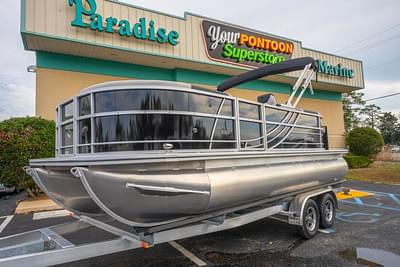
South Bay 220RS LE Rear Seating 275 2025
220RS LE Rear Seating 275 | N/A
May Qualify
 Gulf Shores, AL

Monterey 278SS 2025
N/A
$13,999 cash down
Lancaster, KY

Sea Hunt 245 SE 2027
N/A
$14,537 cash down
Fort Walton Beach, FL


Lund 1775 Renegade SS 2025
1775 Renegade SS | N/A
$3,000 cash down
Norwich, CT

Windy SR 44 BLACKHAWK 2022
SR 44 BLACKHAWK | 210 Hours
$77,500 cash down
Palmetto, FL

Grand Banks 59 Aleutian RP 2007
59 Aleutian RP | 3343 Hours
$159,900 cash down
Juno Beach, FL


Copyright © 2026 Boatzon™. All Rights Reserved