




Boat Loans for Bad Credit
Your Options


Boat Loans for Bad Credit: Your Options
Credit challenges don't automatically disqualify you from boat ownership, but they do change the financing landscape significantly. Understanding what's actually available, what it costs, and how to improve your position before applying helps you make informed decisions rather than accepting the first offer that comes your way.
What "Bad Credit" Actually Means in Boat Financing
Lenders don't use a single universal definition of bad credit, but most marine lenders view credit scores below 640 as presenting elevated risk. That threshold matters because it typically triggers different underwriting standards, higher interest rates, and more restrictive loan terms compared to what borrowers with good credit receive.
The deeper your score sits below that line, the more limited your options become. Borrowers in the 580-640 range face higher rates but usually find willing lenders. Scores below 580 narrow the field considerably, and anything below 550 pushes most traditional marine lenders out of the picture entirely. That doesn't mean financing is impossible, but it does mean the terms will reflect the elevated risk lenders are accepting.
Realistic Expectations About Rates and Terms
Interest rate differences between good credit and bad credit boat loans aren't marginal. A borrower with a 750 credit score might secure financing at 6-7% on a used boat. A borrower at 620 might face 10-12% on that same loan. Drop to 580 and rates can climb to 14-16% or higher, assuming you find a lender willing to approve the application at all.
On a $40,000 boat loan over 15 years, the difference between 7% and 14% interest is roughly $33,000 in total interest paid. That's not a rounding error; it's a fundamental change in what the boat actually costs you. Understanding that reality upfront prevents the sticker shock that comes from discovering midway through applications that your monthly payment will be substantially higher than you'd budgeted.
Loan terms also compress as credit scores drop. Lenders managing risk on bad credit loans often limit terms to 10-12 years rather than the 15-20 years available to borrowers with stronger credit. Shorter terms mean higher monthly payments, which can price some buyers out of boats they could otherwise afford with better credit or longer terms.
Down Payment Requirements Increase
The standard down payment on boat loans typically runs 10-20% for qualified borrowers. Bad credit changes that calculation. Lenders managing elevated risk often require 20-30% down, and some specialty lenders serving very low credit scores may push that to 40% or higher.
A larger down payment serves two purposes from the lender's perspective. It reduces their exposure if the loan defaults, and it demonstrates genuine financial commitment from the borrower. From your perspective, a larger down payment reduces the amount you're financing at those elevated interest rates, which helps control total interest costs somewhat even when the rate itself is unfavorable.
If saving for a larger down payment delays your purchase by several months, that delay may actually save money if you use the time to improve your credit score as well. The combined effect of better credit and a larger down payment can meaningfully improve the financing terms available when you're ready to proceed.
Where to Actually Find Bad Credit Boat Loans
Traditional banks often decline boat loan applications from borrowers with credit scores below their risk thresholds, but that doesn't exhaust your options. Credit unions, particularly those serving specific geographic areas or membership groups, sometimes take a more flexible approach to underwriting and may approve applications that larger banks decline.
Marine-specific lenders who specialize in boat financing often have more experience evaluating marine collateral and may be willing to work with lower credit scores than general lenders would accept. Their expertise with boat values and the marine lending market sometimes translates into slightly more favorable terms than you'd receive from a lender treating your application like any other consumer loan.
Online lending platforms that aggregate multiple lender offers can be useful for bad credit borrowers because they expose you to a wider range of potential approvals without requiring separate applications to each lender. One application generates multiple offers, allowing you to compare actual terms rather than theoretical possibilities.
Some dealers offer in-house financing or have relationships with subprime lenders who accept applications that traditional lenders decline. Dealer financing convenience comes at a cost, typically through higher rates and less favorable terms, but it provides an access point when other options aren't available. Read any dealer financing offer carefully and compare it against other available options before accepting.
How Your Credit Score Affects the Entire Financing Picture
Beyond interest rates and terms, your credit score influences other aspects of the financing process. Co-signer requirements become more common as credit scores drop, with some lenders requiring a qualified co-signer for borrowers below certain score thresholds. That requirement expands access to financing but shifts risk to whoever co-signs, creating obligations they need to understand before agreeing.
Loan-to-value ratios, which measure how much you're borrowing relative to the boat's value, also tighten with lower credit scores. A borrower with excellent credit might finance 90% of a boat's value, while a bad credit borrower might be limited to 70-80%, even with an otherwise strong application.
The age and value of the boat you're financing matters more as credit scores decline. Lenders are generally more willing to finance newer boats with lower-credit borrowers than older vessels, because newer boats hold value more reliably and represent less risky collateral. That often means bad credit borrowers face more limited selection in the used boat market than their budget would otherwise support.
Strategic Credit Improvement Before Applying
The most effective way to improve bad credit boat financing options is to improve your credit before applying. Even modest improvements can shift you into better rate tiers and expand your lender options meaningfully.
Paying down existing revolving credit balances, particularly credit cards, can boost scores relatively quickly. Credit utilization, the percentage of available credit you're using, carries significant weight in score calculations. Reducing balances below 30% of your credit limits helps, and getting below 10% helps more.
Disputing errors on credit reports is worth the time investment. Studies suggest meaningful percentages of credit reports contain errors that negatively affect scores. Correcting those errors through the dispute process can improve your score without requiring any change in your actual credit behavior.
Payment history represents the largest single factor in credit score calculations, so establishing a consistent pattern of on-time payments across all credit obligations helps over time. There's no shortcut here; the positive impact accumulates through sustained good behavior, but that behavior genuinely moves scores upward.
Avoiding new credit applications in the months before applying for a boat loan prevents the multiple hard inquiries that temporarily depress scores. Each application generates an inquiry, and multiple inquiries in a short period suggest elevated credit risk to scoring models.
Making the Calculator Work for You
Running scenarios through the Boatzon calculator helps you understand how different credit-driven rate assumptions affect your actual monthly payment and total loan cost. The difference between 7% and 14% interest becomes concrete rather than abstract when you see the monthly payment and total interest figures side by side.
That clarity helps with two important decisions. First, it shows you what improving your credit score by even 50-100 points would actually save you in monthly costs and total interest over the loan's life. That information helps you weigh whether delaying your purchase to improve credit makes financial sense. Second, it shows you how larger down payments offset some of the damage from higher interest rates by reducing the amount you're financing at those unfavorable terms.
The Long View on Bad Credit Boat Financing
Accepting bad credit financing terms isn't necessarily a permanent situation. Once you've established payment history on the boat loan and continued improving your overall credit profile, refinancing becomes an option. If your score improves 100 points over two years of consistent payments, refinancing at a lower rate can reduce your monthly payment and total interest costs for the remaining term.
Some borrowers view initial bad credit financing as a bridge: it provides access to boat ownership now while their credit situation improves, with refinancing planned as a deliberate next step once they qualify for better terms. That approach works when you've done the math and confirmed the initial high-rate loan fits your budget while leaving room for the other costs of boat ownership.
Bad credit boat loans exist, and they serve a real purpose for buyers who need financing now despite past credit challenges. Understanding the actual costs, realistic terms, and strategic alternatives helps you make informed decisions rather than accepting whatever terms get offered first.
Boats For Sale

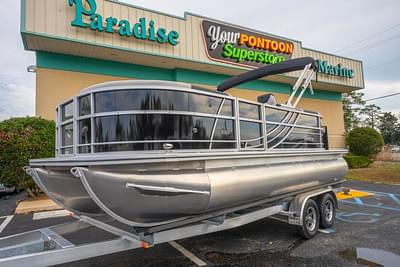
South Bay 220RS LE Rear Seating 275 2025
220RS LE Rear Seating 275 | N/A
$5,628 cash down
 Gulf Shores, AL
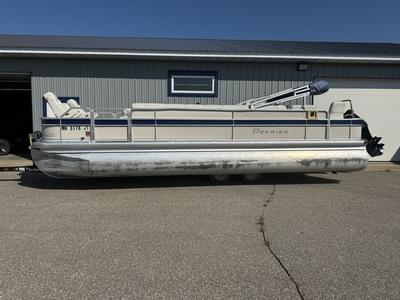

Monterey 278SS 2025
N/A
$13,999 cash down
Lancaster, KY


Copyright © 2026 Boatzon™. All Rights Reserved