




Boat Loan Terms & Length
10-20 Year Guide

10-20 Year Guide
Choosing the right loan term for your boat affects far more than your monthly payment. The length of your financing determines how much interest you'll pay, how quickly you build equity, and whether you'll still be making payments on a boat that's reaching the end of its useful life. Understanding how loan terms work and which term makes sense for your situation helps you structure financing that aligns with both your budget and your long-term boating plans.
Boat loan terms typically range from 5 to 20 years, with the boat's age, value, and condition determining what lenders will approve. A brand-new center console might qualify for 20-year financing, while a 15-year-old fishing boat maxes out at 7-8 years. You have flexibility in choosing your term length, and the right choice depends more on your financial priorities than any universal "best practice."
How Boat Loan Terms Work
When you finance a boat, you're borrowing a lump sum and repaying it in equal monthly installments over a set period. That period is your loan term, typically measured in months (120 months equals 10 years, 180 months equals 15 years, and so on). Your monthly payment covers both the principal (the amount you borrowed) and interest (what the lender charges for the loan).
Longer terms spread your payments over more months, reducing what you pay each month but increasing the total interest you'll pay over the life of the loan. Shorter terms do the opposite: higher monthly payments but substantially less interest paid overall. Most boat loans use simple interest with fixed rates, meaning your interest rate stays constant throughout the loan term and you know exactly what each payment will be from month one through final payoff.
Standard Loan Terms by Boat Age
New Boats (0-5 years old)
New and nearly-new boats qualify for the longest available terms, typically 15-20 years. Lenders view these boats as predictable collateral with established values and strong resale markets. The latest model boat from a reputable manufacturer can often secure 240-month (20-year) financing with competitive rates.
These extended terms make expensive boats accessible to buyers who couldn't afford the payments on shorter terms. A $100,000 boat financed at 7.5% over 20 years costs $806 monthly, compared to $1,161 monthly over 10 years. That $355 monthly difference opens up ownership for families who want premium features without stretching their budget uncomfortably.
The consideration: a 20-year loan means you'll be making payments well into the vessel's middle age. You need confidence you'll use and enjoy the boat for most or all of that period, or accept that you might trade up before payoff and potentially carry negative equity into your next purchase.
Mid-Age Boats (6-10 years old)
Boats in this range typically qualify for 10-15 year terms, depending on the specific age, condition, and brand reputation. A well-maintained 8-year-old Grady-White or Boston Whaler might secure a 15-year term, while a lesser-known brand of the same age caps out at 12 years.
These boats represent a sweet spot for many buyers: they've already absorbed significant depreciation (new boats lose 20-30% in the first 3-5 years), but they're young enough to qualify for reasonable financing terms. Calculate whether you're buying a boat that will outlast your loan. A 7-year-old boat financed for 12 years will be 19 years old at payoff. Quality boats regularly last 25-30+ years with proper maintenance, so this timeline works fine.
Older Boats (11-20 years old)
Boats older than a decade face more restrictive financing, typically maxing out at 7-10 year terms. Lenders view these as higher-risk collateral because values become less predictable, maintenance needs increase, and resale markets narrow as boats age. Interest rates on older boats also run higher, often 1-2 percentage points above comparable loans on newer vessels.
For buyers considering boats in this age range, run the numbers carefully. If you're looking at a $40,000 boat that's 12 years old and can only finance it for 7 years at 9.5%, your monthly payment might run $575-600. Compare that against financing a $55,000 boat that's 5 years old for 12 years at 7.5%, which creates a similar monthly payment but gets you a significantly newer vessel.
Very Old Boats (20+ years)
Most traditional marine lenders won't finance boats older than 20 years, regardless of condition or brand. The exceptions: iconic brands with proven longevity (like certain Hatteras or Bertram models) occasionally qualify for specialty lenders who understand the classic boat market. If you're set on an older boat, unsecured personal loans become your best option, though these cap out around 7 years with rates typically between 10-16%.
Choosing Your Ideal Term Length
Balancing Monthly Payment and Total Cost
The difference in total interest paid between term lengths can be substantial. Consider a $60,000 loan at 7.5%:
- 10-year term: $713 monthly, $25,560 total interest
- 15-year term: $556 monthly, $40,080 total interest
- 20-year term: $483 monthly, $55,920 total interest
That $230 monthly savings from choosing 20 years over 10 costs you an additional $30,360 in interest over the loan's life. For some buyers, that trade-off makes perfect sense because the monthly flexibility matters more. For others focused on minimizing total cost, the shorter term is clearly superior despite higher payments.
Your monthly boat payment shouldn't exist in isolation. Factor in insurance ($50-200+ monthly), slip or storage fees ($100-500+ monthly), fuel costs, and maintenance reserves. A comfortable guideline: keep total boat-related expenses under 10-15% of your gross monthly income. If a 10-year term creates a payment that pushes you over that threshold, extending to 12 or 15 years might provide the breathing room you need.
Equity Building and Future Flexibility
Shorter loan terms build equity faster, which matters if you plan to trade up within 5-7 years. Boats depreciate most steeply in their first five years (often 20-30% of original value), and if you're on a 20-year payment schedule, your loan balance may exceed the boat's value during those early years.
Being "underwater" on your boat loan isn't catastrophic if you plan to keep the boat long-term, but it limits your flexibility. If life circumstances change and you need to sell, coming up with cash to cover the difference between sale price and loan payoff can be challenging. Buyers who upgrade boats frequently (every 5-8 years) benefit from shorter terms that keep them roughly even with or ahead of depreciation.
How Lenders Determine Maximum Terms
Loan-to-Value Ratios
Lenders calculate your loan-to-value (LTV) ratio by dividing your loan amount by the boat's appraised value. The higher your LTV, the riskier the loan from the lender's perspective. Maximum available terms often correlate with LTV; a 90% LTV loan might max out at 12 years while an 80% LTV loan on the same boat qualifies for 15 years.
Putting more money down reduces your LTV and can unlock longer terms. On a $50,000 boat, putting $10,000 down (80% LTV) instead of $5,000 down (90% LTV) might extend your maximum term from 12 to 15 years.
Brand and Model Reputation
Lenders maintain databases tracking which boat brands and models hold value reliably. A 10-year-old Grady-White, Boston Whaler, or Pursuit might qualify for 12-15 year terms while a same-age lesser-known brand caps at 8-10 years. The difference comes down to proven resale performance; lenders know they can recover their money quickly on repossessed premium brands.
If you're comparing boats at similar price points, checking financing availability can reveal value differences that aren't obvious from asking prices alone. The boat that qualifies for longer terms at better rates effectively costs less to own than one with identical features but inferior financing options.
When Shorter Terms Make Sense
Buyers focused on total ownership cost rather than monthly payment flexibility benefit dramatically from shorter terms. The interest savings often dwarf the inconvenience of higher monthly payments. On a $50,000 loan at 8%, choosing 8 years over 15 years saves you approximately $16,000 in total interest.
Financing an older boat for the maximum available term can leave you making payments on a vessel approaching the end of its practical life. A 12-year-old boat financed for 10 years will be 22 years old at payoff, potentially worth very little if it's not a premium brand that ages exceptionally well. Shorter terms on older boats align loan duration with realistic useful life.
Buyers who treat boats like vehicles and trade regularly should avoid long-term financing. If you're likely to want something different in 5-7 years, shorter terms ensure you're not carrying significant negative equity into your next purchase.
When Longer Terms Make Sense
If stretching to afford a boat on a 10-year term means sacrificing other financial goals or living uncomfortably tight on your budget, longer terms provide essential breathing room. The additional interest paid over time matters less than maintaining financial stability and enjoying boat ownership without constant stress about the payment.
High-quality boats from manufacturers known for longevity and value retention justify longer financing because you'll realistically use and enjoy them for 15-20+ years. A Viking sportfish, Grady-White canyon runner, or premium pontoon from Bennington or Harris holds value well enough that 20-year financing doesn't leave you underwater for long.
Buyers early in their careers with strong income growth trajectories benefit from longer terms that keep current payments manageable while expecting to accelerate payoff as earnings increase. Taking a 15-year term with plans to make large extra payments once you're earning significantly more provides flexibility without over-committing now.
Frequently Asked Questions
What's the average boat loan term?
-Can I pay off my boat loan early?
+Do longer loan terms have higher interest rates?
+What's the longest boat loan term available?
+Should I match my loan term to how long I'll keep the boat?
+How does the loan term affect my monthly payment?
+Can I refinance to a different loan term later?
+What happens if I want to sell my boat before the loan term ends?
+Explore Boats for Sale

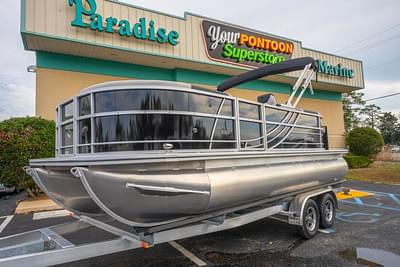
South Bay 220RS LE Rear Seating 275 2025
220RS LE Rear Seating 275 | N/A
$5,628 cash down
 Gulf Shores, AL
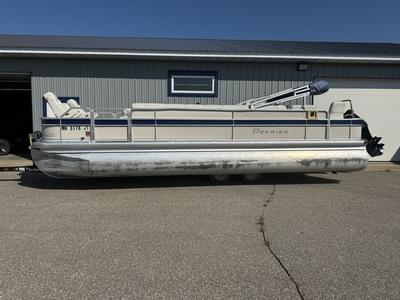

Monterey 278SS 2025
N/A
$13,999 cash down
Lancaster, KY

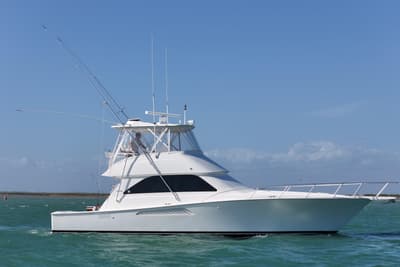
Viking Convertible 2008
Convertible | 3090 Hours
$69,900 cash down
Port Aransas, TX
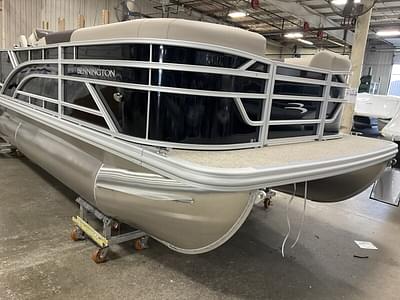
Bennington 20SL YAMAHA T50 2025
N/A
$3,690 cash down
Fergus Falls, MN
Starcraft Marine EX 20 FD 2026
EX 20 FD | N/A
May Qualify
Waterford Township, MI


Copyright © 2026 Boatzon™. All Rights Reserved