




Boat Loan Tax Deductions
What You Can Write Off


Boat loan interest can be tax deductible under specific circumstances, but the rules are more restrictive than most boat owners realize. The IRS allows deductions for mortgage interest on qualified residences, which can include boats if they meet certain requirements. Understanding these rules before claiming deductions helps you avoid costly mistakes during tax season.
The key distinction is between boats used as primary or secondary residences versus boats used purely for recreation. A boat that serves as your home for part of the year may qualify for the mortgage interest deduction, while a boat you trailer to the lake on weekends almost certainly won't. The IRS scrutinizes these deductions carefully, so documentation and legitimate use as a residence matter enormously.
What You Can Write Off
The Qualified Residence Requirement
For boat loan interest to be deductible, the IRS requires the boat to qualify as either your main home or a second home. This means the boat must have basic living accommodations: sleeping space, a toilet, and cooking facilities. Most cruisers, trawlers, and larger houseboats meet these requirements easily. Smaller boats without galleys or heads don't qualify regardless of how you use them.
The boat must also be used as a residence, not just capable of being one. The IRS expects you to actually sleep aboard for some portion of the year. The official IRS guidance on home mortgage interest deductions explains these requirements in detail, though there's no specific minimum number of days required. Claiming a boat as a second home when you've never spent a night aboard creates obvious audit risk. Reasonable personal use that demonstrates actual residential occupancy supports your deduction.
You can only claim mortgage interest deductions on two homes total: your primary residence and one second home. If you already own a primary home and a vacation house, your boat can't also qualify for the deduction even if it meets all other requirements. The limit is strict, and choosing which properties to designate as your qualified residences requires strategic thinking about which loans carry the highest interest.
Loan Requirements for Deductibility
The loan must be secured by the boat itself to qualify for the mortgage interest deduction. Unsecured personal loans used to purchase boats don't meet IRS requirements even if the boat qualifies as a residence. The security interest gets recorded on the boat's title or documented through a preferred ship mortgage for documented vessels, creating the legal lien that makes it a qualified mortgage.
Loan amount limits apply based on when you took out the loan. For loans originated after December 15, 2017, you can deduct interest on mortgage debt up to $750,000 total across all qualified residences ($375,000 if married filing separately). Loans originated before that date follow the older $1 million limit. These limits apply to the combined mortgage debt on your home and boat, not each property separately.
Home equity loans and lines of credit secured by boats face stricter rules. The 2017 tax law eliminated deductions for home equity debt unless the money was used to buy, build, or substantially improve the property securing the loan. Using a home equity line to purchase a boat that qualifies as a residence can work, but using it to buy a boat that doesn't qualify as a residence won't generate deductible interest.
Required Documentation
Keep detailed records supporting your boat's qualification as a residence. Photos showing sleeping quarters, galley, and head facilities establish that the boat meets basic requirements. Maintenance logs, marina receipts, and documentation showing where the boat is kept support your claim that it's actually used as a residence rather than just stored somewhere.
Track the days you spend aboard throughout the year. While the IRS doesn't specify a minimum number of nights, demonstrating regular personal use strengthens your position if questioned. Log entries noting overnight stays, fuel receipts from cruising trips, and marina records showing extended stays all support legitimate residential use.
The Form 1098 from your lender reports mortgage interest paid during the year. Most marine lenders provide these forms automatically for secured boat loans over certain amounts, just like home mortgage lenders. If your lender doesn't provide a 1098, you'll need to track the interest yourself and report it correctly on Schedule A of your tax return.
Claiming the Deduction
Boat loan interest deductions get claimed on Schedule A as mortgage interest, the same place you report your home mortgage interest. You'll need to itemize deductions rather than taking the standard deduction, which means your total itemized deductions (mortgage interest, property taxes, charitable contributions, etc.) must exceed the standard deduction amount to benefit.
The 2017 tax law nearly doubled standard deduction amounts to $13,850 for single filers and $27,700 for married couples filing jointly (2023 amounts, adjusted annually for inflation). Many boat owners who previously itemized now benefit more from the standard deduction, which eliminates any tax benefit from boat loan interest even if the boat qualifies as a residence.
Calculate whether itemizing makes sense before assuming your boat loan interest provides tax benefits. Add up all your potential itemized deductions including mortgage interest, state and local taxes (capped at $10,000), charitable contributions, and medical expenses exceeding 7.5% of adjusted gross income. Only if this total exceeds your standard deduction do the itemized deductions reduce your tax bill.
State and Local Taxes
Property taxes on boats may also be deductible as part of the state and local tax (SALT) deduction, subject to the $10,000 combined cap that includes property taxes on all your real estate. Some states assess annual personal property taxes on boats based on value, which would count toward this limit. Registration fees and other administrative charges generally aren't deductible.
State tax treatment varies significantly. Some states allow deductions for boat loan interest that mirrors federal rules, while others have different requirements or don't allow the deduction at all. Consult state-specific tax guidance or work with a tax professional familiar with your state's rules to maximize available deductions.
What Does Not Qualify
Operating expenses like fuel, insurance, dockage, and routine maintenance aren't deductible even if your boat qualifies as a second home. These costs parallel homeownership expenses like utilities and landscaping, which also aren't deductible. Only the loan interest itself qualifies for the mortgage interest deduction.
Boats used primarily for business or charter don't qualify for the mortgage interest deduction as a residence. If you charter your boat or use it significantly for business purposes, different tax rules apply involving business expense deductions and depreciation. Mixing personal residential use with business use creates complex tax situations requiring professional guidance.
Loan origination fees, points, and closing costs on boat loans follow different rules than ongoing interest. While points paid on home mortgages can often be deducted immediately, boat loan origination fees typically must be amortized over the life of the loan if they're deductible at all. The tax treatment depends on specific circumstances and loan structure.
Audit Risk and Compliance
The IRS pays particular attention to boat loan interest deductions because the rules get misunderstood frequently. Claiming a deduction for a boat that doesn't meet the qualified residence requirements or reporting unsecured loan interest as mortgage interest creates audit exposure. Accurate record-keeping and conservative interpretations of requirements reduce risk.
If you're audited, you'll need to prove both that your boat meets the physical requirements for a residence and that you actually use it as one. The burden of proof falls on you as the taxpayer. Strong documentation prepared contemporaneously (maintenance logs kept throughout the year, not created during an audit) carries more weight than after-the-fact attempts to justify the deduction.
Frequently Asked Questions
Can I deduct boat loan interest on my taxes?
-What makes a boat qualify as a second home?
+Do I need to itemize to deduct boat loan interest?
+Is there a limit on how much boat loan interest I can deduct?
+Can I deduct boat insurance or dockage fees?
+What if I use my boat for charter or business?
+Do I need a 1098 form from my lender?
+Can I deduct interest on a loan used to buy a boat that I live on full-time?
+Working With Tax Professionals
Boat loan tax deductions involve complex rules that most general tax preparers don't encounter regularly. Consider working with a CPA or enrolled agent familiar with maritime tax issues, particularly if you have questions about whether your situation qualifies. The cost of professional guidance typically pays for itself through avoided mistakes and optimized deduction strategies.
Understanding boat financing fundamentals helps you structure your loan in ways that maximize potential tax benefits. Choosing secured financing over unsecured loans, documenting your boat's use as a residence, and maintaining detailed records all support legitimate deductions while minimizing audit risk.
Disclaimer: This article provides general information about boat loan tax deductions for educational purposes only and should not be considered tax advice. Tax laws are complex and change frequently. Individual circumstances vary significantly, and what qualifies for one taxpayer may not qualify for another. Always consult with a qualified tax professional or CPA familiar with maritime tax issues before claiming boat-related tax deductions. The IRS provides detailed guidance in Publication 936 (Home Mortgage Interest Deduction) that applies to boats qualifying as residences.
Explore Boats for Sale

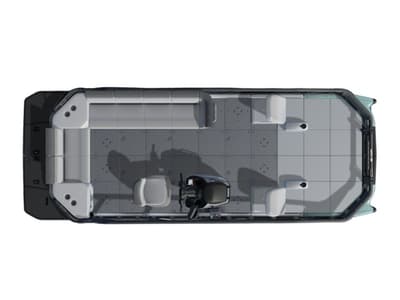
Sea-Doo Switch Sport 21 300 hp Galvanized 2026
Switch Sport 21 300 hp Galvanized | N/A
$4,735 cash down
 Hollywood, FL
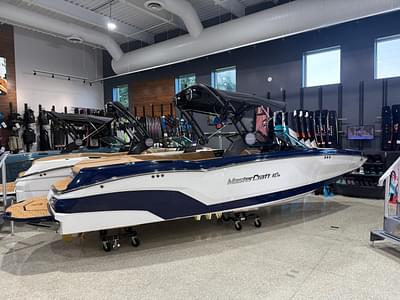
MasterCraft NXT24 2025
NXT24 | N/A
$14,067 cash down
Polk City, FL


Copyright © 2026 Boatzon™. All Rights Reserved