



- Boats

- Shop
- Finance
- Boatability
- Shopping Tools
- Dealer


Boat Loan Length
Choosing the Right Term

Boat loan terms range from 2-20 years, and choosing the right length dramatically affects both your monthly budget and total interest paid over the life of the loan. A $60,000 boat financed at 7.5% costs $3,900 more in interest over 15 years compared to 10 years, but the shorter term increases monthly payments by $176. Understanding these trade-offs helps you select a term that balances affordability with minimizing total cost.
Most boat buyers focus exclusively on monthly payments when comparing loan terms, asking "can I afford this payment?" rather than "what will this actually cost me?" That approach leads to extending terms unnecessarily, paying thousands more in interest to reduce monthly payments by modest amounts. The smarter strategy considers both immediate affordability and long-term cost, choosing the shortest term you can comfortably manage.
Boat age and value create hard limits on available terms regardless of your preference. Lenders won't finance a 15-year-old boat for 20 years because the loan would outlast the boat's useful life. These restrictions force important decisions about whether to finance at all, how much to put down, or whether to consider newer boats that qualify for longer terms with lower payments.
Choosing the Right Term
How Boat Age Affects Maximum Loan Terms
Lenders calculate maximum terms by adding the loan length to the boat's current age, requiring that the sum stays below certain thresholds. A new boat might qualify for 20 years, while a 10-year-old boat maxes out at 10-12 years, and a 15-year-old boat might only get 5-7 years. These formulas vary between lenders, but the principle remains consistent: older boats get shorter terms.
The logic behind age restrictions protects both lenders and borrowers from scenarios where loans exceed boat values. A 25-year-old boat with 10 years remaining on a loan has virtually no resale value, making default attractive if the borrower faces financial difficulties. Lenders limit this risk by keeping loan terms shorter than the boat's practical lifespan.
New boats manufactured in the current model year typically qualify for maximum terms of 15-20 years depending on purchase price. Boats under $25,000 might max out at 12-15 years even when new, while boats exceeding $100,000 often qualify for 20-year terms. This value-based restriction reflects the reality that higher-value boats hold value longer, justifying extended financing.
Boats 1-5 years old generally qualify for 12-15 year terms. A three-year-old boat purchased today might get a 12-year loan, creating a total age of 15 years when the loan matures. Some lenders extend this slightly for premium brands known for longevity, but 15 years remains a common ceiling.
Boats 6-10 years old typically max out at 10-12 year terms. A seven-year-old boat might qualify for a 10-year loan, reaching 17 years old at payoff. Rates on these older boats often run 0.5-1% higher than new boat rates, partially offsetting the benefit of lower purchase prices.
Boats over 10 years old face significant term restrictions. A 12-year-old boat might only qualify for 8 years, while a 15-year-old boat might be limited to 5 years or declined entirely. At this age, many buyers choose personal loans rather than secured boat loans, accepting higher rates for more flexible terms.
Comparing Total Interest Across Different Terms
The difference in total interest between loan terms appears modest when stated as percentages but translates into thousands of dollars over the loan life. Understanding these actual dollar amounts helps you evaluate whether extended terms justify their cost.
Consider a $60,000 boat loan at 7.5% interest across different terms. A 10-year loan creates monthly payments of $713 and total interest of $25,560. Extending to 15 years reduces monthly payments to $556 but increases total interest to $40,080. The 20-year option drops payments to $484 while ballooning total interest to $56,160.
Breaking this down: the 15-year term saves you $157 monthly compared to 10 years, but that convenience costs $14,520 in additional interest. The 20-year term saves another $72 monthly compared to 15 years, costing an additional $16,080 in interest. You're essentially paying $98 per month for the privilege of having $157 lower payments, which represents terrible value.
The same pattern appears at different loan amounts. A $40,000 loan at 7.5% costs $17,040 in interest over 10 years versus $26,720 over 15 years. That $9,680 difference funds several years of maintenance, insurance, or fuel costs that you'll need anyway. Viewing extended terms as trading future boat expenses for current payment relief clarifies the true cost.
Boats under $25,000 show smaller absolute differences but similar percentage increases. A $20,000 loan at 8% costs $9,120 in interest over 10 years versus $14,400 over 15 years. That $5,280 difference might not seem enormous, but it represents over 25% of the original loan amount paid purely in interest.
Monthly Payment Trade-Offs
Monthly payment differences between terms matter more for some buyers than others depending on budget constraints and competing financial priorities. A retiree on fixed income might need the lower payment regardless of total cost, while a high-earner focused on wealth building should minimize interest.
The payment-to-income ratio helps determine appropriate terms. Financial advisors typically recommend keeping all debt payments under 36% of gross monthly income. If a 10-year boat loan pushes you above this threshold but a 15-year loan keeps you comfortably below it, the longer term makes sense despite higher total cost.
Payment stability matters for household budgeting. Knowing exactly what you'll pay each month for 15 years allows precise financial planning, while variable-rate loans or shorter terms requiring refinancing create uncertainty. Some buyers value predictable payments enough to accept slightly higher total costs, particularly those managing complex household budgets with multiple financial obligations.
Seasonal income creates another consideration for term selection. Fishing guides, charter captains, or others with seasonal cash flow might prefer slightly longer terms that keep payments manageable during slow months, accepting higher total cost for cash flow stability. This trade-off can be worth it when irregular income creates payment risk.
When Longer Terms Make Sense
Extended loan terms aren't always wrong despite higher total costs. Certain scenarios justify prioritizing lower payments over minimizing interest, making 15-20 year terms the smarter choice.
Buyers planning to refinance within 3-5 years benefit from lower current payments even with higher rates. If you expect income increases, credit score improvements, or rate drops that enable refinancing to better terms, starting with a longer term that you'll refinance away makes sense. This strategy keeps payments affordable while you improve your refinancing position.
Investment opportunity costs sometimes justify longer boat loan terms. If you can invest the payment difference and earn returns exceeding your loan rate, extended terms create wealth despite higher interest costs. A 7% boat loan extended to free up $200 monthly for investments earning 10% produces net gains over time.
Premium boats from brands like Viking, Hatteras, or custom builders hold value exceptionally well, sometimes appreciating rather than depreciating. Financing these boats over 15-20 years carries less risk than financing mass-market boats over the same period because strong resale markets mean you'll likely never be underwater on the loan.
Cash flow preservation during early ownership years can justify longer terms even for buyers who could afford shorter ones. Boat ownership creates unexpected expenses in the first few years as you upgrade electronics, add fishing gear, or handle deferred maintenance. Keeping payments lower while you invest in these improvements, then making extra principal payments later, provides flexibility that rigid short-term loans don't allow.
When Shorter Terms Make More Sense
Shorter loan terms work better for most buyers on most boats because they minimize total cost and build equity faster. If you can afford the higher payments without straining your budget, shorter terms almost always prove smarter financially.
Boats that depreciate quickly justify shorter terms that pay them off before resale value drops below the loan balance. Mass-market brands in competitive categories lose 20-30% of their value in the first three years. Financing these over 20 years virtually guarantees being underwater for the first decade of ownership.
Buyers who plan to upgrade boats every 5-7 years should use terms no longer than their planned ownership period. Reaching the upgrade point with a paid-off boat or small remaining balance provides maximum flexibility. Owing $40,000 on a boat worth $45,000 gives you trade-in equity. Owing $55,000 on the same boat forces you to bring cash to the deal or roll negative equity into your new loan.
Older boats nearing the end of their useful life should be financed over the shortest terms possible regardless of payment impact. A 12-year-old boat financed over 10 years will be 22 years old at payoff. Major systems like engines, outdrives, and electronics often need replacement at this age. Paying off the loan quickly ensures you're not financing repairs on top of loan payments.
High earners focused on minimizing interest should always choose the shortest terms they can comfortably afford. The interest savings compound into significant wealth over time when redirected toward investments. Paying $15,000 less in interest over a loan's life and investing that difference creates multiples of the saved amount over decades.
Finding Your Optimal Term Length
The right loan term balances monthly affordability with total cost minimization while accounting for your specific boat, financial situation, and plans. Working through this decision systematically prevents choosing terms based purely on payment amounts. Using the boat loan calculator helps you compare actual monthly payments and total costs across different loan terms for your specific boat purchase.
Calculate your debt-to-income ratio including the boat loan payment. Add all monthly debt payments (mortgage, car loans, credit cards, student loans) and divide by gross monthly income. If the boat payment pushes you above 36%, consider whether a longer term brings you back into safe range or whether you should look at less expensive boats.
Run total interest comparisons on terms you're considering. Understanding that a 15-year term costs $12,000 more than a 10-year term frames the decision differently than just seeing monthly payment differences. That $12,000 could upgrade to better electronics, cover several years of maintenance, or fund other priorities.
Consider your ownership timeline. If you typically keep boats 5-7 years, aim for terms no longer than your planned ownership. Paying toward principal rather than interest for the majority of your ownership provides flexibility when you're ready to upgrade.
Evaluate the boat's depreciation trajectory. Researching similar models' resale values after 5, 10, and 15 years shows whether your loan balance will likely exceed boat value at various points. Avoid scenarios where you'd be significantly underwater unless you're certain you'll keep the boat long enough to reach neutral equity.
Frequently Asked Questions
What's the maximum term for boat loans?
-How does loan term affect interest rates?
+Can I pay off a long-term boat loan early?
+What loan term do most boat buyers choose?
+How much does term length affect monthly payments?
+Should I choose the longest term available?
+Can I refinance to change my loan term later?
+Does putting more down allow longer terms?
+Choosing Terms That Work for You
Loan term selection affects boat affordability more than any other financing variable besides interest rate. The right term creates manageable monthly payments without unnecessarily inflating total cost through excessive interest charges. Taking time to compare actual dollar amounts across different terms prevents defaulting to maximum terms just because payments seem more comfortable.
Most buyers benefit from choosing terms shorter than their maximum qualification. A boat that qualifies for 20 years might make more financial sense at 12-15 years, creating only moderately higher payments while saving substantial interest. The calculator shows these trade-offs clearly, letting you see exactly what each additional year of term length costs in total dollars.
Your boat choice, financial situation, and ownership plans all factor into optimal term selection. Think beyond monthly payments to consider total cost, equity building timeline, and how the financing fits into your broader financial picture. Understanding marine loan options across different lenders helps you find terms and rates that match your needs. The goal isn't the lowest possible payment but rather the best balance between affordability and cost efficiency for your specific situation.
Disclaimer: This article provides general information about boat loan terms and financing for educational purposes. Interest rates, term availability, and qualification requirements vary significantly between lenders and change based on market conditions, borrower creditworthiness, boat age and value, and other factors. Loan terms, payment amounts, and interest calculations shown are examples and may not reflect current market conditions or your specific situation. Always compare actual loan offers from multiple lenders and review complete loan documents before making financing decisions. Information about loan terms and financing options is subject to change based on lender policies and market conditions.
Explore Boats for Loans

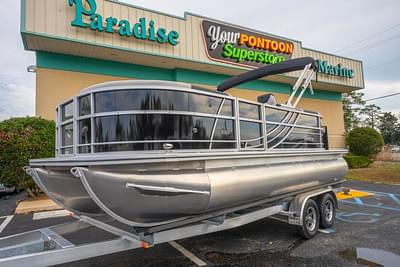
South Bay 220RS LE Rear Seating 275 2025
220RS LE Rear Seating 275 | N/A
May Qualify
 Gulf Shores, AL

Monterey 278SS 2025
N/A
$13,999 cash down
Lancaster, KY
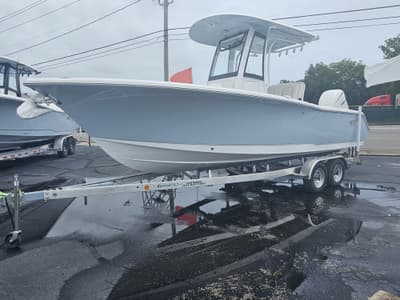
Sea Hunt 245 SE 2027
N/A
$14,537 cash down
Fort Walton Beach, FL

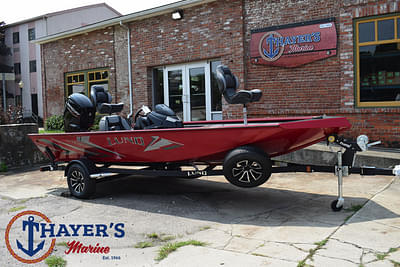
Lund 1775 Renegade SS 2025
1775 Renegade SS | N/A
$3,000 cash down
Norwich, CT
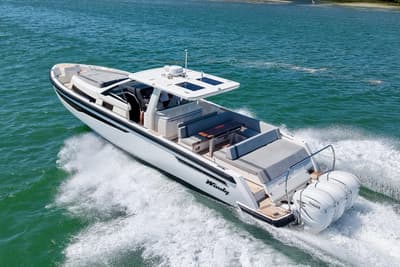
Windy SR 44 BLACKHAWK 2022
SR 44 BLACKHAWK | 210 Hours
$77,500 cash down
Palmetto, FL
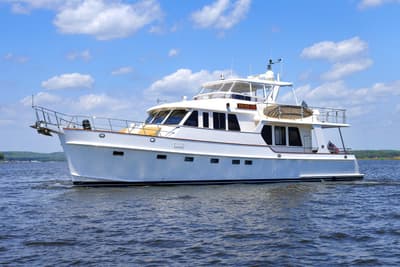
Grand Banks 59 Aleutian RP 2007
59 Aleutian RP | 3343 Hours
$159,900 cash down
Juno Beach, FL


Copyright © 2026 Boatzon™. All Rights Reserved