



- Boats

- Shop
- Finance
- Boatability
- Shopping Tools
- Dealer


Boat Loan APR vs Interest Rate
Understanding the Difference

Boat Loan APR vs Interest Rate
APR (Annual Percentage Rate) includes all loan costs, including interest rate plus origination fees, documentation charges, and other lender expenses expressed as a yearly percentage. Interest rate reflects only the cost of borrowing money without additional fees. A boat loan advertised at 7% interest might carry a 7.5% APR once you factor in $1,200 in origination fees and closing costs, making APR the more accurate measure of total loan expense.
Most boat buyers compare loans by looking at interest rates alone, missing the bigger picture of what they'll actually pay. Two lenders offering identical 7.25% interest rates can have dramatically different total costs if one charges 2% in origination fees while the other charges nothing. The lender with fees delivers a higher APR despite matching the advertised rate, making it the more expensive option.
Understanding both numbers prevents costly mistakes when shopping for financing. Interest rate helps you calculate monthly payments. APR tells you which loan actually costs less over time. Focusing exclusively on either number without considering both leads to poor decisions that cost thousands in unnecessary expenses.
What Interest Rate Measures
Interest rate represents the percentage charged on borrowed principal, determining how much extra you pay beyond the loan amount itself. A $50,000 loan at 7% costs you $3,500 in interest the first year, calculated on the outstanding balance. As you pay down principal, interest charges decrease even though the rate stays constant.
Lenders advertise interest rates prominently because they sound lower than APR and make loans appear more affordable. A 6.75% interest rate feels significantly better than a 7.2% APR even when they apply to the same loan. This marketing reality explains why headlines focus on rates while APR appears in fine print.
Fixed interest rates remain constant throughout the loan term. Variable rates fluctuate based on index changes, typically tied to prime rate or other benchmark indexes. Most boat loans use fixed rates, providing payment predictability over 10-20 year terms. Variable rates sometimes start lower but carry risk of increases that boost monthly payments.
The interest rate alone determines your monthly payment amount. A $60,000 loan at 7% over 15 years creates a $539 monthly payment, while the same loan at 8% costs $573 monthly, a $34 difference driven purely by the one-point rate increase.
What APR Includes
APR adds all loan origination costs to the interest rate, spreading them across the loan term to show total borrowing expense. This standardized calculation lets you compare loans with different fee structures on equal footing.
Origination fees represent the largest component beyond interest rates. Lenders charge 0-2% of the loan amount to process applications, underwrite loans, and fund deals. A $75,000 loan with 1.5% origination fee adds $1,125 upfront, which factors into APR calculations even though it doesn't affect your interest rate.
Documentation fees, application fees, and processing charges all increase APR. These costs typically range from $200-800 depending on lender and loan size. While modest compared to origination fees, they still impact total cost and thus APR.
Credit report fees and appraisal costs sometimes get included in APR, though practices vary between lenders. Marine surveys required for used boats might or might not factor into APR depending on whether the lender bundles this cost into closing or treats it as a separate buyer expense.
The APR calculation spreads one-time fees across your entire loan term. A $1,000 origination fee on a 15-year loan adds roughly 0.15% to your APR, while the same fee on a 20-year loan adds about 0.11%. Longer terms dilute the APR impact of upfront costs, making the gap between interest rate and APR smaller.
Why APR Always Exceeds Interest Rate
APR mathematically must equal or exceed interest rate because it includes everything the interest rate covers plus additional costs. The only scenario where APR matches interest rate exactly is a loan with zero fees, which rarely exists in practice.
The gap between interest rate and APR signals fee levels. A loan showing 7% interest and 7.1% APR carries minimal fees. The same 7% rate paired with 7.8% APR indicates substantial origination costs or other charges. Large gaps deserve scrutiny; you're paying significant upfront fees that might be negotiable or avoidable with different lenders.
Some lenders intentionally advertise attractive interest rates while burying high fees that inflate APR. This tactic hooks borrowers who focus on rates without checking total costs. A 6.5% rate with $3,000 in fees costs more than a 7% rate with no fees, but the 6.5% sounds better until you review APR.
Comparing Loan Offers Using Both Metrics
Smart loan shopping requires analyzing interest rate and APR together rather than relying on either alone. The combination reveals both your payment amount and total cost, letting you make informed trade-offs. Using the boat loan calculator helps you model different scenarios with varying down payments, interest rates, and loan terms to understand how these factors affect your monthly budget.
Start with the interest rate to understand monthly payment obligations. If you're comparing loans and can't afford the payment at 8% interest, APR becomes irrelevant because the loan doesn't work for your budget regardless of fees. Interest rate determines immediate affordability.
Once you've identified loans with acceptable payment amounts, shift focus to APR to minimize total cost. Between three lenders offering payments you can afford, choose the lowest APR. This approach ensures you select the least expensive option among workable choices.
Consider an example: Lender A offers 6.75% interest with 2% origination fee (7.25% APR). Lender B offers 7% interest with no fees (7% APR). On a $50,000 loan over 15 years, Lender A creates a $442 monthly payment while Lender B costs $449 monthly. The $7 payment difference favors Lender A, but you're paying $1,000 upfront in origination fees to achieve it. Lender B costs $84 more per year in interest but saves $1,000 upfront, making it cheaper for roughly 12 years. Only if you keep the boat beyond that point does Lender A become the better deal.
The breakeven analysis matters for buyers who might refinance, upgrade boats within a few years, or prioritize preserving cash for other boat expenses. Paying higher interest with no fees beats paying lower interest with substantial upfront costs if you won't keep the loan long enough to recover the fee expense through interest savings.
When APR Differences Matter Most
Small APR differences on short-term loans or small loan amounts create minimal total cost variance. A 0.2% APR difference on a $25,000 five-year loan amounts to roughly $150 over the loan life. Worth considering, but not a make-or-break factor if other loan terms favor the slightly higher APR option.
Large APR gaps on substantial loans create significant cost differences. A 0.5% APR difference on a $100,000 15-year loan costs approximately $4,500 in additional total payments. That magnitude justifies prioritizing the lower APR even if the higher-APR lender offers other attractive features.
Long loan terms magnify APR impact. The same 0.3% APR difference costs more over 20 years than 10 years because you're paying interest on borrowed money longer. Buyers choosing extended terms should scrutinize APR more carefully than those selecting shorter payoff periods.
Refinancing plans reduce the importance of APR. If you intend to refinance within 3-5 years when rates drop or your credit improves, upfront fees matter less because you won't carry the loan long enough for interest rate differences to offset fee expenses. In this scenario, minimizing immediate out-of-pocket costs might trump achieving the absolute lowest APR.
Common APR Misconceptions
APR doesn't represent the actual interest rate you're paying. It's a standardized comparison tool, not your literal cost of borrowing. The interest rate determines your interest charges; APR just helps you compare total costs across different loan structures.
Prepayment doesn't change APR. Your loan documents show fixed APR regardless of whether you pay off early. However, early payoff does affect the real cost of upfront fees. If you paid $1,500 in origination fees expecting to spread them over 15 years but paid off in 5 years, your true cost of those fees tripled per year of loan life.
APR calculations assume you keep the loan for its full term. Real-world borrower behavior often differs, with refinancing, boat sales, or early payoffs shortening actual loan duration. This reality means APR overstates the impact of low interest rates with high fees for borrowers who won't keep loans long term.
Different loan terms from the same lender show different APRs even with identical interest rates. A 10-year and 15-year loan both at 7% interest might show 7.3% and 7.2% APR respectively because the longer term spreads origination fees across more payments, reducing the APR impact.
Frequently Asked Questions
Why is APR higher than the interest rate on my loan?
-Should I choose the loan with the lowest interest rate or lowest APR?
+Does APR include insurance or extended warranties?
+Can I negotiate APR or just interest rate?
+How much APR difference justifies choosing one lender over another?
+Do all lenders calculate APR the same way?
+Does paying points affect APR?
+Should I ignore APR if I'm paying off the loan early?
+Making Informed Decisions
APR and interest rate both matter, serving different purposes in loan evaluation. Interest rate answers "can I afford this payment?" APR answers "which loan costs least?" Using both metrics together prevents choosing loans based on attractive advertised rates that hide expensive fee structures.
Request APR disclosures from every lender you're considering. Federal law requires lenders to provide APR within three days of application, giving you standardized numbers to compare. Don't rely solely on advertised rates that might not reflect the total cost you'll actually pay.
The gap between rate and APR reveals how much lenders charge in fees. Large gaps warrant questions about whether those fees are negotiable, what services justify the charges, and whether competitor lenders offer similar terms with lower costs. Small gaps indicate straightforward loans without excessive charges buried in the structure.
Your decision ultimately balances monthly affordability against total cost. Sometimes the most affordable monthly payment doesn't represent the cheapest total expense. Understanding both metrics lets you make conscious trade-offs rather than accidentally choosing expensive loans because advertised rates looked attractive.
Disclaimer: This article provides general information about boat loan APR and interest rates for educational purposes. APR calculations, fee structures, and lending practices vary between lenders. Examples shown are for illustration and may not reflect current market rates or specific lender terms. APR requirements and disclosure rules are set by federal regulation, but individual lender practices in what fees they include can vary. Always review complete loan documentation including Truth in Lending disclosures showing both interest rate and APR before making financing decisions. Loan terms, rates, fees, and APR calculations are subject to change based on lender policies and market conditions.
Boats for Sale

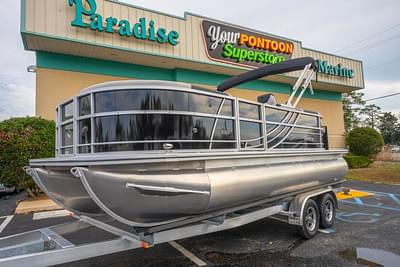
South Bay 220RS LE Rear Seating 275 2025
220RS LE Rear Seating 275 | N/A
May Qualify
 Gulf Shores, AL

Monterey 278SS 2025
N/A
$13,999 cash down
Lancaster, KY
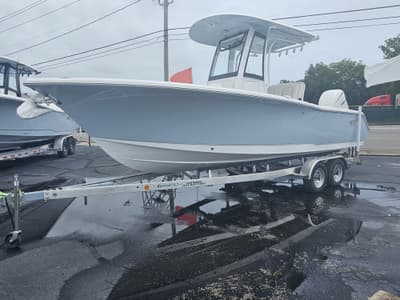
Sea Hunt 245 SE 2027
N/A
$14,537 cash down
Fort Walton Beach, FL

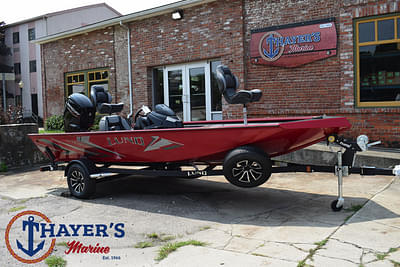
Lund 1775 Renegade SS 2025
1775 Renegade SS | N/A
$3,000 cash down
Norwich, CT
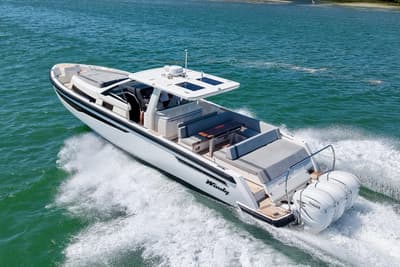
Windy SR 44 BLACKHAWK 2022
SR 44 BLACKHAWK | 210 Hours
$77,500 cash down
Palmetto, FL
Grand Banks 59 Aleutian RP 2007
59 Aleutian RP | 3343 Hours
$159,900 cash down
Juno Beach, FL


Copyright © 2026 Boatzon™. All Rights Reserved